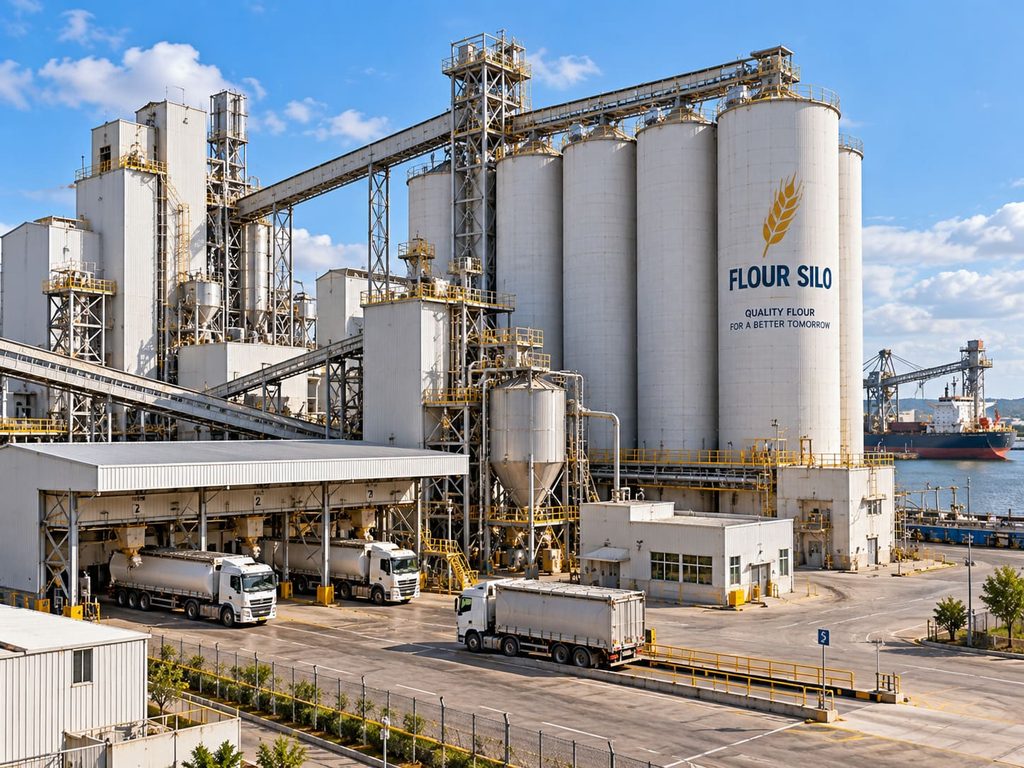
Flour silos are common in mills, bakeries, food-processing plants, starch facilities, and automated ingredient-handling systems.
Although flour is easy to store and transport in bulk, measuring its level continuously can be difficult.
Heavy dust, pneumatic filling, uneven material surfaces, internal structures, and relatively weak reflections can all affect conventional level instruments.
Why Is Flour Silo Level Measurement Difficult?
During pneumatic filling, flour enters the silo together with a large volume of conveying air.
This can create an extremely dusty environment.
The material surface is also rarely flat. Flour may form a cone during filling and a depression during discharge. The measurement point may therefore represent a local material height rather than the exact average inventory level.
Bridging and wall buildup can create additional differences between the measured level and the actual amount of flour inside the silo.
Why Use Radar?
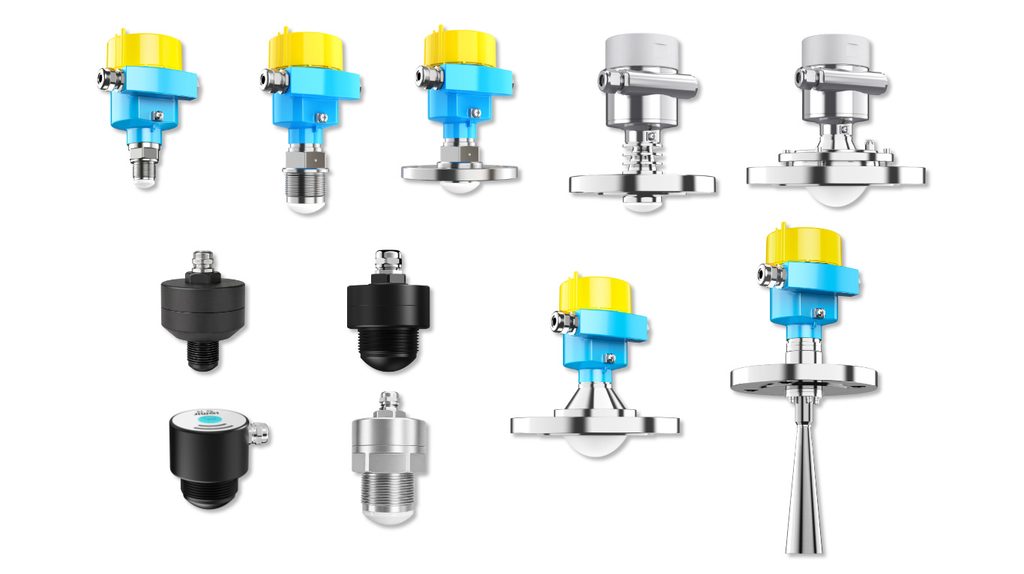
Radar level transmitters use electromagnetic waves rather than sound.
This makes radar particularly attractive for dusty bulk-solid applications.
High-frequency radar can provide a narrow beam, allowing the instrument to target a smaller area of the material surface while avoiding silo walls, filling pipes, braces, and other internal structures.
Non-contact measurement also means there is no long probe extending into the flour where it could be exposed to material impact or buildup.
Continuous Level vs. Point Level Detection
A radar level transmitter provides continuous information.
It can show whether a silo is 30%, 60%, or 90% full and can provide data for inventory monitoring, production planning, and automatic replenishment.
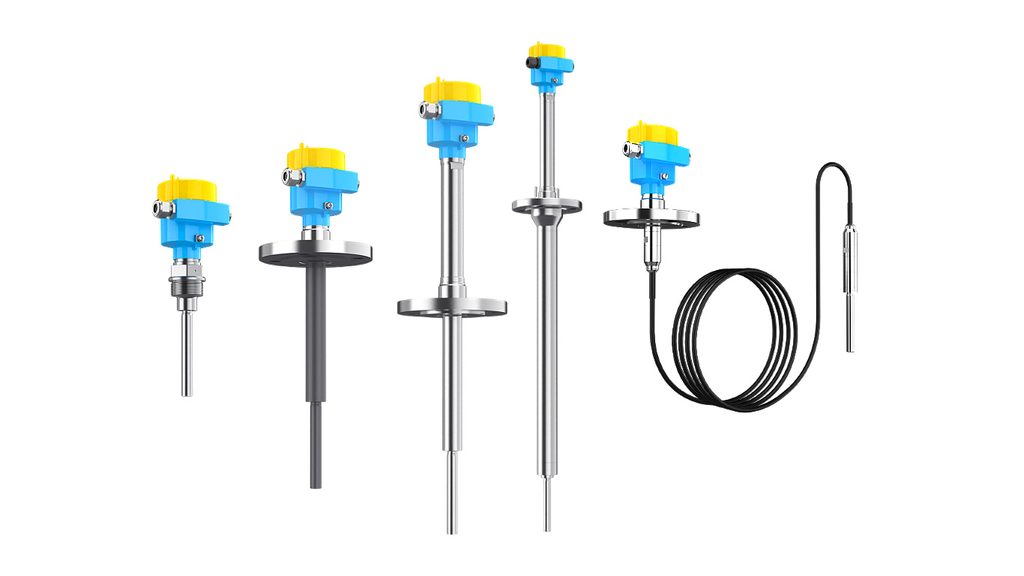
A vibrating rod or other point level switch performs a different task.
Installed near the high-level position, it can detect when flour reaches a predetermined limit and send a switching signal to the control system.
For critical silos, combining the two functions can provide continuous monitoring together with an independent high-level alarm.
Installation Position
The radar should not be mounted directly in the filling stream.
Incoming flour can temporarily create a high material surface and heavy dust concentration directly below the inlet.
The sensor should instead be aimed toward an area that provides a representative material level throughout filling and discharge.
Internal supports, ladders, pipes, and silo walls should remain outside the primary measurement path whenever possible.
Do Not Ignore the Cone
A common mistake is to convert measured height directly into mass without considering the shape of the material surface.
For bulk solids, the relationship between level and stored mass depends on silo geometry, material bulk density, filling pattern, and discharge behavior.
If accurate inventory is required, the level measurement should be combined with a suitable volume model or silo calibration table.
Dust Hazard Considerations
Fine organic dust can create hazardous conditions under certain circumstances.
Instrument selection, electrical installation, grounding, enclosure design, and any required hazardous-area certification should therefore be based on the actual area classification and project requirements.
A standard instrument should never be assumed suitable for a classified dust environment simply because the measurement principle itself is non-contact.
Maintenance
Radar instruments have no mechanical parts moving through the flour, but the antenna area should still be inspected.
In extremely dusty or humid conditions, deposits can gradually accumulate around the process connection.
Where severe buildup is expected, the installation can be designed to simplify inspection and cleaning.
Conclusion
Reliable flour silo level measurement requires an instrument that can operate through dust while coping with irregular material surfaces and complex silo geometry.
High-frequency radar is a strong option for continuous measurement, while a suitable point level switch can provide independent high-level detection.
Correct mounting position remains essential. A high-performance radar installed directly in the filling stream or aimed at a structural beam can still produce poor results.
For this reason, instrument selection and silo geometry should always be evaluated together.