
Magnetic Level Indicator for Wastewater Treatment selection requires matching the instrument to the vessel, liquid, and operating conditions. Learn how magnetic level indicators improve liquid level monitoring in industrial wastewater tanks, including material selection, installation, alarms, and maintenance.
1. Magnetic Level Indicator for Wastewater Treatment: Application Overview
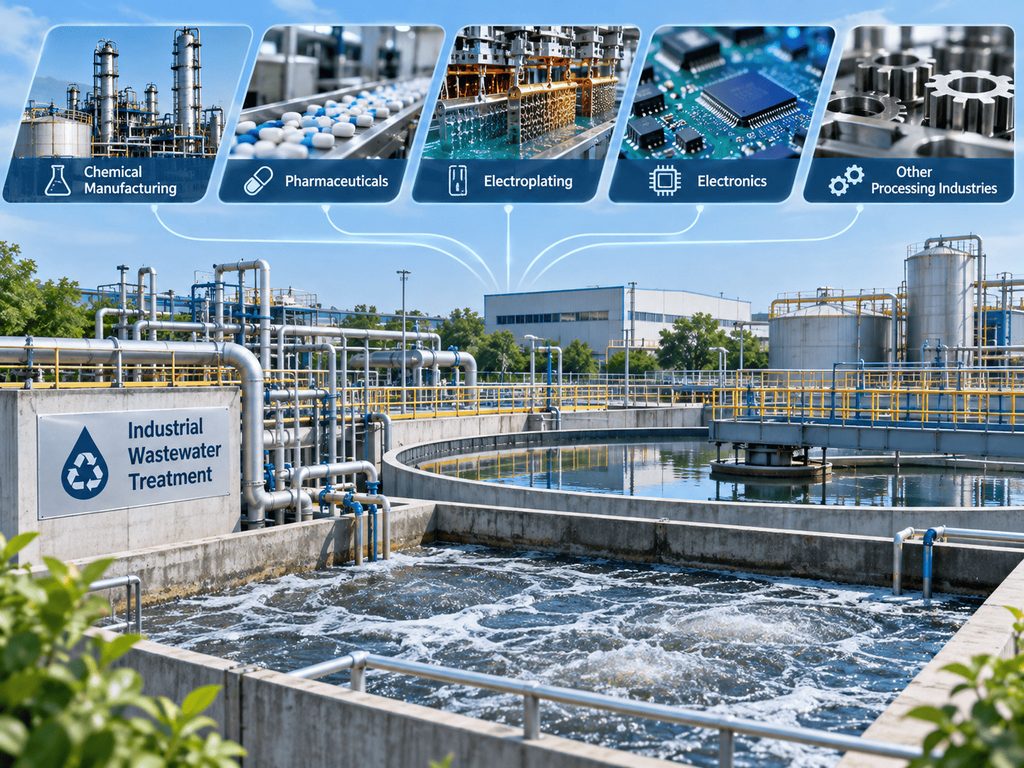
Industrial wastewater treatment is an essential part of operations in chemical manufacturing, pharmaceuticals, electroplating, electronics, and other processing industries.
Wastewater treatment facilities typically include collection tanks, equalization tanks, neutralization vessels, intermediate storage tanks, and discharge systems.
Each stage requires reliable liquid level monitoring to maintain stable operation and prevent process interruptions.
For example, excessive liquid levels in collection tanks may lead to overflow, while insufficient levels in intermediate tanks can cause transfer pumps to run dry.
A magnetic level indicator provides a practical solution for monitoring liquid levels in suitable industrial wastewater applications.
The Flap-11A magnetic level indicator can be considered for wastewater storage tanks and certain chemical processing vessels where the liquid characteristics and operating conditions are compatible with the instrument design.
2. Challenges of Wastewater Tank Level Measurement
Industrial wastewater is often more difficult to measure than clean water because its chemical composition and physical characteristics can vary significantly.
Chemical Corrosion
Wastewater may contain acids, alkalis, dissolved salts, organic compounds, and other chemicals.
These substances can affect the corrosion resistance of measuring chambers, floats, and sealing materials.
For this reason, instrument selection must be based on the actual wastewater composition rather than the general description of the liquid.
Suspended Solids and Sediment
Some wastewater contains sludge, suspended particles, or crystallized deposits.
When these materials enter the measuring chamber of a magnetic level indicator, they may interfere with float movement.
Severe accumulation can cause the float to become stuck, resulting in incorrect or unchanged level indications.
Frequent Level Fluctuations
Wastewater treatment systems often operate intermittently.
Changes in inflow, pump operation, and discharge rates can cause rapid liquid level fluctuations.
The level measurement system must provide suitable monitoring and alarm functions for these operating conditions.
3. How Magnetic Level Indicators Support Wastewater Treatment
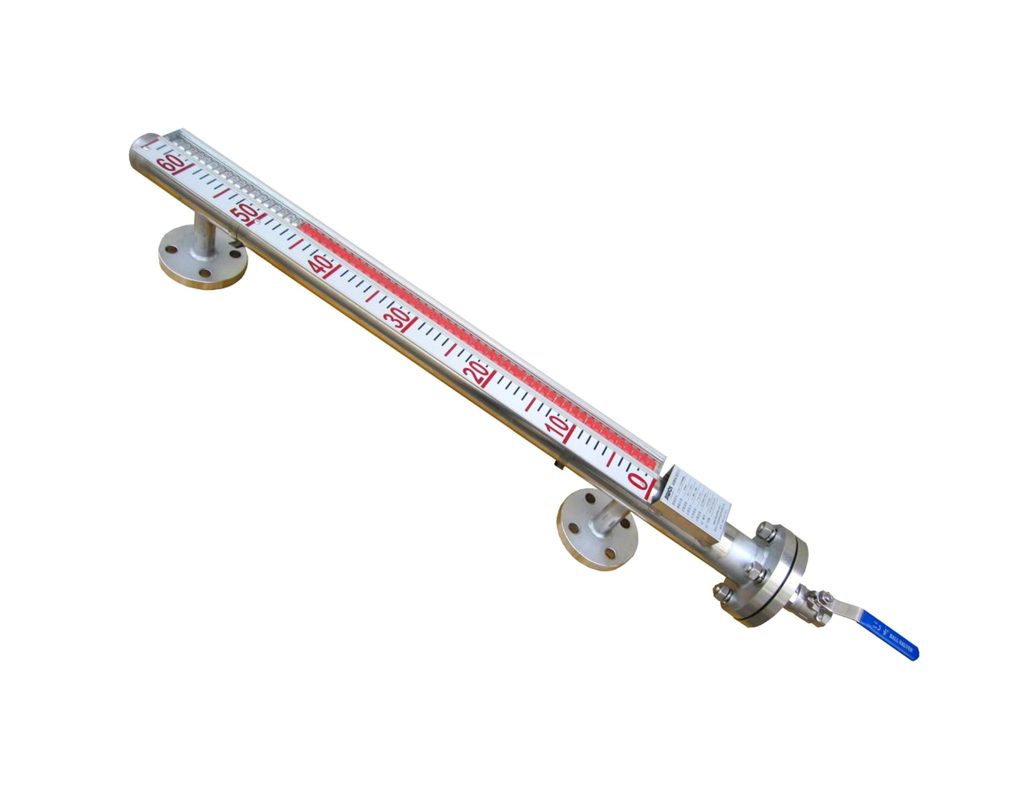
A side-mounted magnetic level indicator uses a measuring chamber connected to the wastewater tank.
As the liquid level changes, a magnetic float moves inside the chamber and activates an external flap indicator.
The indicator provides a clear visual representation of the liquid level without requiring operators to open the tank.
For automated wastewater treatment systems, optional level switches and transmitters can provide additional functionality.
A high-level switch may be used to trigger an alarm when a collection tank approaches its operating limit.
A low-level switch can provide a signal to protect a transfer pump from running under insufficient liquid conditions.
A continuous level transmitter can send level information to a PLC or DCS for remote monitoring and operational control.
The alarm settings and pump control logic should be determined according to tank capacity, flow rates, and process requirements.
For application context, review JIWEI’s water and wastewater applications alongside the instrument specifications.
4. Selecting Suitable Wetted Materials
Material compatibility is one of the most important factors when selecting a wastewater magnetic level gauge.
For wastewater compatible with 316L stainless steel, a stainless steel magnetic level indicator may be appropriate.
However, wastewater containing high chloride concentrations, strong acids, or other aggressive chemicals may require different materials.
Corrosion-resistant linings or specially selected wetted components may be necessary.
The complete wetted assembly must be evaluated, including the measuring chamber, float, process connections, gaskets, and drain components.
A corrosion-resistant chamber alone does not guarantee that the entire instrument is suitable for the application.
5. Installation Considerations
Industrial wastewater tanks may be installed indoors or outdoors, sometimes in humid or chemically aggressive environments.
The magnetic level indicator should be installed vertically, with process connections aligned according to the required measuring range.
Long measuring chambers may require additional mechanical support.
If the wastewater contains limited amounts of sediment, a suitable drain arrangement may help facilitate periodic maintenance.
However, for wastewater containing large quantities of sludge, solids, or deposits, alternative measurement technologies may be more appropriate.
Radar or ultrasonic level measurement should be considered when a float-based system is likely to experience frequent blockage.
6. Maintenance and Troubleshooting
Routine maintenance should focus on corrosion, leakage, blockage, and indicator performance.
Operators should regularly verify that the flap display responds to actual liquid level changes.
Process connections should be inspected for leakage, and any installed switches or transmitters should be checked for proper operation.
If the level indication remains unchanged while the tank level is changing, possible causes include a blocked connection, a stuck float, or an incorrectly selected float.
Before opening or cleaning the measuring chamber, the instrument must be safely isolated, depressurized, and drained according to the site’s procedures.
7. Benefits for Wastewater Treatment Facilities
Magnetic level indicators offer several advantages for suitable wastewater applications.
They provide local level indication without requiring electrical power for the mechanical display.
Optional level switches support high- and low-level alarms.
Remote transmitters allow integration with automated wastewater treatment systems.
These features can improve operational visibility and help maintenance personnel identify abnormal tank conditions.
Long-term reliability, however, depends on wastewater characteristics, material compatibility, and appropriate maintenance.
8. Frequently Asked Questions
Are magnetic level indicators suitable for all industrial wastewater?
No. Wastewater containing high concentrations of solids, sludge, or highly aggressive chemicals may require alternative designs or measurement technologies.
Can a magnetic level indicator be connected to a PLC?
Yes. With a compatible remote level transmitter, liquid level signals can be transmitted to a PLC or DCS.
Is 316L stainless steel suitable for acidic wastewater?
It depends on the acid type, concentration, temperature, and other chemical constituents.
9. Conclusion
Magnetic level indicators can provide dependable local liquid level monitoring in suitable industrial wastewater treatment tanks.
By selecting compatible wetted materials, ensuring proper installation, and maintaining the measuring chamber, wastewater treatment facilities can benefit from clear local indication and optional automated monitoring.