1. Introduction: The Importance of Level Monitoring in Titanium Dioxide Production
Titanium Dioxide Acid Tank level measurement requires careful evaluation of corrosive process conditions.
Titanium dioxide is widely used as a white pigment in paints, coatings, plastics, paper, and other industrial products.
One important production route is the sulfuric acid process, which involves the digestion of titanium-bearing raw materials using concentrated sulfuric acid.
During this stage, chemical reactions occur under controlled operating conditions, producing a reaction mixture that is subsequently processed through dissolution, clarification, hydrolysis, and other treatment stages.
Accurate liquid level information is important for managing material inventory, coordinating chemical additions, and maintaining stable production.
However, titanium dioxide acid digestion vessels present demanding measurement conditions.
The process may involve highly corrosive materials, elevated temperatures, vapor, suspended solids, and changing liquid properties.
Conventional contact-type instruments may require special material selection and can be exposed to aggressive chemical conditions.
The JWrada-35 radar level meter provides a non-contact measurement option that can be evaluated for suitable chemical process vessels.
Using 80 GHz FMCW radar technology, it measures the distance to the process surface without requiring an immersed mechanical sensing element.
This article examines the engineering considerations involved in applying JWrada-35 to titanium dioxide production.
2. Measurement Challenges in Acid Digestion Vessels
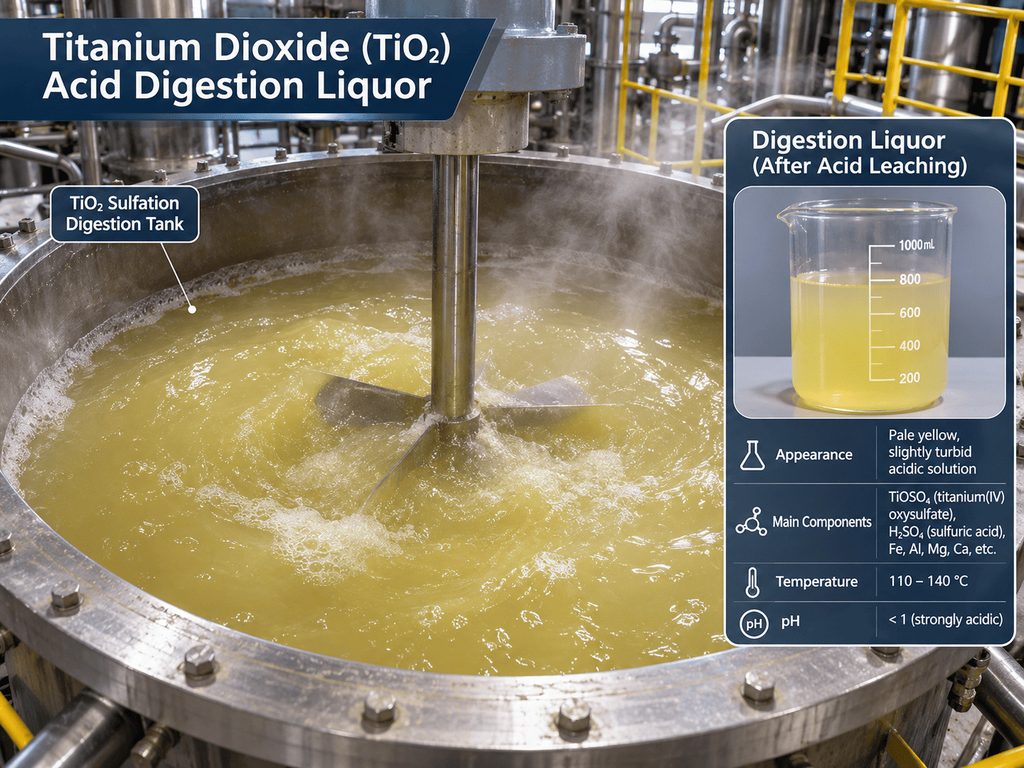
2.1 Highly Corrosive Process Media
The sulfuric acid process involves aggressive chemical materials.
Instrument selection must consider the chemical compatibility of the antenna, process connection, sealing materials, and other exposed components.
Non-contact radar measurement reduces the need for an immersed sensing probe, but it does not eliminate the requirement for corrosion-resistant process connections and suitable protection against chemical vapors.
The selected configuration must be verified against the actual chemical concentration and operating conditions.
2.2 High Process Temperature
Acid digestion may involve elevated process temperatures.
Temperature affects the suitability of the instrument configuration, including antenna materials, seals, and process connections.
The JWrada-35 product family includes configurations with specified process temperature capabilities up to 220°C.
However, this value must be checked against the selected instrument configuration and the corresponding pressure rating.
2.3 Vapor and Condensation
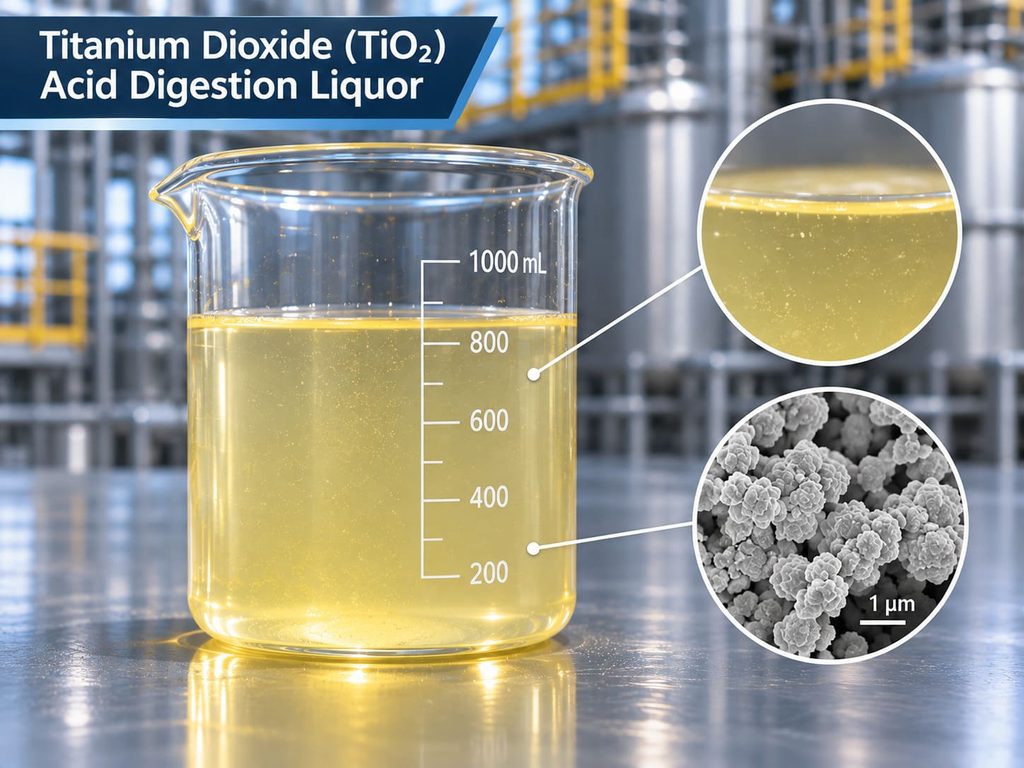
Chemical process vessels may contain vapor above the liquid surface.
Condensation can form around the upper vessel and instrument opening.
If deposits or condensation accumulate on the antenna, the radar signal may become less stable.
The installation arrangement should minimize direct exposure to chemical splashing and persistent condensation.
2.4 Internal Equipment and Reaction Turbulence
Acid digestion vessels may contain internal pipes, structural supports, and process equipment.
During material charging and reaction operations, the liquid surface may become disturbed.
These conditions can generate multiple reflections and affect the measurement signal.
The mounting position should be selected to provide the clearest possible path to the process surface.
3. Why Consider JWrada-35 for Titanium Dioxide Production?
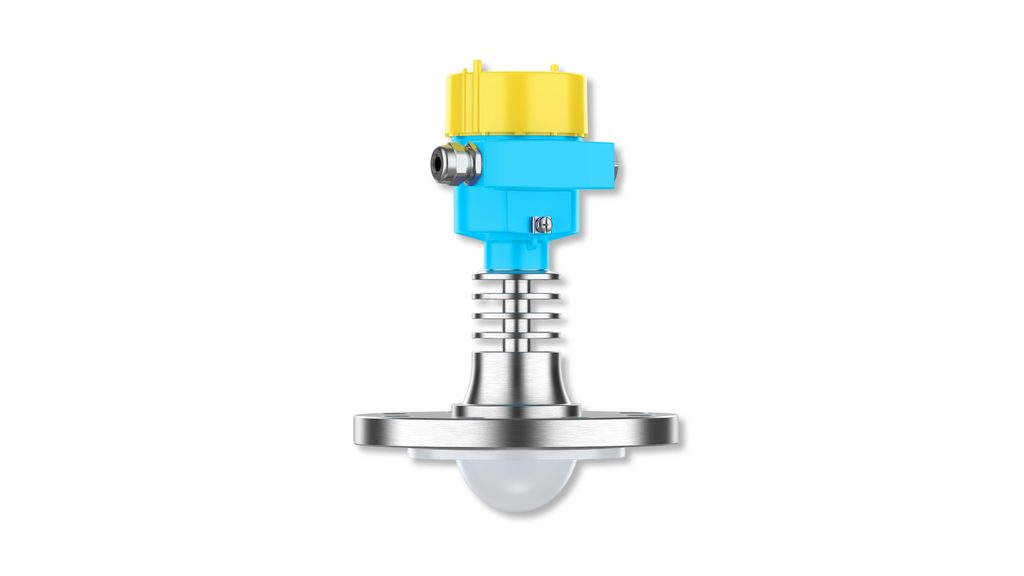
The JWrada-35 is an 80 GHz FMCW radar level meter designed for industrial applications requiring extended measuring distance and demanding process conditions.
Its published specifications include:
- Operating frequency: 80 GHz.
- Maximum measuring range: 150 m.
- Measurement accuracy up to ±1 mm under specified conditions.
- 76 mm lens antenna.
- Process pressure range up to the specified configuration limit of 40 bar.
- Process temperature up to 220°C in compatible configurations.
- Intelligent echo processing.
- False-echo learning and multi-echo separation.
- Industrial communication options including 4–20 mA/HART and RS485/Modbus, depending on configuration.
The actual allowable temperature and pressure combination must be verified with the selected process connection and antenna arrangement.
3.1 Non-Contact Measurement
The radar measures the distance to the process surface from above the vessel.
It does not require an immersed probe.
This can reduce direct exposure of the sensing element to aggressive liquid materials.
3.2 Extended Measuring Range
The JWrada-35 offers a maximum specified measuring range of 150 m.
This provides flexibility for larger vessels and installations with substantial measuring distances.
For ordinary digestion tanks, the extended range may not be necessary, but the instrument’s broader application capability can be relevant in integrated production facilities.
3.3 Focused Radar Beam
The 80 GHz technology and lens antenna support focused measurement.
When installed correctly, the instrument can reduce unwanted reflections from nearby vessel structures.
3.4 Intelligent Echo Processing
The instrument includes echo processing functions designed to identify the actual process surface among multiple reflections.
These functions can help address interference caused by fixed structures and changing surface conditions.
Actual performance must be confirmed under representative process conditions.
4. Typical Application Scenario
Consider a titanium dioxide manufacturing facility using the sulfuric acid production route.
The facility operates large digestion vessels and requires continuous monitoring of process liquid levels.
A representative engineering scenario is shown below.
| Parameter | Example Condition |
|---|---|
| Medium | Acid digestion reaction mixture |
| Vessel | Industrial digestion tank |
| Vessel height | Approximately 12 m |
| Temperature | Elevated process temperature |
| Pressure | Process-dependent |
| Chemical environment | Corrosive |
| Measurement method | Top-mounted radar |
| Control system | DCS |
| Output | 4–20 mA/HART |
| Instrument | JWrada-35 |
These values are illustrative engineering assumptions, not verified customer project specifications.
Final selection requires detailed confirmation of acid concentration, temperature, pressure, vapor composition, corrosion compatibility, and hazardous-area requirements.
5. Recommended Installation Arrangement
5.1 Select a Chemically Compatible Configuration
Before installation, engineers should confirm the compatibility of all potentially exposed materials.
This includes the antenna, process connection, sealing elements, and any protective components.
5.2 Avoid Chemical Charging Points
The radar should not be positioned directly above areas where raw materials or reaction liquids enter the vessel.
Direct splashing may contaminate the antenna and disturb the reflected signal.
5.3 Check the Vessel Roof and Internal Structures
Support beams, pipes, and other equipment should be considered when selecting the installation position.
The radar beam should have a clear path toward the measured surface.
5.4 Evaluate Temperature and Pressure Together
The instrument’s maximum temperature and pressure ratings should not be treated as independent limits that can always be combined.
The selected configuration must satisfy the actual operating envelope.
6. Commissioning and Measurement Verification
Commissioning should begin with the vessel drawing and process design data.
The reference point, empty distance, maximum operating level, and output scaling should be configured.
The echo profile should then be reviewed under normal operating conditions.
Technicians should pay particular attention to:
- Vessel filling.
- Chemical addition.
- Normal reaction operation.
- Vapor and condensation.
- Liquid transfer.
- High- and low-level conditions.
False-echo learning should only be performed after identifying the genuine process surface echo.
The output signal should be verified against the DCS or PLC input.
For critical process applications, independent reference measurement and alarm verification should be included in commissioning.
7. DCS Integration and Process Control
The JWrada-35 can provide continuous level data to a compatible industrial control system.
Chemical Inventory Monitoring
Operators can monitor vessel levels from the central control room.
Process Addition Management
Level information can support the coordination of raw material addition and liquid transfer.
High-Level Monitoring
The DCS can generate alarms when the vessel approaches predefined operating limits.
Independent protection should be provided where required by the process safety assessment.
Historical Process Analysis
Recorded level trends can help engineers review operating cycles and investigate unusual changes in vessel inventory.
8. Expected Operational Benefits
A properly engineered JWrada-35 installation may provide:
- Non-contact measurement in suitable corrosive process applications.
- Reduced dependence on immersed mechanical sensing components.
- Continuous vessel level monitoring.
- Flexible measurement range for larger industrial vessels.
- Integration with DCS-based process control.
- Improved visibility of chemical inventory.
Actual results should be supported by field commissioning records.
9. Frequently Asked Questions
Q1: Can JWrada-35 measure sulfuric acid process liquids?
It can be evaluated for suitable applications, but the complete instrument configuration must be checked against the actual chemical concentration, temperature, pressure, and vapor environment.
Q2: Does non-contact measurement eliminate corrosion concerns?
No. Although the radar sensing principle does not require immersion, the antenna and process connection may still be exposed to corrosive vapor or splashing.
Q3: Is JWrada-35 suitable for high-temperature digestion tanks?
The product family includes configurations rated up to 220°C. The actual temperature rating must be verified for the selected configuration.
Q4: Can it be integrated into a DCS?
Yes. Compatible configurations support industrial communication options such as 4–20 mA/HART and RS485/Modbus.
Q5: What is the maximum measuring range?
The published maximum measuring range of JWrada-35 is 150 m. Actual performance depends on the medium, installation, and operating conditions.
10. Conclusion
Titanium dioxide acid digestion vessels present demanding level measurement conditions because of corrosive chemicals, elevated temperatures, vapor, and complex internal structures.
The JWrada-35 80 GHz radar level meter offers a non-contact measurement option for applications where the selected configuration is compatible with the process environment.
Its extended measuring range, focused radar beam, and intelligent echo processing provide flexibility for industrial vessel monitoring.
Successful implementation depends on careful material compatibility assessment, temperature and pressure verification, appropriate installation, and field commissioning.