1. How to Select a Radar Level Transmitter
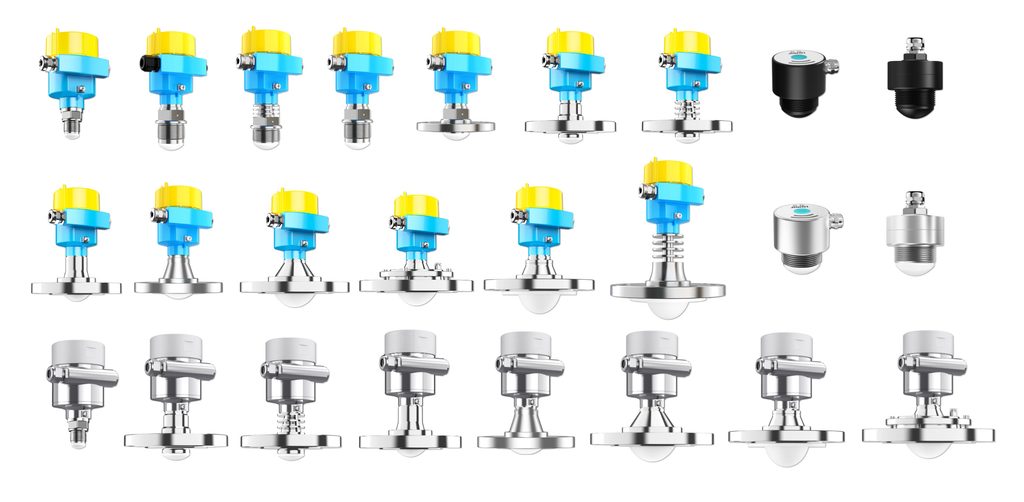
Radar level transmitters are widely used for continuous level measurement in chemical processing, power generation, water treatment, food and beverage, building materials, mining, and many other industries.
Because radar technology provides non-contact measurement, long measuring range, low maintenance, and reliable performance under demanding process conditions, it has become one of the most common technologies for industrial level measurement.
However, a higher radar frequency or a longer measuring range does not necessarily mean better performance.
When selecting a radar level transmitter, several factors should be considered:
- Is the medium a liquid or solid?
- What is the dielectric constant of the medium?
- What is the maximum measuring distance?
- What are the dimensions and internal structures of the vessel?
- What are the process temperature and pressure?
- Are foam, vapor, dust, or condensation present?
- What type of process connection is required?
- What output signal and hazardous-area certification are needed?
If any of these parameters are overlooked, problems such as weak echoes, unstable readings, false echoes, fluctuating level values, or complete loss of signal may occur.
The key to radar level transmitter selection is therefore not simply comparing product specifications. The instrument must match the actual process conditions.
2. Determine the Medium: Liquid or Solid
The first step in selecting a radar level transmitter is identifying the medium being measured.
Liquid Level Measurement
Water, wastewater, acids, alkaline solutions, oils, solvents, and various chemical liquids can generally be measured using non-contact radar level transmitters.
Water-based liquids usually provide strong radar reflections and are relatively easy to measure.
However, additional attention is required when the application involves:
- Low-dielectric liquids
- Volatile liquids
- Heavy foam
- Dense vapor
- Turbulent liquid surfaces
- Agitators or mixers
- Corrosive media
Oils and some organic solvents, for example, have relatively low dielectric constants and may produce weaker reflected signals. In these applications, radar frequency, antenna design, signal sensitivity, and echo-processing capability become particularly important.
Solid Level Measurement
Radar level transmitters can also measure bulk solids such as:
- Cement
- Coal powder
- Minerals
- Plastic pellets
- Grain
- Fly ash
- Powdered materials
Solid level measurement is generally more challenging than liquid level measurement.
Typical issues include:
- Sloped material surfaces
- Material cones
- Heavy dust
- Filling streams
- Irregular reflections
- Interference from silo walls
For these applications, a high-frequency radar level transmitter with a narrow beam angle and strong focusing capability is often preferred.

3. Why Is Dielectric Constant Important?
A radar level transmitter emits microwave signals toward the surface of the measured medium and calculates the level based on the reflected signal.
The ability of the medium to reflect microwave energy is therefore important.
One of the key parameters is the dielectric constant (εr).
In general, a medium with a higher dielectric constant produces a stronger radar reflection. A medium with a lower dielectric constant typically generates a weaker return signal.
| Medium | Dielectric Characteristics | Measurement Difficulty |
|---|---|---|
| Water and water-based liquids | High | Low |
| Acid and alkaline solutions | Generally high | Low |
| Oils | Relatively low | Medium |
| Some organic solvents | Low | Medium to high |
| Powders and granules | Depends on material and bulk density | Medium to high |
For low-dielectric liquids, light oils, powders, and low-density bulk solids, particular attention should be paid to radar sensitivity, operating frequency, beam focusing, and echo-processing algorithms.
If the dielectric constant of the medium is unknown, provide the exact medium name and process conditions to the radar level transmitter manufacturer for proper evaluation.
4. 26GHz vs. 80GHz Radar Level Transmitter: Which Should You Choose?
26GHz radar level transmitters have been widely used in industrial applications for many years, while 80GHz radar technology has become increasingly popular.
The two technologies should not simply be viewed as old versus new. The correct choice depends on the application.
26GHz Radar Level Transmitter
26GHz radar level transmitters are suitable for many conventional liquid and solid level measurement applications.
Typical applications include:
- Standard storage tanks
- Vessels with relatively simple internal structures
- General liquid level measurement
- Applications where an extremely narrow beam is not required
80GHz Radar Level Transmitter
An 80GHz radar level transmitter uses a shorter wavelength and typically provides a narrower beam angle with more concentrated radar energy.
It is particularly suitable for:
- Small vessels
- Narrow tanks
- Tall silos
- Vessels with complex internal structures
- Powder and granular solids
- Limited installation space
- Applications requiring avoidance of internal obstacles
When a silo contains reinforcement structures, filling pipes, supports, or other obstacles, the narrower radar beam can help reduce unwanted reflections.
Therefore, radar frequency should be selected according to the medium and vessel configuration rather than simply choosing the highest available frequency.
5. How to Determine the Correct Measuring Range
A common mistake when selecting a radar level transmitter is to specify only the tank height.
For example:
“My tank is 10 meters high, so I need a 10-meter radar level transmitter.”
In practice, the required measuring range depends on several factors:
- Instrument mounting height
- Maximum level
- Minimum level
- Blocking distance or dead zone
- Nozzle height
- Tank bottom geometry
- Material surface profile
- Required measurement margin
A 10-meter-high tank does not necessarily require an exact 10-meter measuring range.
For bulk solids, the shape of the material surface must also be considered. Material may form a cone or sloped surface, and the measured distance can vary depending on where the radar beam reaches the material.
For accurate selection, it is recommended to provide:
Tank height + tank diameter + maximum level + minimum level + mounting position
This information helps the manufacturer select the appropriate radar level transmitter and configuration.
6. Consider Vessel Dimensions and Internal Structures
Two applications with the same 10-meter measuring range may require different radar level transmitters because the vessel structures are different.
Several internal features require special attention.
Filling Inlet
Avoid installing the radar level transmitter directly above the filling inlet whenever possible.
Falling liquid or bulk material can enter the radar beam and create strong, constantly changing reflections.
Agitators
Rotating agitator blades can generate changing false echoes.
The mounting position and false-echo suppression functions should therefore be considered during instrument selection and commissioning.
Heating Coils and Support Structures
Metal structures inside a tank can reflect radar signals.
A radar transmitter with a narrower beam angle can often avoid these obstacles more effectively.
Tall and Narrow Vessels
For vessels with a small diameter and large height, beam angle becomes particularly important.
A wide radar beam is more likely to strike the vessel wall and generate unwanted echoes.
7. How Do Temperature and Pressure Affect Selection?
Although radar level measurement is non-contact, the antenna, process connection, seals, and other components must still withstand the process temperature and pressure.
At minimum, the following information should be provided:
Normal operating temperature + maximum temperature + normal pressure + maximum pressure
High-Temperature Applications
For high-temperature vessels, consider:
- Antenna material
- Seal material
- Process connection
- Maximum allowable process temperature
Special high-temperature radar level transmitters may be required for demanding applications.
High-Pressure Applications
For pressure vessels, measuring range is only one consideration.
The pressure rating of the process connection, flange, seals, and instrument assembly must also meet the maximum process pressure.
Low-Temperature Applications
For low-temperature or cryogenic media, seal compatibility, condensation, and icing should also be considered.
For this reason, always provide both normal operating conditions and possible extreme process conditions.
8. What About Foam, Vapor, and Dust?
Foam, vapor, and dust are common reasons why radar level measurement applications require additional evaluation.
Foam
Different types of foam affect radar signals differently.
The effect depends on factors such as:
- Foam thickness
- Foam density
- Liquid content
- Foam stability
If heavy or persistent foam is present, this should be specified during the selection process.
Vapor
Hot liquids may generate significant vapor.
If condensation is also present, moisture may accumulate on the antenna or process connection and affect measurement performance.
Dust
Bulk solid silos often generate large amounts of dust during filling.
Radar technology can perform well in many dusty environments. However, if the dust or material tends to build up on the antenna, additional factors should be considered:
- Antenna design
- Mounting position
- Anti-buildup design
- Air purging, if necessary
When selecting a radar level sensor for a silo, it is therefore important to specify both dust conditions and the tendency of the material to adhere to surfaces.
9. How Should a Radar Level Transmitter Be Installed?
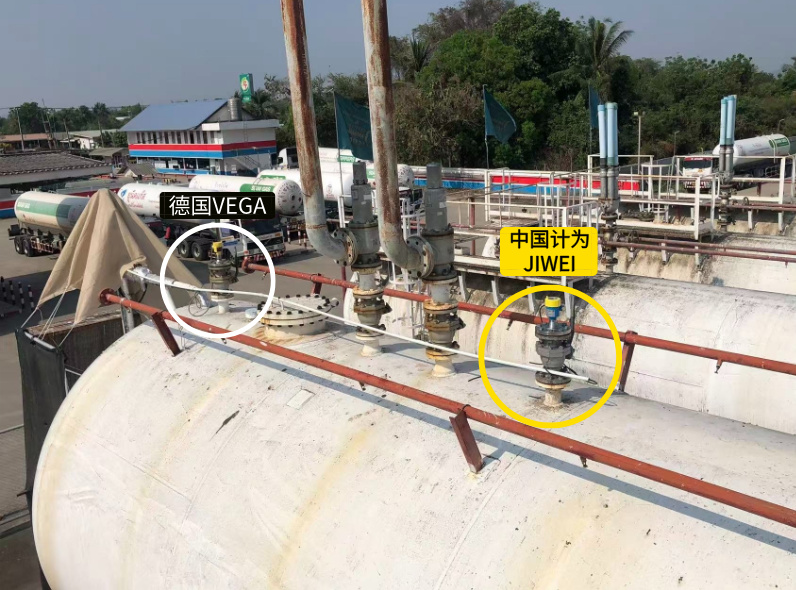
Radar level transmitters are typically installed on the top of tanks, vessels, or silos.
For stable measurement, the radar beam should have a clear path to the surface of the measured medium.
Several installation factors should be considered.
Avoid Mounting Directly Above the Filling Point
This prevents the filling stream from interfering with the radar signal.
Avoid Internal Obstacles
Common obstacles include:
- Ladders
- Support bars
- Heating coils
- Agitators
- Reinforcement structures
Check Nozzle Dimensions
A nozzle that is too narrow or too long can interfere with radar signal transmission.
Even when using a high-frequency radar level transmitter with a narrow beam, the nozzle diameter and length should comply with the manufacturer’s installation requirements.
Consider the Material Surface in Solid Applications
Bulk solids often form uneven or sloped surfaces.
The radar mounting position should therefore be selected according to the filling point, discharge point, and expected material profile.
An unsuitable installation position can lead to poor measurement performance even when the radar transmitter itself is correctly specified.
10. How to Select the Process Connection
Common process connections for radar level transmitters include:
- Threaded connections
- Flange connections
- Hygienic connections
- Customized process connections
Different flange standards may also be required, including:
- GB
- ASME/ANSI
- DIN
- JIS
Simply specifying “DN100 flange” may therefore be insufficient.
Complete process connection information should ideally include:
Nominal size + flange standard + pressure rating + sealing face type
For corrosive applications, wetted materials such as 316L stainless steel, PTFE, or other corrosion-resistant materials should be selected according to the process medium.
11. Which Output Signal Should You Choose?
Common radar level transmitter output options include:
4–20mA
4–20mA is widely used in industrial automation and can be connected directly to PLC and DCS systems.
4–20mA + HART
HART communication adds digital communication capability to the conventional analog signal, allowing easier parameter configuration and instrument diagnostics.
RS485 / Modbus
RS485 with Modbus communication is suitable for digital communication and applications where multiple instruments need to be connected to a network.
Some projects may require other industrial communication protocols.
When requesting a quotation, it is useful to specify:
PLC/DCS type + required output signal + power supply
12. Outdoor, Corrosive, and Hazardous-Area Applications
Outdoor Installation
For outdoor installations, consider:
- Rain
- Dust
- High and low ambient temperatures
- Direct sunlight
- Humidity
The radar level transmitter should have an appropriate IP protection rating for the installation environment.
Corrosive Environments
When measuring acids, alkalis, or other corrosive media, all components that may come into contact with the process medium should be checked for material compatibility.
Do not evaluate corrosion resistance based only on the enclosure material.
Hazardous Areas
Oil and gas, petrochemical, chemical, and coal chemical applications may involve potentially explosive atmospheres.
In these applications, confirm:
- Explosion protection type
- Explosion protection rating
- Gas or dust environment
- Hazardous-area classification
- Required project certifications
Do not select an instrument simply because it is described as an “explosion-proof radar level transmitter.”
The certification must match the actual hazardous-area requirements.
13. Radar Level Transmitter Selection Checklist
Providing complete process information allows the manufacturer to recommend a suitable radar level transmitter more quickly and accurately.
| Selection Parameter | Information Required |
|---|---|
| Medium | Water, oil, acid, cement, coal powder, etc. |
| Medium type | Liquid / powder / granules |
| Measuring range | Maximum measuring distance |
| Vessel height | Total tank or silo height |
| Vessel diameter | Maximum diameter |
| Process temperature | Normal and maximum temperature |
| Process pressure | Normal and maximum pressure |
| Dielectric constant | Provide if known |
| Process conditions | Foam, vapor, dust, agitation, etc. |
| Process connection | Thread or flange |
| Flange standard | GB / ASME / DIN / JIS, etc. |
| Output signal | 4–20mA, HART, RS485, etc. |
| Installation environment | Indoor / outdoor |
| Hazardous-area requirement | Required or not |
| Power supply | 24VDC, etc. |
The more complete the process information, the more accurate the radar level transmitter selection will be.
14. Frequently Asked Questions About Radar Level Transmitters
Can a radar level transmitter measure solids?
Yes.
Radar level transmitters can measure both liquids and bulk solids, including powders, granules, and certain lump materials.
Because solid surfaces are often uneven and dusty, the silo height, material characteristics, beam angle, and mounting position should all be considered during selection.
Is an 80GHz radar level transmitter always better than a 26GHz model?
Not necessarily.
80GHz radar typically provides a narrower beam angle and is particularly useful for small tanks, tall silos, and vessels with complex internal structures.
26GHz radar can still provide reliable measurement in many conventional applications.
The correct frequency depends on the actual process conditions.
Can a radar level transmitter measure oil?
Yes.
However, different oils have different dielectric properties.
For low-dielectric oils, particular attention should be paid to echo strength, antenna design, operating frequency, and signal-processing capability.
Does foam affect radar level measurement?
It can.
The effect depends on the thickness, density, stability, and liquid content of the foam.
Applications with heavy or persistent foam should be evaluated carefully during instrument selection.
Why does a radar level transmitter show fluctuating readings?
Common causes include:
- Internal vessel obstacles
- Agitator interference
- Filling streams crossing the radar beam
- Changes in foam or vapor
- Material buildup on the antenna
- Incorrect mounting position
- Improper parameter configuration
When readings fluctuate, both installation conditions and instrument settings should be checked before concluding that the transmitter itself is faulty.
15. Conclusion: Choosing the Right Radar Level Transmitter
A practical radar level transmitter selection process can follow this sequence:
Medium → Dielectric properties → Measuring range → Vessel structure → Radar frequency → Beam angle → Temperature and pressure → Installation → Process connection → Output signal → IP protection and hazardous-area requirements
For standard storage tanks, radar level transmitter selection is usually straightforward.
For applications involving low-dielectric media, foam, vapor, heavy dust, agitators, high temperature, high pressure, or complex internal vessel structures, a more detailed application analysis is recommended.
Shenzhen Jiwei Automations Ltd. can provide radar level transmitter selection support based on the medium, vessel dimensions, process temperature and pressure, mounting connection, and operating environment.
Providing complete application information before requesting a quotation can help shorten the selection process, improve measurement reliability, and reduce the risk of additional modification costs caused by an incorrectly selected instrument.