What Should You Do If a Radar Level Transmitter Antenna Becomes Crystallized?
Radar level transmitters are widely used in the chemical, food and beverage, pharmaceutical, environmental protection, water treatment, and building materials industries due to their high accuracy, non-contact measurement, and excellent performance in harsh process conditions.
However, when measuring high-temperature, high-humidity, high-concentration, or crystallizing media, many users encounter a common issue: radar level transmitter antenna crystallization.
So, what causes crystallization on a radar level transmitter antenna? Can the transmitter still measure accurately after crystallization? How can you remove crystal buildup quickly? More importantly, how can you prevent it from happening again?
This comprehensive guide explains the causes, effects, troubleshooting methods, preventive measures, and maintenance tips for radar level transmitter antenna crystallization, helping you improve measurement reliability while reducing maintenance costs.
What Is Radar Level Transmitter Antenna Crystallization?
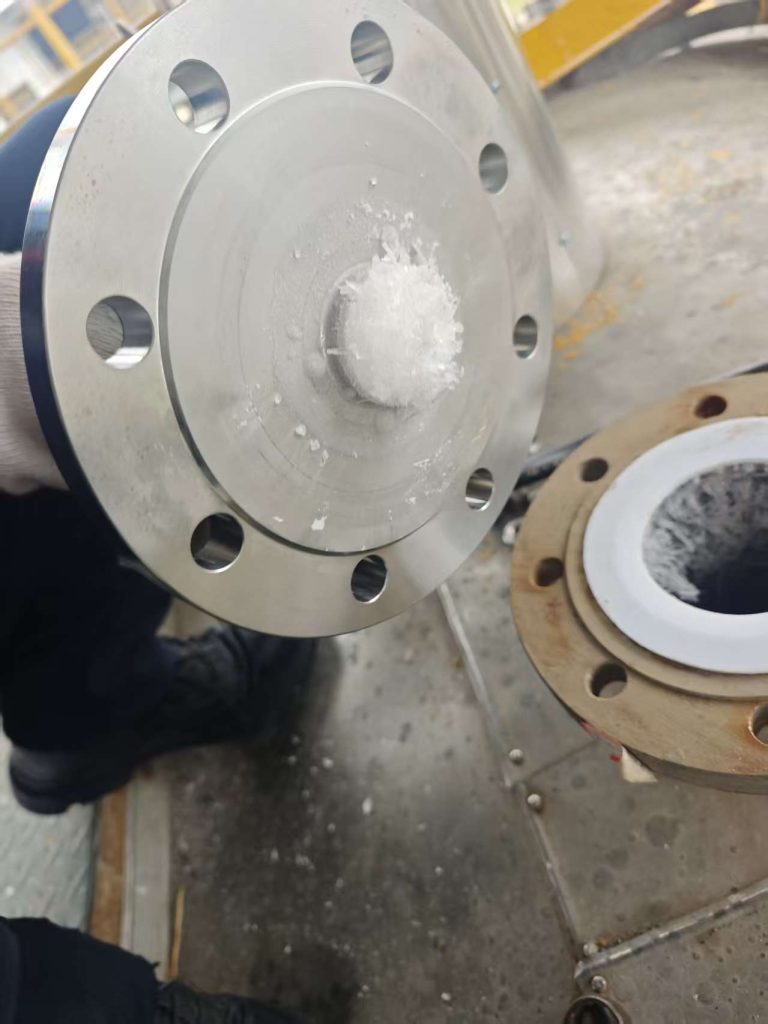
Antenna crystallization refers to the formation of solid crystals on the surface of a radar level transmitter antenna due to the precipitation of dissolved substances in the process medium.
These substances may include:
- Salts
- Sugars
- Chemical compounds
- Minerals
- Fertilizer components
Under certain temperature, pressure, or concentration conditions, these materials precipitate from the process fluid and gradually accumulate on the antenna surface.
As the crystal layer becomes thicker, it interferes with the transmission and reception of microwave signals, eventually causing inaccurate level measurements.
Common Crystallizing Media
Radar level transmitters frequently encounter crystallization when measuring:
- Urea solution
- Sodium hydroxide (Caustic Soda)
- Sodium sulfate
- Sodium chloride (Brine)
- Glucose syrup
- Maltose syrup
- Phosphate solutions
- Nitrate solutions
- Fertilizer slurry
- Lime slurry
- High-concentration saline solutions
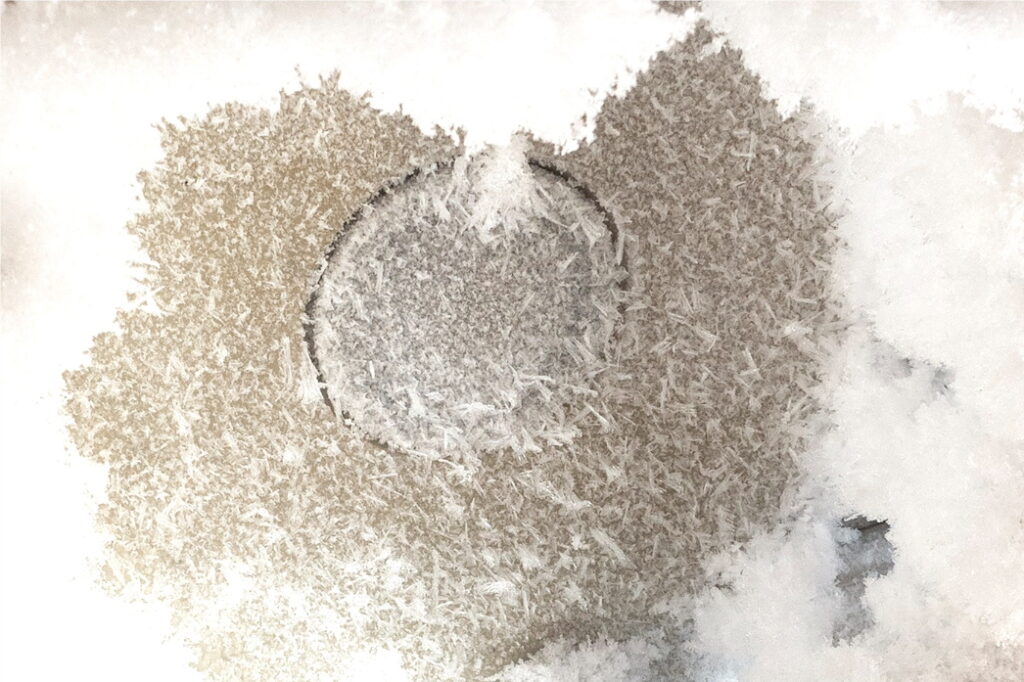
These materials are especially prone to crystallization when temperatures drop or water evaporates.
Why Does a Radar Level Transmitter Antenna Crystallize?
Several factors contribute to crystal buildup.
1. The Process Medium Naturally Crystallizes
This is the most common cause.
Many chemical products become supersaturated as temperature decreases, causing dissolved solids to precipitate.
Examples include:
- Urea solution crystallizes when cooled.
- Glucose syrup leaves deposits after cooling.
- High-concentration caustic soda forms crystals.
- Salt solutions crystallize after moisture evaporates.
When the antenna is continuously exposed to vapors from these media, crystal deposits gradually accumulate.
2. Large Temperature Fluctuations
Significant temperature changes greatly increase the likelihood of crystallization.
Typical situations include:
- Daytime temperature: 60°C
- Nighttime temperature: 20°C
- Equipment shutdown
- Winter operation
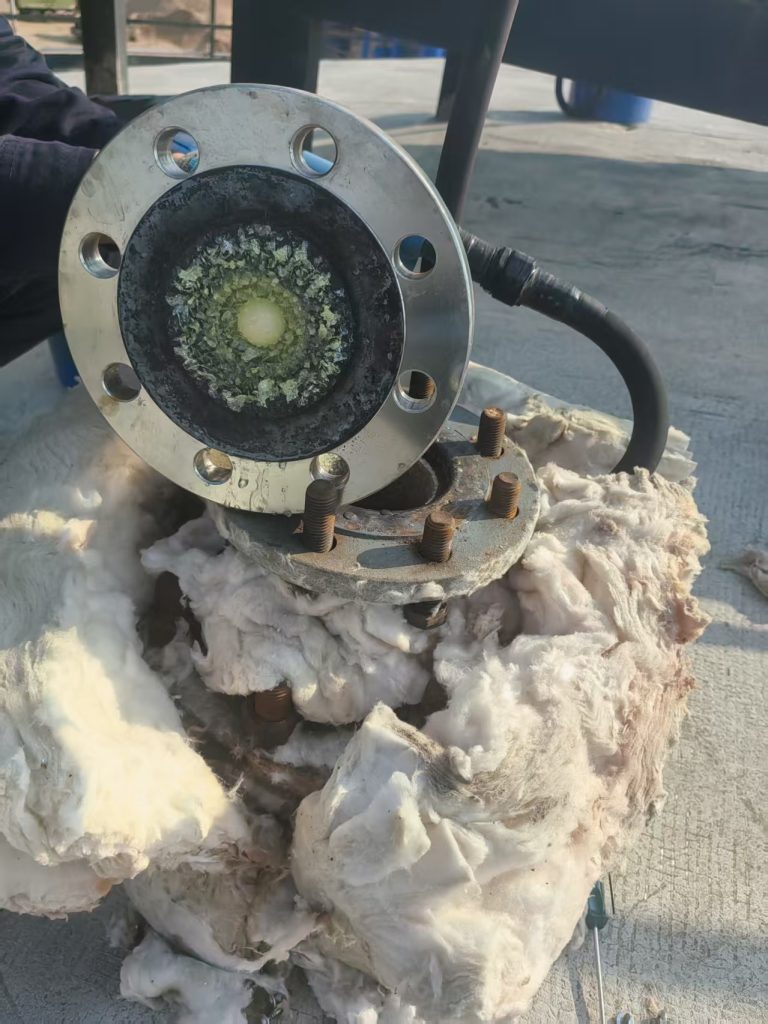
Condensation forms as hot vapor contacts cooler surfaces. The condensed liquid combines with dissolved materials, accelerating crystal formation on the antenna.
3. Improper Installation Location
Incorrect installation significantly increases contamination.
Problematic locations include:
- Near filling inlets
- Above agitators
- Near steam outlets
These areas expose the antenna to splashing liquids that eventually evaporate and leave solid crystal deposits.
4. Infrequent Cleaning
A dirty antenna attracts even more deposits.
The buildup process typically follows this sequence:
Surface contamination → Crystal adhesion → Thick crystal layer
Over time, the deposits become increasingly difficult to remove.
5. Process Condition Changes
Changes in operating conditions can also trigger crystallization, including:
- Increased concentration
- Lower operating temperature
- Mixer shutdown
- Extended downtime
All of these conditions promote crystal formation.
How Does Antenna Crystallization Affect Radar Level Measurement?
Even a thin layer of crystals can significantly impact radar performance.
Reduced Measurement Accuracy
Crystal deposits alter the microwave propagation path.
For example, if the actual level is 5.0 meters, the transmitter may display:
- 4.85 m
- 5.20 m
- Constantly fluctuating values
Measurement accuracy decreases noticeably.
Weaker Echo Signal
Crystal layers absorb and scatter microwave energy.
As a result:
- Echo signal strength decreases.
- The transmitter struggles to detect the true level.
- Signal quality deteriorates.
- Measurement failures become more frequent.
False Echoes
The crystal layer itself becomes a reflective surface.
The radar may interpret this reflection as the actual material level, causing:
- False level readings
- Fixed level indication
- Frozen measurement values
This is one of the most common issues encountered in industrial applications.
Unstable Measurements
High-frequency 80 GHz radar level transmitters offer excellent focusing capability but are also more sensitive to antenna contamination.
Even minor crystal deposits can cause:
- Measurement fluctuations
- Unstable level readings
- Frequent alarms
Increased Maintenance Costs
If crystallization is ignored, maintenance becomes more expensive.
Possible consequences include:
- Removing the transmitter
- Production shutdown
- Manual cleaning
- Antenna replacement
Regular preventive maintenance is far less costly than emergency repairs.
How to Remove Crystallization from a Radar Level Transmitter Antenna
Several cleaning methods are commonly used depending on the severity of the buildup.
Method 1: Manual Cleaning
Recommended for:
- Thick crystal deposits
- Severe measurement errors
- Long-overdue maintenance
Cleaning procedure:
- Shut down the process.
- Disconnect the power supply.
- Remove the radar level transmitter.
- Soak the antenna in warm water.
- Clean gently with a soft cloth.
- Remove all crystal deposits.
- Inspect the sealing gasket.
- Reinstall the transmitter.
Important: Never use steel brushes or abrasive tools, as they may damage PTFE or PP antennas.
Method 2: Hot Water Cleaning
Suitable for:
- Sugar syrup
- Urea
- Salt deposits
Using 60–80°C (140–176°F) hot water usually dissolves these crystals quickly.
This is one of the most common cleaning methods in the food processing industry.
Method 3: Steam Cleaning
Ideal for:
- Oil residues
- Chemical deposits
- Sticky process media
Low-pressure steam allows the antenna to be cleaned without removing the transmitter, minimizing production downtime.
Method 4: Chemical Cleaning
Some crystal deposits cannot be removed with hot water alone.
Depending on the process medium, suitable cleaning agents may include:
- Mild acids
- Mild alkalis
- Specialized industrial cleaning solutions
Always verify chemical compatibility with the antenna material before use.
Method 5: Online Air Purging
Many industrial facilities install automatic purge systems that continuously blow:
- Compressed air
- Nitrogen
across the antenna surface.
Benefits include:
- Preventing material buildup
- Reducing crystallization
- Extending maintenance intervals
- Improving long-term measurement stability
Air purging is especially effective in the chemical, cement, and powder processing industries.
How to Prevent Radar Level Transmitter Antenna Crystallization
Prevention is always more cost-effective than cleaning.
Choose the Correct Installation Position
Avoid installing the transmitter near:
- Filling ports
- Discharge outlets
- Agitator shafts
- Steam vents
Reducing direct splashing greatly minimizes crystal buildup.
Maintain Stable Process Temperature
Avoid rapid heating and cooling cycles.
Thermal insulation can help:
- Reduce temperature fluctuations
- Slow crystal formation
- Improve measurement stability
Install Heat Tracing or Insulation
For highly crystallizing media, consider:
- Electric heat tracing
- Steam tracing
- Thermal insulation jackets
Maintaining a stable antenna temperature helps prevent crystal precipitation.
Perform Regular Maintenance
Recommended inspection intervals:
| Process Condition | Inspection Frequency |
|---|---|
| Normal media | Every 3–6 months |
| Crystallizing media | Monthly |
| Severe crystallization | Weekly |
Routine inspections help detect buildup before measurement problems occur.
Use Anti-Adhesion Antennas
Modern radar level transmitters are available with antennas made from:
- PTFE
- PEEK
- Ceramic
- Special non-stick coatings
These materials reduce product adhesion and significantly decrease the likelihood of crystallization.
Enable False Echo Suppression
Most modern radar level transmitters include intelligent signal-processing functions such as:
- False echo suppression
- Echo mapping
- Echo learning
- Adaptive filtering
Even if slight crystal buildup occurs, these functions help maintain stable and accurate measurements.
Proper parameter configuration during commissioning is highly recommended.
Best Practices by Industry
Chemical Industry
Use heat tracing, air purging, and scheduled inspections for high-salt, high-alkali, and concentrated chemical solutions.
Food & Beverage Industry
Integrate the transmitter with a CIP (Clean-in-Place) system to perform regular hot-water cleaning while minimizing manual maintenance.
Pharmaceutical Industry
Choose hygienic, corrosion-resistant antenna materials and follow validated cleaning procedures that comply with GMP requirements.
Environmental & Water Treatment
Increase inspection frequency when measuring concentrated wastewater or high-salinity solutions to prevent excessive buildup.
How to Reduce Crystallization Risk During Radar Level Transmitter Selection
Selecting the right instrument from the beginning can greatly reduce future maintenance.
Consider the following factors:
- Choose antenna materials such as PTFE, PEEK, or ceramic for superior corrosion resistance and low adhesion.
- Select the appropriate radar frequency and beam angle according to tank dimensions and installation conditions.
- Confirm that the transmitter supports false echo suppression, echo mapping, and adaptive signal filtering.
- Reserve connections for air purging or heat tracing in severe crystallization applications.
- Provide the manufacturer with complete process information, including concentration, temperature, pressure, viscosity, and crystallization characteristics.
Proper instrument selection improves long-term reliability while lowering maintenance costs.
Radar Level Transmitter Maintenance Tips
Follow these best practices during routine maintenance:
- Disconnect power before cleaning.
- Follow all plant safety procedures.
- Never scrape the antenna with metal tools.
- Inspect gaskets, flanges, and seals after cleaning.
- Verify echo quality after reinstalling the transmitter.
- Keep maintenance records documenting crystal buildup, cleaning intervals, and instrument performance.
A standardized maintenance program significantly reduces unexpected failures.
Frequently Asked Questions (FAQ)
Can a radar level transmitter continue operating with minor crystallization?
Yes. If only a small amount of crystallization is present and measurements remain stable, the transmitter can continue operating temporarily. However, cleaning should be scheduled as soon as possible to prevent further buildup.
Does the antenna always need to be removed for cleaning?
No. If online cleaning systems such as air purging, hot-water flushing, or steam cleaning are available, the antenna can often be cleaned without removing the transmitter.
Are high-frequency radar level transmitters more sensitive to crystallization?
Yes. 80 GHz radar level transmitters provide superior focusing and accuracy, but because the microwave beam is more concentrated, antenna contamination has a greater impact on echo quality. Therefore, regular maintenance is especially important.
How can I tell if crystallization is affecting measurement?
Common symptoms include:
- Unstable level readings
- Sudden measurement fluctuations
- Weak echo signals
- False level indications
- Fixed level values
- Frequent instrument alarms
If these issues occur, inspect the antenna for crystal deposits or material buildup.
Conclusion
Radar level transmitter antenna crystallization is a common challenge when measuring crystallizing process media. The root causes typically include process media characteristics, temperature fluctuations, improper installation, and insufficient maintenance.
Crystal deposits can weaken microwave signals, generate false echoes, reduce measurement accuracy, and eventually lead to instrument failure.
Fortunately, these problems can be effectively addressed through manual cleaning, hot-water flushing, steam cleaning, chemical cleaning, or online air purging. Long-term prevention depends on proper instrument selection, optimized installation, heat tracing, thermal insulation, intelligent radar functions, and a well-planned maintenance program.
By implementing a comprehensive maintenance and prevention strategy, industrial facilities can significantly improve radar level measurement reliability, reduce downtime, lower maintenance costs, and maximize production efficiency.