In early July 2026, Shenzhen Jiwei Automation was qualified as a project partner of East China Petrochemical Co., Ltd. Jiwei Automation will supply 110 level measurement instruments and related technical support for a large-scale refining and petrochemical integration project at the company’s green petrochemical base.
The instruments will primarily be installed in a 450,000-ton-per-year adipic acid production unit. The supplied products include 80GHz radar level transmitters, Ring-11 tuning fork level switches, Tube-11 vibrating rod level switches, and magnetic level gauges.
These instruments will perform a range of critical functions, including continuous level measurement, high- and low-level alarms, pump protection, overfill and empty-bin prevention, local level indication, and intelligent instrument maintenance. The solution will provide reliable measurement data to support the safe, stable, and intelligent operation of the production facilities.
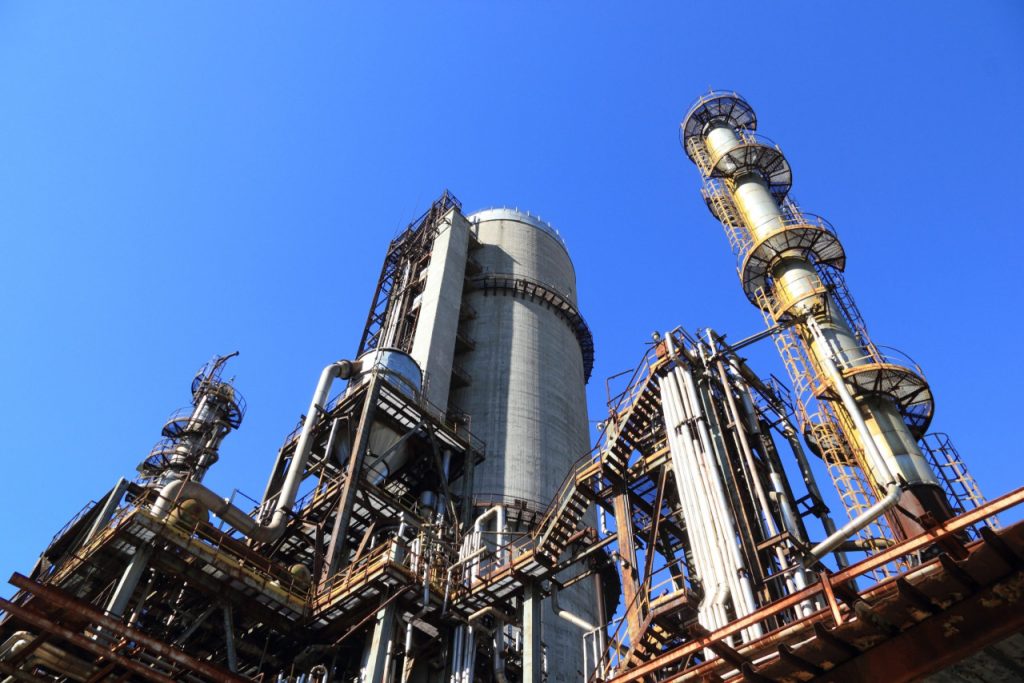
Supporting a Large-Scale Green Refining and Petrochemical Integration Project
The green petrochemical base has a total crude oil refining capacity of approximately 50 million tonnes per year, making it one of the larger refining and petrochemical integration projects in China.
Large integrated refining and petrochemical projects are generally characterized by extensive production facilities, long process chains, diverse process media, and stringent requirements for continuous operation. Throughout the production process, level data from storage tanks, reactors, intermediate vessels, powder silos, and utility tanks directly affects material feeding, discharge, circulation, storage, process control, and safety interlocking.
Inaccurate level readings, delayed level alarms, or false switch activation may lead to pump dry running, tank overflow, material shortages, conveying interruptions, or even production shutdowns. Reliable level measurement instrumentation is therefore essential for maintaining continuous petrochemical operations and advancing industrial digitalization.
Based on the process conditions at different measuring points, Jiwei Automation developed an integrated solution combining continuous measurement, point-level detection, local indication, and remote intelligent maintenance.
Meeting the Measurement Requirements of a 450,000-Tonne Adipic Acid Plant
Adipic acid is an important basic chemical used in the production of nylon 66, specialty engineering plastics, polyurethane, and other industrial materials. Its production process involves oxidation, crystallization, separation, drying, storage, packaging, and utility systems.
The adipic acid plant handles a wide range of process media. Liquid media include nitric acid, acidic solutions, mother liquor, condensate, and wastewater, while solid media include crystalline powders, granules, and dust collected from filtration systems.
Measurement points may be exposed to highly corrosive media, steam condensation, temperature fluctuations, foam, agitation, crystallization, dust impact, material adhesion, and changing bulk density. These demanding operating conditions place high requirements on the corrosion resistance, interference immunity, repeatability, measurement stability, and functional safety of level instruments.
To meet the application requirements of nitric acid storage tanks, oxidation reactors, acid intermediate vessels, mother liquor circulation tanks, condensate collection vessels, wastewater tanks, finished-product silos, and packaging buffer bins, Jiwei Automation provided a coordinated portfolio of level measurement instruments.
The overall configuration integrates continuous liquid level measurement, high- and low-level alarms, powder level detection, local visual indication, and intelligent maintenance.
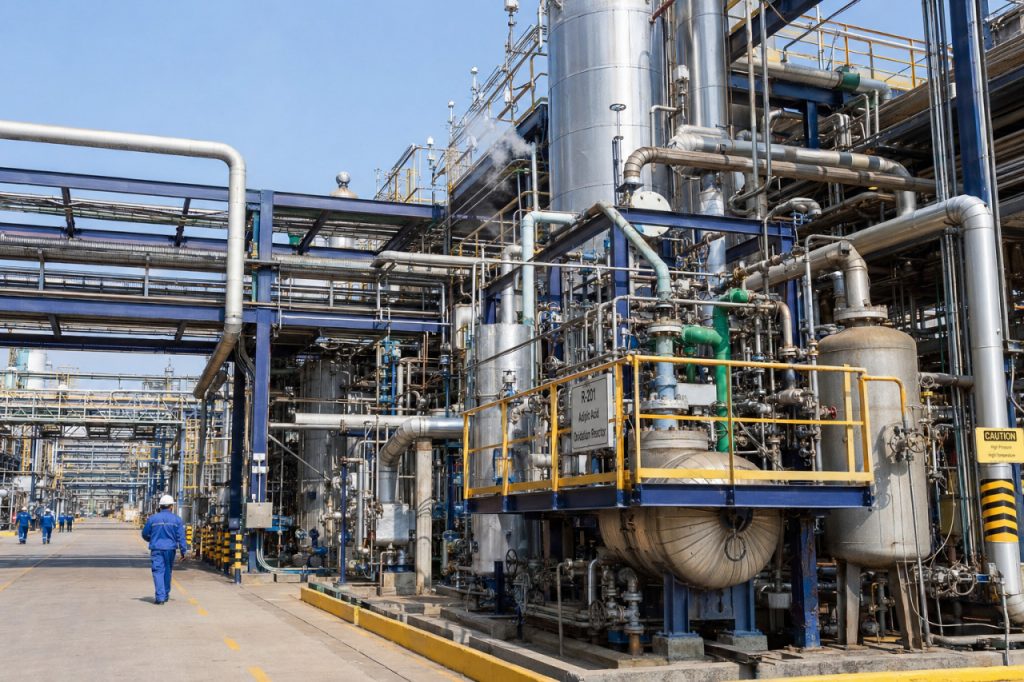
80GHz Radar Level Transmitters for Stable Continuous Measurement
The 80GHz radar level transmitters will mainly be installed at continuous level measurement points, including nitric acid storage tanks, oxidation reactors, intermediate acid vessels, mother liquor tanks, condensate tanks, and finished-product liquid storage tanks.
These vessels may contain acidic gases, steam, condensate, foam, agitators, heating coils, and other internal structures that can interfere with conventional level measurement technologies. Some process media are also highly corrosive, making long-term direct contact between the measuring element and the medium undesirable.
Jiwei 80GHz radar level transmitters use high-frequency millimeter-wave radar technology. They feature a narrow beam angle, concentrated signal transmission, and strong target resolution.
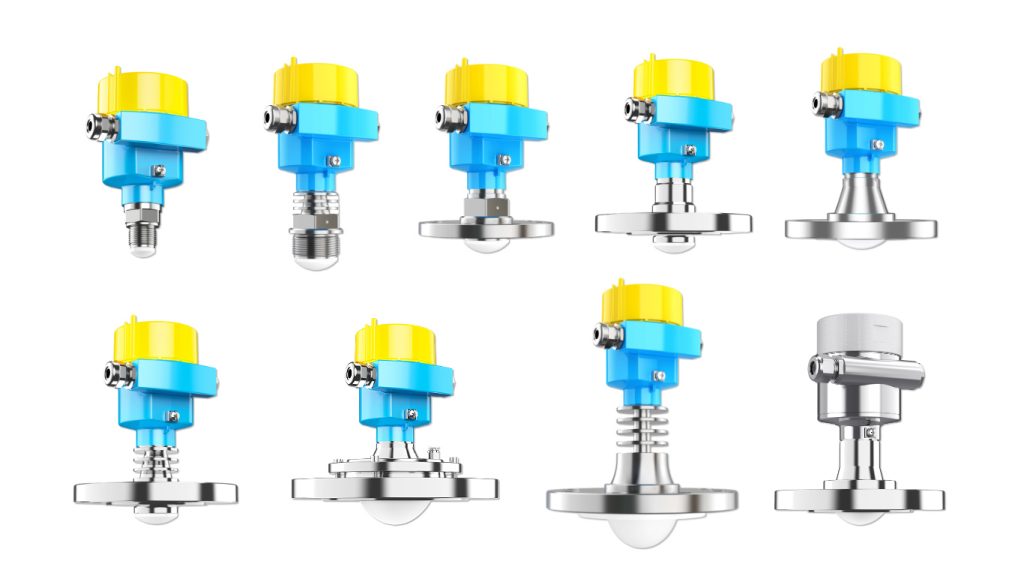
Their non-contact measuring principle prevents direct contact between the instrument and corrosive process media, helping reduce instrument wear and routine maintenance requirements.
In vessels with complex internal structures, the narrow radar beam can more effectively avoid interference from tank walls, coils, agitators, ladders, and other obstacles. Combined with echo learning, false-echo suppression, and interference-masking functions, the transmitter can identify valid echoes and continuously provide reliable level data.
For oxidation-related equipment, the radar level transmitter can maintain stable measurement despite acidic vapor, steam, agitation, and fluctuating liquid surfaces. In mother liquor tanks and intermediate vessels, it can help reduce measurement interference caused by foam, crystallization, condensation, or process turbulence.
To support intelligent maintenance in petrochemical facilities, Jiwei’s JWrada series radar instruments provide remote commissioning, operating-status monitoring, fault diagnosis, and over-the-air software upgrades.
The instruments can also connect to the Jiwei Intelligent Control mobile application or mini program. Maintenance personnel can use a mobile device or management platform to configure parameters, review operating data, and diagnose instrument faults, improving data acquisition, instrument management, and maintenance efficiency.
Ring-11 Tuning Fork Level Switches for Reliable Safety Interlocking
Ring-11 tuning fork level switches will mainly be used for high- and low-level alarms in acid intermediate vessels, mother liquor circulation tanks, washing-liquid tanks, condensate collection vessels, wastewater tanks, and pump inlet buffer vessels.
At these measuring points, the process media may be affected by liquid surface fluctuations, agitation, foam, or slight material adhesion. Conventional level switches may generate false alarms under such operating conditions, disrupting material feeding, discharge, circulation, and interlocking control.
The Ring-11 tuning fork level switch determines whether the fork is covered by monitoring changes in its vibration frequency. Its measurement is largely unaffected by variations in medium color, conductivity, or dielectric constant.
The compact structure and proprietary signal-processing technology enable the instrument to maintain stable operation in the presence of foam, liquid movement, and slight buildup. This helps minimize false alarms and improves the repeatability of point-level detection.
In low-level protection applications for mother liquor circulation tanks, the tuning fork level switch can immediately transmit a low-level signal to prevent circulation pumps from running dry.
At high-level alarm points in wastewater collection tanks, the instrument can provide a reliable switching signal for overflow-prevention interlocks.
When installed in acid intermediate vessels, the Ring-11 can work with a programmable logic controller to manage material inlet and outlet interlocks, helping maintain stable process operation.
Tube-11 Vibrating Rod Level Switches Prevent Silo Overfill and Material Shortages
Tube-11 vibrating rod level switches will mainly be installed at point-level detection locations in finished adipic acid silos, packaging buffer bins, powder conveying bins, intermediate powder silos, and dust collection hoppers.
Finished adipic acid is generally stored and transported as a white crystalline powder or granular material. During storage and conveying, the material may generate significant dust, impact the sensing element during filling, vary in bulk density, adhere slightly to surfaces, or form bridges inside the silo.
If a high-level alarm fails to activate promptly, the silo may be overfilled, causing material overflow and contamination. If a low-level signal is inaccurate, packaging equipment may run out of material, conveying operations may be interrupted, or the production line may stop.
The Tube-11 vibrating rod level switch is suitable for detecting powders, granules, and certain bulk solids. It determines whether material has reached the set position by monitoring changes in the vibration state of the sensing rod.
The instrument offers strong resistance to dust and material impact and can remain reliable in applications involving slight buildup.
At high-level alarm points in finished-product silos, the Tube-11 can stop or limit continued feeding to prevent overfilling.
In packaging buffer bins, a low-level switch can remind the control system to replenish material, helping maintain continuous operation of the packaging line.
When used in dust collection hoppers, the switch can indicate accumulated material levels and help plant personnel schedule ash discharge, cleaning, and maintenance activities.
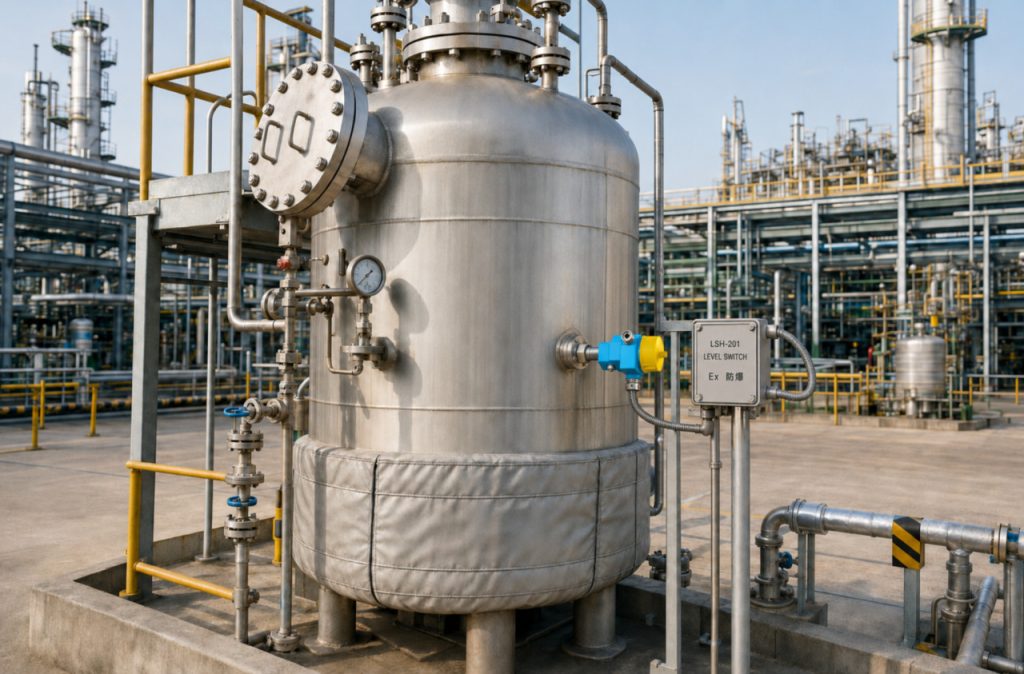
Magnetic Level Gauges Provide Clear Local Level Indication
Magnetic level gauges will mainly be installed on acid storage tanks, intermediate liquid storage tanks, condensate tanks, mother liquor vessels, wastewater tanks, and selected utility tanks.
During routine inspections, plant startup and shutdown, maintenance, and emergency response, operators need to confirm liquid levels quickly and intuitively at the equipment location.
Magnetic level gauges use magnetic coupling to provide direct local level indication. They can operate without an external power supply, making them suitable for applications that require straightforward and dependable visual confirmation of liquid levels.
By selecting appropriate wetted materials for the process medium, magnetic level gauges can also be used for various corrosive-liquid applications.
When equipped with a remote level transmitter and limit switches, the magnetic level gauge can provide local indication, remote monitoring in the control room, and high- and low-level alarms.
For acid storage tanks, the gauge gives inspection personnel a clear visual reference. On condensate or wastewater collection vessels, the local display can be combined with a remote signal to provide confirmation both in the field and in the central control room.
On utility tanks, the instrument offers operating personnel a simple and reliable method of observing liquid-level changes.
This combination of local and remote measurement supports dual verification of process data and improves the reliability of inspection and production management.
Independent Research, Quality Control, and Professional Certifications
Petrochemical plants are typically expected to operate continuously for extended periods. Measurement instruments must therefore deliver more than basic accuracy. They must also provide environmental adaptability, explosion protection, long-term stability, and functional safety.
Jiwei Automation maintains an independent research and development system and a rigorous quality-control process. The company continues to develop technologies in radar measurement, vibration-based point-level detection, magnetic level indication, and intelligent instrument maintenance.
Relevant products have obtained professional certifications, including SIL2 and SIL3 functional safety certification, explosion-proof certification, and CE certification. These certifications provide technical support for the reliable use of Jiwei instruments in demanding industrial environments.
By combining 80GHz radar level transmitters, tuning fork level switches, vibrating rod level switches, and magnetic level gauges, the project solution covers critical measurement points across corrosive liquid tanks, oxidation reactors, mother liquor circulation vessels, condensate tanks, finished-product powder silos, and packaging buffer bins.
The coordinated application of multiple level measurement technologies allows each instrument to be selected according to the specific process medium, vessel structure, operating temperature, pressure, corrosion level, and control requirement.
Reliable Level Data Supports Petrochemical Digitalization
As the petroleum and chemical industries continue to advance digitalization and intelligent manufacturing, production facilities are placing greater emphasis on the accuracy, continuity, transparency, and traceability of field data.
Level information is an essential part of industrial process data. It is used not only to indicate the amount of material inside a tank or silo but also to support automatic control, safety interlocking, equipment protection, production scheduling, inventory management, and predictive maintenance.
Reliable field instrumentation enables plant operators to obtain a clearer understanding of equipment status and process conditions. It also provides an accurate data foundation for distributed control systems, safety instrumented systems, programmable logic controllers, and plant asset management platforms.
A representative of the East China Petrochemical project stated:
“We expect Jiwei’s level measurement instruments to further improve process data acquisition and enhance the transparency of plant operations, providing stronger support for safe, stable, and intelligent production.”
A representative of Jiwei Automation added:
“As digitalization and intelligent transformation continue across the petroleum and chemical industries, stable and reliable level measurement data has become an essential foundation for production management, safety interlocking, and equipment maintenance. Jiwei will combine its professional expertise and independent research capabilities with the actual operating conditions of the project to provide suitable instruments and application services that support long-term, stable plant operation.”
Being qualified as a project partner of East China Petrochemical Co., Ltd. demonstrates Jiwei Automation’s technical capabilities and practical experience in level measurement for complex petrochemical processes.
From corrosive liquid storage tanks and oxidation reactors to mother liquor circulation vessels and finished-product powder silos, Jiwei’s integrated level measurement solution covers the plant’s critical measuring points.
The project will help strengthen safety interlocking, improve process visibility, reduce the risk of equipment failures, and provide reliable data for production management and instrument maintenance.
Looking ahead, Jiwei Automation will continue to focus on the measurement requirements of the petroleum, chemical, power generation, metallurgy, new energy, water treatment, and building materials industries.
Through continued innovation in level measurement and intelligent maintenance technologies, Jiwei Automation is committed to providing safe, stable, and intelligent instrumentation solutions for a broader range of industrial applications.