
Learn how float level transmitters monitor industrial lubrication oil tanks, support low-oil alarms, protect pumps, and help identify abnormal oil consumption.
This article presents an illustrative engineering application, not a documented customer installation.
1. Why Oil Level Monitoring Is Important in Industrial Lubrication Systems
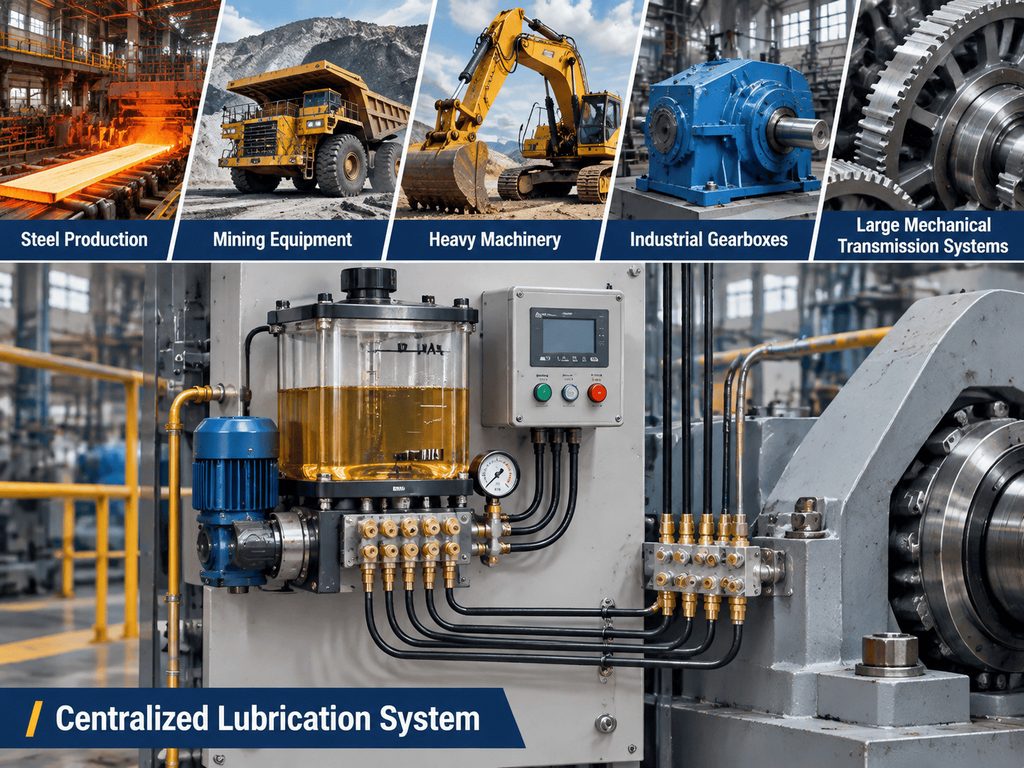
Centralized lubrication systems are widely used in steel production, mining equipment, heavy machinery, industrial gearboxes, and large mechanical transmission systems.
These systems continuously supply lubricating oil to bearings, gears, and other moving components.
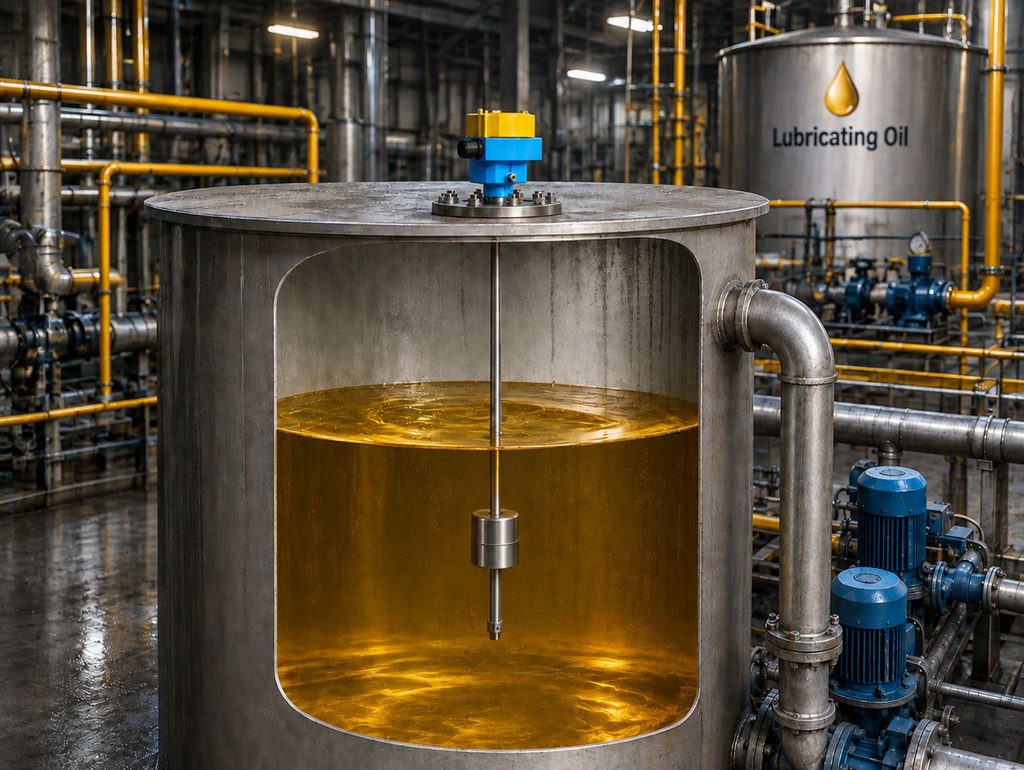
A typical lubrication system consists of an oil reservoir, circulation pumps, filters, cooling equipment, supply piping, and return lines.
The reservoir stores lubricating oil and provides stable suction conditions for the pumps.
If the oil level becomes too low, air may enter the pump, resulting in unstable oil delivery and pressure fluctuations.
Inadequate lubrication can increase friction, raise component temperatures, and accelerate mechanical wear.
For large industrial machines, a lubrication failure may result in substantial equipment damage or production interruption.
Continuous oil level monitoring therefore plays an important role in equipment condition management.
2. Typical Application Scenario
Consider a centralized lubrication station serving a large industrial machine.
The system uses an oil reservoir containing industrial gear oil or circulating lubricating oil.
For this example, assume an effective measuring height of 1200 mm and a normal operating temperature of 30–65°C.
The reservoir operates near atmospheric pressure.
Oil is pumped to the lubrication points and subsequently returns to the reservoir.
During operation, oil quantity may change because of leakage, maintenance draining, or other operating conditions.
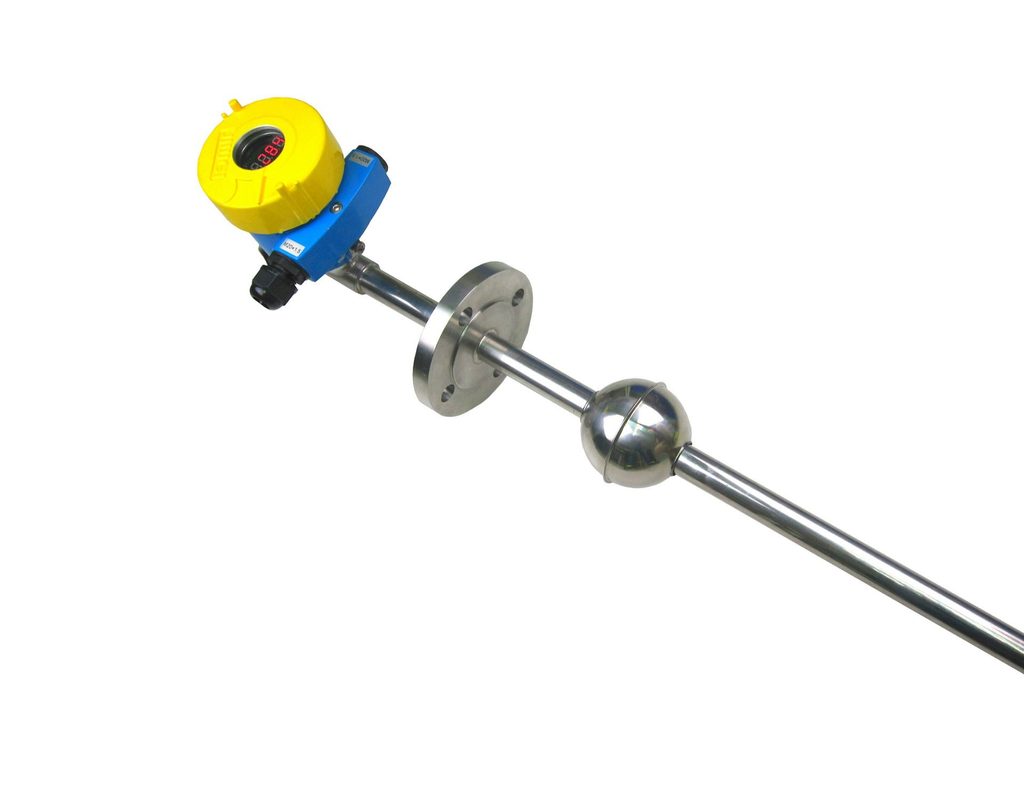
The proposed monitoring system uses a Float-11A float level transmitter to provide continuous level information to the PLC.
3. Challenges in Lubricating Oil Level Measurement
3.1 Oil Density
Float level transmitters depend on buoyancy.
Lubricating oils have different densities depending on their formulation and operating temperature.
The float must therefore be selected according to the oil’s minimum operating density.
A float configured for water should not automatically be assumed suitable for oil.
3.2 Viscosity at Low Temperatures
Some industrial oils become significantly more viscous during cold startup.
Increased viscosity may slow float movement and delay measurement response.
The minimum startup temperature and maximum expected viscosity should be considered during instrument selection.
3.3 Return Flow and Foaming
Oil returning to the reservoir may create turbulence.
If the transmitter is installed near the return inlet, its output may fluctuate.
Some lubrication systems may also experience foaming caused by entrained air.
Foam and bubbles can affect the local liquid conditions around the float.
4. Selecting the Float-11A Transmitter
The Float-11A can be considered for lubricating oils that meet its density, viscosity, temperature, and material compatibility requirements.
The instrument uses a magnetic float moving along a guide tube to detect liquid level changes.
Its internal sensing network produces an electrical signal that is converted to a standard 4–20 mA output.
This enables integration with industrial automation systems.
Selection should include verification of oil grade, minimum density, maximum viscosity, operating temperature, tank geometry, and installation dimensions.
Oil sludge, heavy deposits, or other contaminants may increase the risk of float sticking.
5. Installation in Lubrication Oil Reservoirs
Lubrication reservoirs often contain suction pipes, return lines, filters, and internal supports.
The transmitter should be installed away from direct return-flow impact.
The guide tube must remain vertical, and the float must have sufficient clearance.
Maintenance access should be considered during installation planning.
For top-mounted instruments, adequate space should be available for removal and inspection.
After installation, the transmitter should be checked under both stationary and normal operating conditions.
6. Low-Oil Alarms and Equipment Interlocks
The transmitter’s 4–20 mA output can be connected to the PLC.
For an illustrative 1200 mm measuring range, the system might use the following setpoints:
| Function | Example Level |
|---|---|
| Oil inspection reminder | 500 mm |
| Low-oil alarm | 350 mm |
| Protective interlock | Based on pump suction requirements |
Actual values must be established according to reservoir geometry, minimum pump suction conditions, and equipment risk.
The PLC may issue a warning when the oil level reaches the reminder point.
If the level continues to decrease, a low-oil alarm is generated.
Further protective actions should follow the equipment’s approved control strategy.
Oil level is only one part of lubrication system protection. Oil pressure, temperature, flow, and filter condition may also require monitoring.
7. Using Level Trends to Investigate Oil Leakage
Continuous level monitoring provides useful information for maintenance teams.
If the oil level decreases unusually quickly under similar operating and temperature conditions, personnel can investigate seals, pipe connections, and potential external leakage.
However, lubricating oil expands and contracts as temperature changes.
Oil may also move between system piping and the reservoir during startup and shutdown.
Therefore, level changes should be interpreted alongside oil temperature, operating status, and maintenance records.
A falling level alone does not conclusively establish leakage.
8. Maintenance and Troubleshooting
The float and guide tube should be inspected periodically for sludge accumulation.
If the level output remains unchanged, check whether the float moves freely.
If the output fluctuates excessively, investigate return-flow turbulence, vibration, and electrical interference.
Slow response during cold startup may indicate excessive oil viscosity.
The instrument’s output should also be periodically compared with a reliable reference measurement.
9. Frequently Asked Questions
Can a float level transmitter measure industrial gear oil?
Potentially, yes. The oil’s density, viscosity, and temperature range must be confirmed.
Can oil level monitoring trigger equipment shutdown?
The signal can participate in PLC interlocks, but shutdown logic must be based on equipment-specific risk and operating requirements.
Does every oil level fluctuation indicate a problem?
No. Temperature changes, oil circulation, and operating conditions may affect the reservoir level.
What is the advantage over a traditional oil sight glass?
A continuous transmitter provides remote monitoring, historical trends, and automatic alarms.
10. Conclusion
Continuous oil level monitoring helps improve the visibility and management of industrial lubrication systems.
A properly selected Float-11A float level transmitter can support remote monitoring, low-oil alarms, and maintenance analysis.
For suitable lubricating oils and reservoir configurations, it provides a practical measurement solution for industrial equipment protection.