1. What Is the Echo Learning Function?
During the measurement process of a radar level meter, the instrument emits high-frequency electromagnetic waves toward the liquid or material surface. When these waves reach the surface of the measured medium, they are reflected back. The instrument then calculates the distance between the sensor and the material surface based on the echo signal, thereby obtaining the liquid level or material level height.
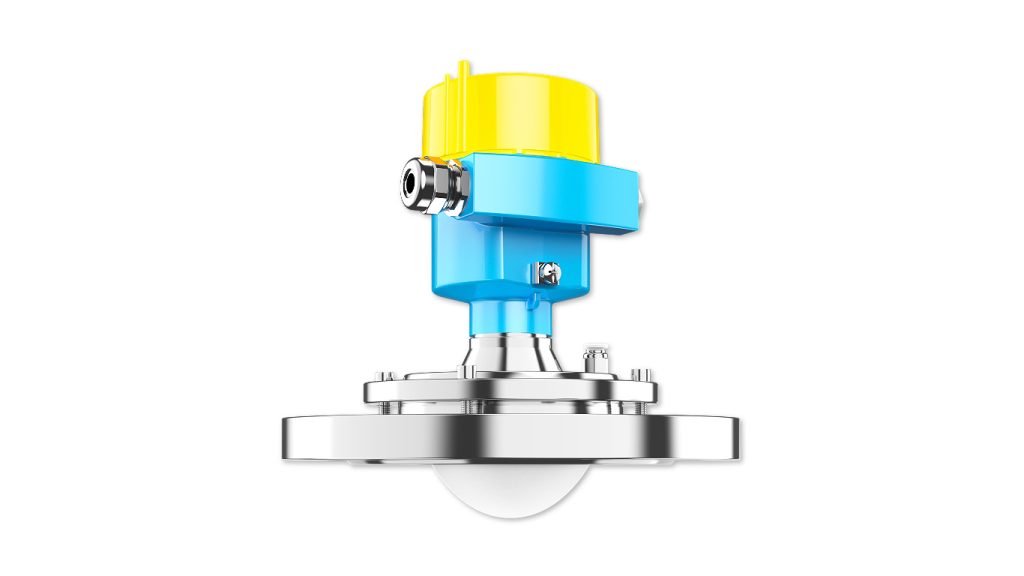
Taking the Jiwei JWrada® series radar level meters as an example, some models adopt 80GHz FMCW frequency-modulated continuous-wave radar technology. They transmit high-frequency electromagnetic waves, receive reflected echoes, perform spectrum analysis, and finally determine the level height.
However, industrial sites are not ideal laboratory environments. When radar waves propagate inside a tank or silo, they may be reflected not only by the real liquid or material surface, but also by agitators, heating coils, tank walls, support rods, mounting nozzles, inlet pipes, weld seams, buildup, foam, dust, and other factors. These reflection signals that do not represent the actual level are usually called false echoes or interference echoes.
The echo learning function refers to the ability of a radar level meter to identify, record, and suppress these false echoes through algorithms. Simply put, it allows the instrument to “remember which echoes should not be treated as the real level.” After echo learning is completed, even if similar interference signals appear again during subsequent measurement, the instrument can reduce the risk of misjudgment through intelligent algorithms and prioritize the valid echo from the real liquid or material surface.
Therefore, echo learning is not just an additional menu option. It is an important core technology that enables high-performance radar level meters to achieve stable measurement, anti-interference measurement, and reliable performance under complex working conditions.
2. Why Do Radar Level Meters Encounter False Echoes?
To understand the importance of echo learning, we must first understand why radar level meters may “misread” a signal.
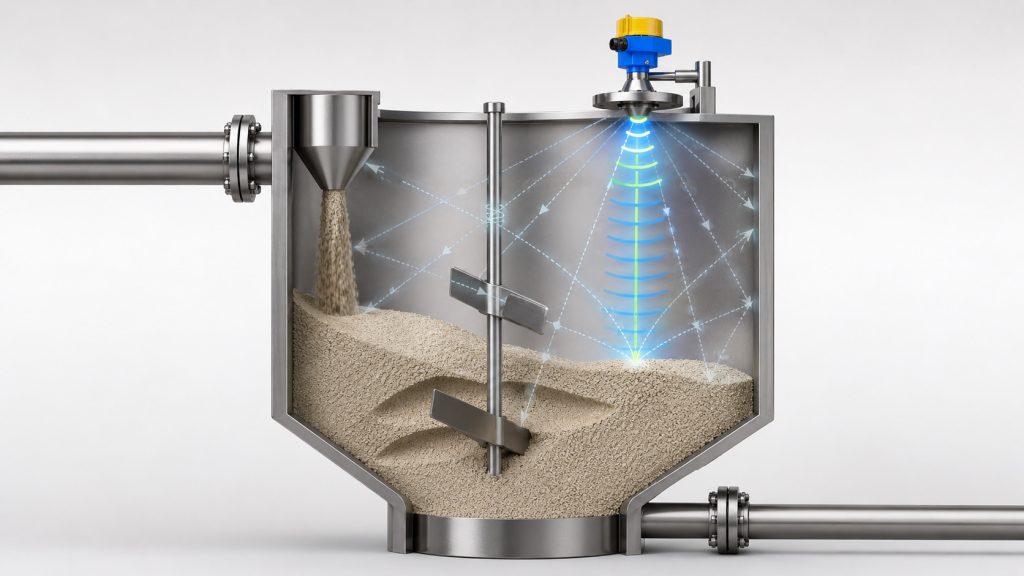
A radar level meter does not receive only one echo. In an actual vessel, when the radar beam travels downward, any structure capable of reflecting electromagnetic waves may generate an echo. Especially in metal tanks, reactors, powder silos, vessels with agitators, high mounting nozzles, conical silo bottoms, domed tank roofs, and other scenarios, the echo signals are often highly complex.
For example, in a reactor with an agitator, the agitator shaft and blades continuously reflect radar waves. In a powder silo, dust, material buildup, sloped material surfaces, and silo walls may all generate interference. In steam or foam applications, the real liquid surface echo may be weakened, while false echoes may become relatively more prominent. In long mounting nozzles, the inner wall of the nozzle may also create strong near-end interference.
If a radar level meter does not have sufficient echo identification capability, it may mistakenly interpret an interference echo as the actual liquid or material level. This can lead to measurement jumps, unstable output, false alarms, or even affect pumps, valves, interlock systems, and production safety.
This is why Jiwei emphasizes intelligent echo processing in its JWrada® radar level meter product descriptions. For example, the JWrada®-32 is equipped with intelligent echo learning and adaptive algorithms, featuring false echo identification, multi-layer echo separation, and dynamic target tracking. The JWrada®-35 also highlights its echo learning and intelligent adaptive algorithm, enabling stable measurement in complex environments.
3. How Does the Echo Learning Function Work?
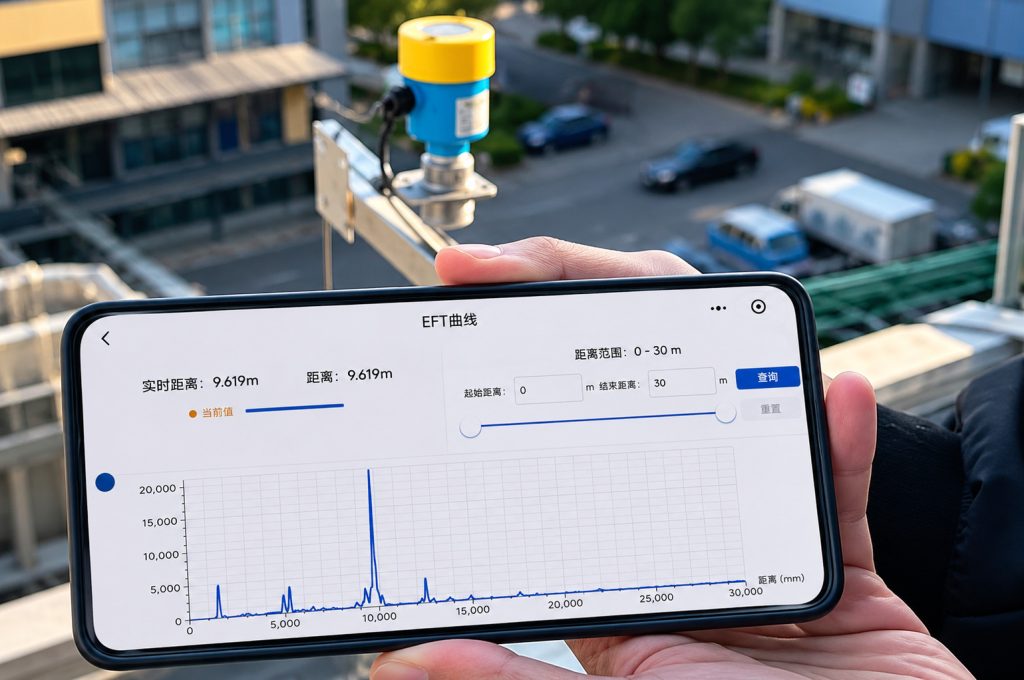
From a technical perspective, echo learning mainly revolves around the “echo curve.” After receiving the returned signals, the radar level meter generates an echo curve. Peaks on the curve represent reflection signals from different distance positions. Some peaks come from the real liquid or material surface, while others come from fixed obstacles or process interference.
Echo learning usually includes several key steps.
First, the instrument scans the echo signals inside the current vessel and generates a complete echo curve.
Second, the system identifies fixed interference caused by mounting nozzles, agitators, support structures, tank wall reflections, and other components.
Third, the instrument stores the position, intensity, and characteristics of these false echoes, forming an interference echo memory.
Fourth, during subsequent measurement, the instrument compares the real-time echo curve with the learned interference characteristics.
Fifth, the instrument combines echo intensity, distance continuity, target movement trends, medium characteristics, and algorithm models to determine which echo represents the true level.
An ordinary radar level meter may simply look for the strongest echo. A high-performance radar level meter, however, requires a more intelligent judgment mechanism. In complex working conditions, the true level echo may not always be the strongest, and false echoes may not always remain unchanged. An excellent echo learning function should not only “remember interference” but also “understand changes.” Through multi-layer echo separation and dynamic target tracking, it improves the reliability of measurement results.
This is exactly why Jiwei JWrada® series radar level meters emphasize “intelligent echo learning,” “adaptive algorithms,” “false echo identification,” and “dynamic target tracking.” For complex vessels and harsh working conditions, the core competitiveness of a radar level meter lies not only in high-frequency hardware, but also in whether it can accurately identify the true echo.
4. Why Do High-Performance Radar Level Meters Need Echo Learning?
1. Because False Echoes Are Inevitable Under Complex Working Conditions
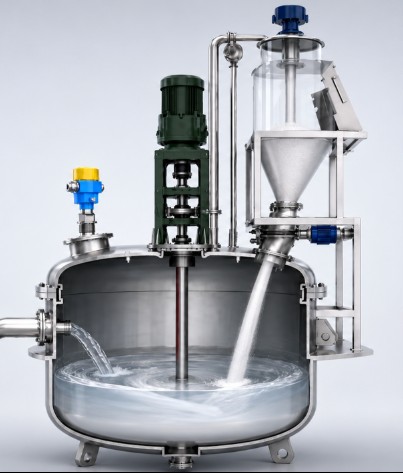
In real industrial applications, ideal empty tanks, straight cylindrical vessels, and obstruction-free installation conditions are not common. More often, level measurement takes place in complex vessels involving agitation, coils, steam, foam, dust, buildup, corrosion, high temperature, and high pressure.
The product information for Jiwei JWrada®-35 radar level meters clearly states that the instrument is suitable for high-temperature, high-pressure, and highly corrosive environments. It is also applicable to level measurement of low-dielectric-constant powders, solid particles, dusty environments, steam, and foam. These are precisely the conditions where false echoes are most likely to occur and measurement becomes most difficult.
Therefore, high-performance radar level meters must have echo learning capability. Otherwise, once agitator interference, dust interference, steam interference, or internal structure reflection occurs, the instrument may fail to stably identify the real level.
2. Because False Echoes Directly Affect Measurement Accuracy
Measurement errors in radar level meters often occur not because the instrument fails to receive a signal, but because it selects the wrong signal.
For example, the real liquid level may be at 6 meters, while a metal support inside the tank generates a strong reflection at 3 meters. If the instrument mistakenly treats the echo at 3 meters as the liquid surface, it will output a completely incorrect level value. What is even more dangerous is that this type of error may not always appear as obvious fluctuation. Sometimes it outputs a stable but incorrect value, misleading the control system.
In tank inventory management, an incorrect level reading can cause inventory deviation. In pump protection, it may lead to dry running. In overflow alarm systems, it may cause false alarms or missed alarms. In chemical dosing processes, it may even affect material ratios and safety interlocks.
The value of the echo learning function is to minimize these “seemingly normal but actually wrong” measurement risks.
3. Because High Performance Means Not Only High Accuracy, but Also High Reliability
When selecting radar level meters, many users focus on measuring range, accuracy, output signal, explosion-proof rating, and process temperature. However, for complex working conditions, the factors that truly determine long-term performance are often anti-interference capability and echo processing capability.
For example, the Jiwei JWrada®-31 radar level meter uses 80GHz technology, has a maximum measuring range of up to 10 meters, and emphasizes high accuracy, high signal-to-noise ratio, intelligent echo learning, and adaptive algorithms. It is suitable for liquid level measurement in industries such as pharmaceuticals, food, energy, hydrology, and water treatment.
This shows that the value of a high-performance radar level meter is not merely the “±1 mm” specification on the datasheet, but its ability to provide stable and reliable data in complex vessels.
In other words, high accuracy solves the problem of “measuring precisely,” while echo learning solves the problem of “identifying correctly.” Only when the instrument first identifies the true echo can its accuracy become meaningful.
4. Because Echo Learning Reduces Commissioning and Maintenance Costs
Without echo learning, once interference echoes appear on site, engineers often need to solve the problem by changing the installation position, adjusting the antenna angle, adding a stilling well, shortening the mounting nozzle, or avoiding the agitator. These methods may be effective, but they can involve shutdown, tank opening, mechanical modification, and reinstallation, all of which are costly.
With echo learning, many fixed interferences can be suppressed through software settings and intelligent algorithms. Engineers can allow the instrument to learn the interference characteristics of the current vessel during commissioning, and later determine whether optimization is needed by checking the echo curve and historical data. This improves commissioning efficiency and reduces long-term maintenance difficulty.
For field instrumentation personnel, a good radar level meter should not only “measure after installation,” but also be easy to commission, stable in operation, and convenient to diagnose when problems occur.
5. Which Working Conditions Especially Require Echo Learning?
The echo learning function is particularly important in the following scenarios.
Reactors with agitators. Agitator shafts, blades, and baffles generate strong interference echoes, while liquid surface fluctuation may also make the true echo unstable.
Storage tanks with heating or cooling coils. Metal coils have strong reflection capability and can easily form false echoes at fixed positions.
Powder silos and granular material silos. Dust, feeding impact, material slope, and wall buildup can make the echo curve more complex.
Steam and foam conditions. Steam may weaken the signal, while foam may absorb or scatter radar waves, resulting in a weaker true liquid surface echo.
Long nozzles or high mounting nozzles. The inner wall of the mounting nozzle may generate near-end reflections, affecting close-range measurement.
Domed tank roofs or irregular vessels. Multiple reflections are more likely to occur, and the instrument may receive echoes from indirect paths.
Low-dielectric-constant media. When the medium has weak reflectivity and the true echo is not obvious, false echoes are more likely to interfere with judgment.
Critical interlock control points. When liquid or material level signals are directly involved in safety control, pump and valve control, or overflow protection, measurement reliability becomes even more important.
For these scenarios, it is recommended to prioritize high-performance radar level meters with intelligent echo learning, adaptive algorithms, false echo identification, and dynamic tracking capabilities.
6. The Value of Echo Learning in Jiwei Radar Level Meters
Looking at the Jiwei JWrada® series radar level meters, the value of echo learning is mainly reflected in the following aspects.
First, it improves measurement stability under complex working conditions. Product information for Jiwei JWrada®-31 and JWrada®-35 both emphasizes intelligent echo processing capabilities, including false echo identification, multi-layer echo separation, and dynamic target tracking. These functions help the instrument maintain relatively stable output even when the tank structure is complex and echo signals are mixed.
Second, it enhances the instrument’s adaptability to site changes. Industrial conditions are not static. The dielectric constant of the material, surface state, foam thickness, dust concentration, steam intensity, and degree of buildup may all change over time. Echo learning combined with adaptive algorithms helps the instrument better adapt to these changes.
Third, it improves commissioning convenience. Jiwei JWrada® radar level meters support HART communication and Bluetooth modules, and can work with the JW Tools WeChat mini program and app for on-site wireless commissioning and monitoring. For field engineers, wireless viewing, configuration, and monitoring of instruments can significantly improve commissioning efficiency.
Finally, it makes domestic high-performance radar level meters more suitable for replacing imported instruments. In industries such as chemical processing, food, pharmaceuticals, water treatment, energy, building materials, and metallurgy, users need instruments that not only “can measure,” but can also operate reliably over the long term under complex working conditions. Echo learning is one of the key indicators for evaluating whether a radar level meter is capable of high-end applications.
7. Is the Echo Learning Function Omnipotent?
Echo learning is important, but it is not a universal remedy. No matter how powerful the algorithm is, it cannot fully replace correct model selection and standardized installation.
First, radar level meters should be installed away from inlet streams, agitators, obvious obstacles, and strong impact areas whenever possible. Jiwei JWrada® product installation instructions also remind users not to install the instrument directly above the inlet flow, and to install it as far away from the agitator as possible when agitation is present, in order to reduce interference.
Second, the appropriate radar model should be selected according to the working conditions. For small-range, hygienic, and compact installation scenarios, small-range high-frequency radar liquid level meters can be considered. For high-temperature, high-pressure, highly corrosive, dusty, steam-heavy, or long-range material level measurement conditions, a model better suited to complex applications should be selected.
Third, echo learning must be performed under suitable conditions. If learning is carried out at the wrong liquid level, during severe fluctuation, or under heavy interference, subsequent judgment may be affected. Therefore, during on-site commissioning, the actual level, vessel structure, and echo curve should all be considered.
Finally, after working conditions change, reassessment is also necessary. If new internal components are added, severe wall buildup occurs, condensation forms on the antenna, the medium changes, or the installation position is adjusted, the original learning results may no longer be fully applicable. In such cases, the instrument should be checked and optimized again.
8. How to Evaluate Echo Learning Capability When Selecting a High-Performance Radar Level Meter
When selecting a radar level meter, users should not only look at price, measuring range, and accuracy. They should also pay close attention to the following questions:
Does the instrument have false echo identification capability?
Does it support intelligent echo learning or echo mapping?
Does it support multi-layer echo separation?
Does it have dynamic target tracking capability?
Can it adapt to complex conditions such as agitation, foam, steam, dust, and buildup?
Does it support convenient commissioning and remote monitoring?
Does it have mature industry application cases?
Can models be selected according to different working conditions such as liquids, powders, granules, corrosive media, high temperature, and high pressure?
If a radar level meter only emphasizes “high accuracy” but does not clearly explain its echo processing capability, it may be suitable for simple storage tanks, but not necessarily for complex working conditions. A truly high-performance radar level meter must combine high-frequency hardware, a high signal-to-noise ratio, excellent antenna design, and intelligent echo algorithms.
9. Conclusion: Echo Learning Is the Key Ability That Enables Radar Level Meters to “Understand” Echoes
The essence of the echo learning function is to upgrade a radar level meter from simply “receiving echoes” to accurately “identifying true echoes.” In complex industrial sites, the signals received by the instrument often include both true liquid or material surface echoes and false echoes caused by agitators, pipes, tank walls, dust, foam, steam, buildup, and other factors. If these signals cannot be accurately distinguished, even high accuracy specifications cannot deliver real value.
High-performance radar level meters need echo learning because there is never only one echo in an industrial vessel. A truly excellent radar level meter must not only measure far and measure accurately, but also determine which echo represents the true level under complex working conditions.
Based on the Jiwei JWrada® series radar level meters, intelligent echo learning, adaptive algorithms, false echo identification, multi-layer echo separation, and dynamic target tracking are key technologies for improving measurement reliability under complex working conditions. For users in chemical processing, food, pharmaceuticals, water treatment, energy, building materials, metallurgy, and other industries, choosing a high-performance radar level meter with echo learning capability means more stable measurement, fewer false alarms, lower maintenance costs, and higher production safety.
In one sentence: The echo learning function is the intelligent core that enables high-performance radar level meters to achieve stable, accurate, and reliable measurement under complex working conditions.