Introduction
Black liquor level measurement is an important part of the chemical recovery process in kraft pulp mills.
Although black liquor is stored and transferred as a liquid, it is far more challenging to measure than ordinary process water.
Its concentration changes throughout the recovery cycle. Temperature can be elevated. Vapor may be present above the liquid. Foam and surface movement can occur, while deposits can gradually form on tank walls and process equipment.
For a level instrument, these conditions create a demanding operating environment.
Reliable level information supports pump control, material balance, evaporation processes, recovery operations, and overflow prevention.
This article explains the main measurement challenges and why non-contact radar is frequently considered for black liquor tanks.
What Is Black Liquor?
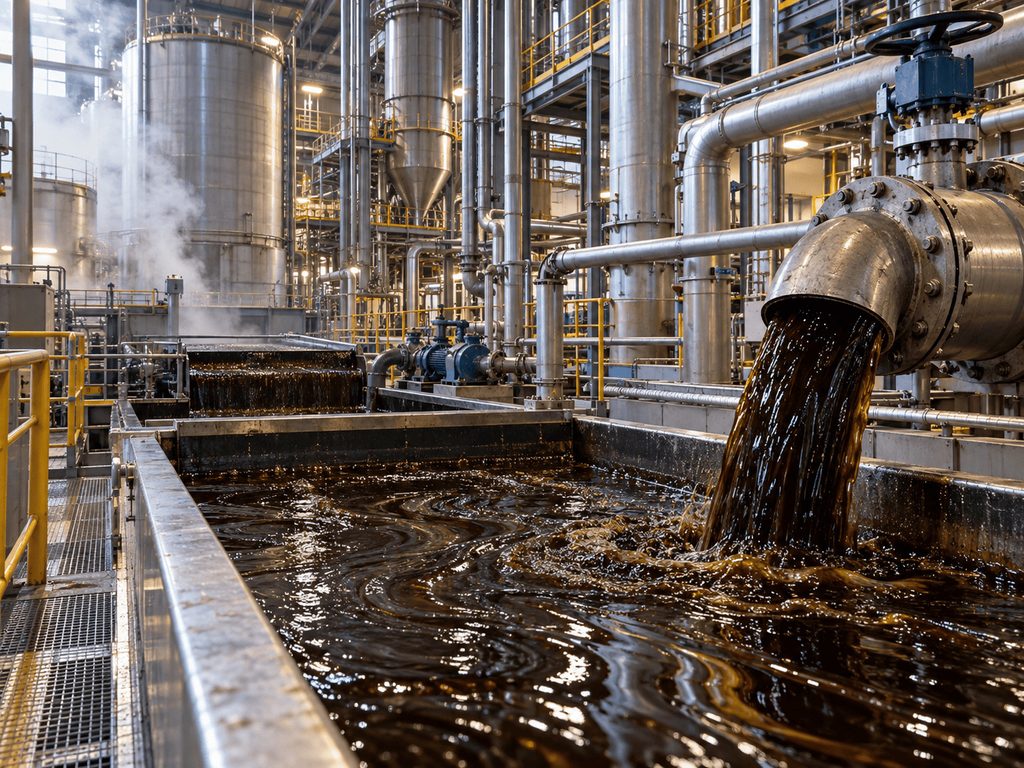
During kraft pulping, wood chips are cooked with alkaline chemicals to separate cellulose fibers from lignin and other wood components.
The resulting spent cooking liquor contains dissolved organic material together with inorganic pulping chemicals.
This mixture is known as black liquor.
Black liquor is subsequently concentrated and processed in the chemical recovery system.
Depending on its location in the process, the liquor may be relatively dilute or highly concentrated.
As concentration increases, physical properties can change substantially.
That variation is important when choosing level measurement technology.
Why Accurate Black Liquor Level Measurement Matters
Black liquor moves through several stages before chemical recovery is completed.
Storage and process vessels often act as buffers between different parts of the plant.
If level measurement becomes unreliable, process control can suffer.
A low tank level may cause:
- Pump suction problems
- Unstable process feed
- Reduced production continuity
A high level can increase the risk of:
- Overflow
- Process loss
- Contamination
- Safety incidents
A stable continuous level signal allows operators and control systems to manage transfer pumps and valves more effectively.
Why Black Liquor Is Difficult to Measure
1. High Temperature
Some black liquor applications operate at elevated temperature.
Temperature affects the instrument materials, seals, process connection, and surrounding vapor conditions.
The level sensor must be selected according to the real maximum operating temperature rather than normal ambient conditions.
2. Vapor
Hot liquor can generate significant vapor above the liquid.
This is particularly relevant for acoustic measuring technologies because sound velocity depends on gas conditions.
Radar uses electromagnetic waves and is therefore less dependent on the gas-phase properties above the product.
3. Material Deposits
Black liquor can create deposits on tank walls and equipment.
Contact probes are directly exposed to these deposits.
Even non-contact instruments should be positioned to reduce the risk of heavy contamination on the antenna.
4. Foam
Process movement can create foam.
Foam behavior should be evaluated rather than ignored.
A light foam layer may have limited influence, while dense wet foam can create an additional reflecting surface.
5. Changing Process Conditions
Black liquor properties vary with concentration and process stage.
The measurement solution should therefore remain stable when liquid properties change within the expected operating range.
Why Use Non-Contact Radar?
Radar level meters are mounted above the liquid and determine level by measuring the distance to the process surface.
This provides several practical advantages.
Reduced Direct Contact
The main sensing element does not need to remain immersed in the liquor.
This reduces continuous exposure to the process medium.
Less Dependence on Density
Hydrostatic level systems derive level from pressure and liquid density.
When product density changes, measurement accuracy can be affected unless compensation is applied.
Radar directly measures distance to the liquid surface.
Good Performance in Vapor
Electromagnetic waves are less dependent on gas-phase temperature and composition than sound waves.
This makes radar attractive for hot tanks containing vapor.
Suitable for Closed Tanks
Radar can be installed on the top of a closed vessel and connected to the plant control system for continuous monitoring.
Why 80 GHz Radar Can Be Useful
A pulp mill tank often contains pipes, supports, ladders, inlet arrangements, or other structures.
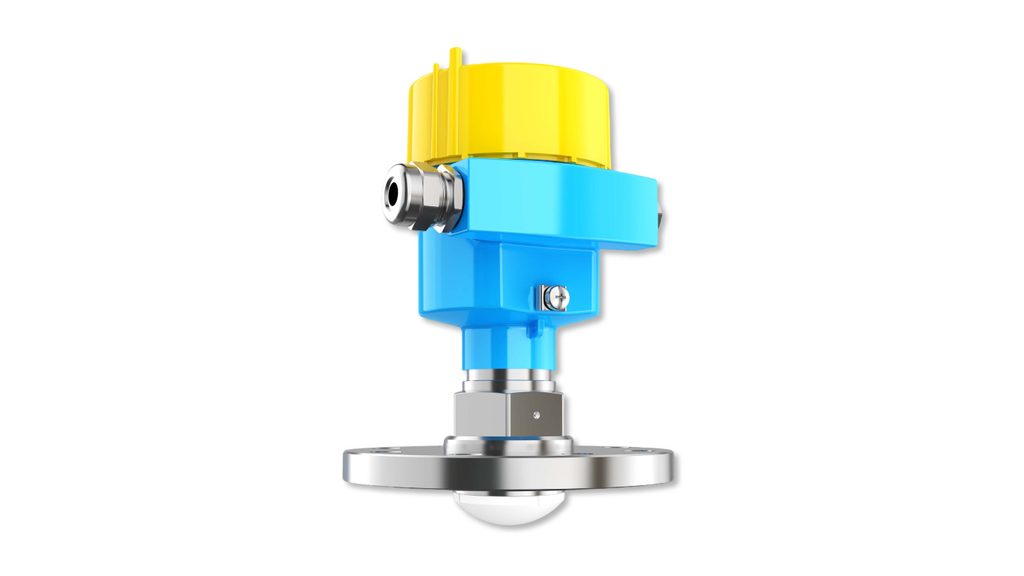
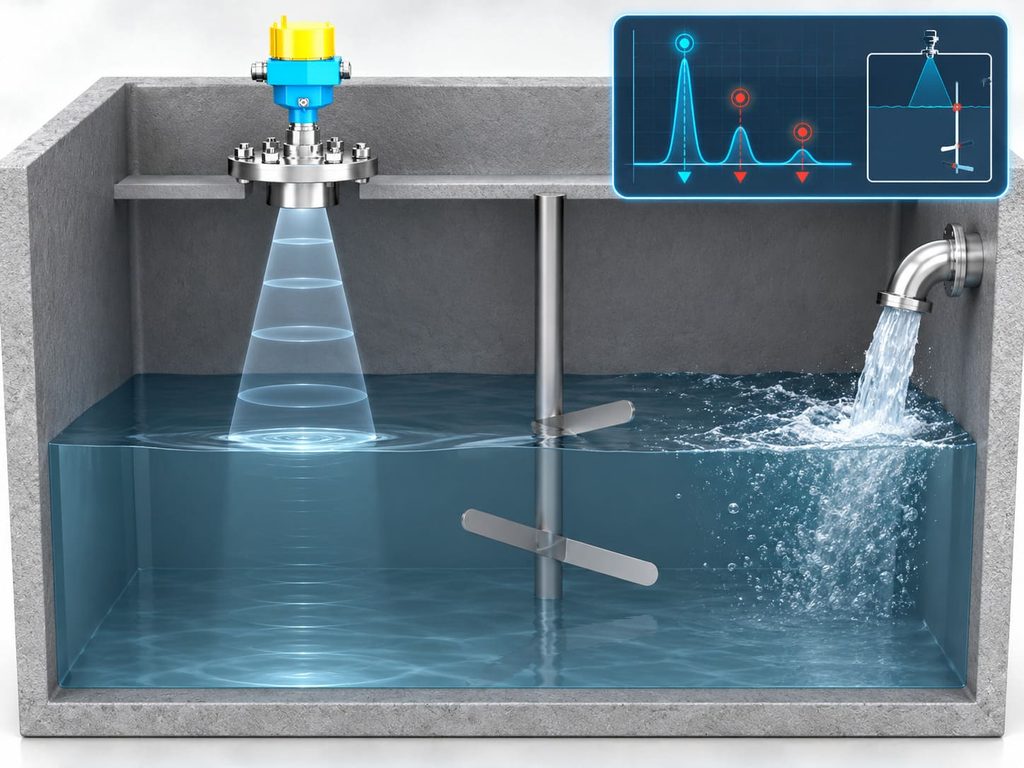
High-frequency radar can produce a narrow measurement beam.
A narrow beam helps engineers direct the signal toward a clear part of the liquid surface.
This reduces unwanted reflections from tank internals.
High-resolution signal processing can also help distinguish the changing liquid surface from fixed interference echoes.
Selecting a Radar Level Meter for Black Liquor
Do not select an instrument based only on measuring range.
Several process parameters should be confirmed.
Temperature
Determine both normal and maximum process temperature.
Pressure
Confirm whether the tank is atmospheric, slightly pressurized, under vacuum, or operating at higher pressure.
Tank Height
Measure the distance from the sensor reference point to the bottom of the vessel.
Maximum Level
The instrument must still measure reliably when liquid approaches the upper operating limit.
Foam
Describe expected foam thickness and stability.
Internal Structures
Identify agitators, heating coils, pipes, beams, ladders, and inlet streams.
Process Connection
Confirm available flange size and nozzle dimensions.
Chemical Compatibility
Any materials exposed to the process environment must be compatible with the liquor and vapor.
Installation Recommendations
Select a Clear Measuring Area
The antenna should have a clear path toward the liquid surface.
Avoid mounting directly above large internal structures.
Avoid the Fill Stream
Incoming liquor can produce splashing, waves, and temporary false reflections.
Move the measurement point away from the inlet when possible.
Consider Buildup
Choose a position less likely to experience direct splashing or heavy deposits.
Check Mounting Nozzle Geometry
Long, narrow, or obstructed nozzles can reduce measurement performance.
The radar antenna and process connection should match the available nozzle.
Perform False-Echo Mapping
Fixed tank structures can be identified during commissioning.
Echo-learning functions can help suppress these interference signals.
Radar vs. Differential Pressure
Differential-pressure transmitters have historically been used for many process tanks.
They can provide reliable measurement where density is stable and impulse lines remain clean.
However, black liquor applications may present complications.
Changes in density can influence hydrostatic calculations.
Impulse lines may also require maintenance if deposits or plugging occur.
Radar avoids impulse lines and measures surface distance directly.
This does not mean differential pressure is unsuitable in every case. The correct technology depends on plant design and maintenance strategy.
Radar vs. Ultrasonic
Ultrasonic measurement is also non-contact.
However, ultrasonic instruments depend on sound propagation through the vapor space.
Hot vapor, condensation, and temperature gradients can affect acoustic performance.
Radar is generally more suitable where these conditions are severe.
Continuous Measurement and Independent Overflow Protection
A continuous radar transmitter can supply the normal process level to the PLC or DCS.
For critical vessels, plants may also install an independent point level switch as a high-high alarm.
The two devices perform different functions.
Continuous radar supports process control, while the independent switch can provide an additional protection layer.
Maintenance Considerations
Non-contact measurement can reduce maintenance, but it should not be interpreted as “zero maintenance.”
Periodic inspection should check:
- Antenna cleanliness
- Cable condition
- Process seal
- Housing integrity
- Echo quality
- Configuration changes
Plants with heavy deposits may establish inspection intervals based on actual operating experience.
Jiwei Radar Level Solutions for Recovery Applications
Jiwei provides industrial radar level measurement solutions for liquid tanks and demanding process applications.
The appropriate configuration should be selected according to black liquor concentration, temperature, pressure, tank dimensions, vapor conditions, and corrosion requirements.
For complex vessels, 80 GHz radar offers a focused measurement beam and advanced echo processing that can help reduce interference from tank internals.
Before selecting a model, providing a vessel drawing and actual process data allows a more reliable recommendation.
Conclusion
Black liquor is one of the more demanding liquid level applications in a pulp mill.
Temperature, vapor, deposits, foam, and changing process properties can all influence the performance of conventional measuring technologies.
Non-contact radar provides a practical way to measure the liquid surface without continuously immersing a sensing element in the liquor.
High-frequency radar can further improve installation flexibility because of its narrow beam.
Successful measurement, however, still depends on selecting the correct materials, process connection, installation position, and configuration.
A detailed engineering review remains the best way to achieve stable long-term performance.
FAQ
Is radar suitable for black liquor?
Yes, radar can be suitable for many black liquor tanks, particularly where non-contact measurement and resistance to vapor conditions are important.
Does black liquor foam affect radar?
It can. The effect depends on foam thickness, moisture, density, and stability.
Is radar affected by changing black liquor density?
Radar measures the distance to the surface and does not use liquid density to calculate level.
Can radar work in hot black liquor tanks?
Appropriate radar configurations can be selected for elevated temperatures, but maximum process temperature and process connection requirements must be confirmed.