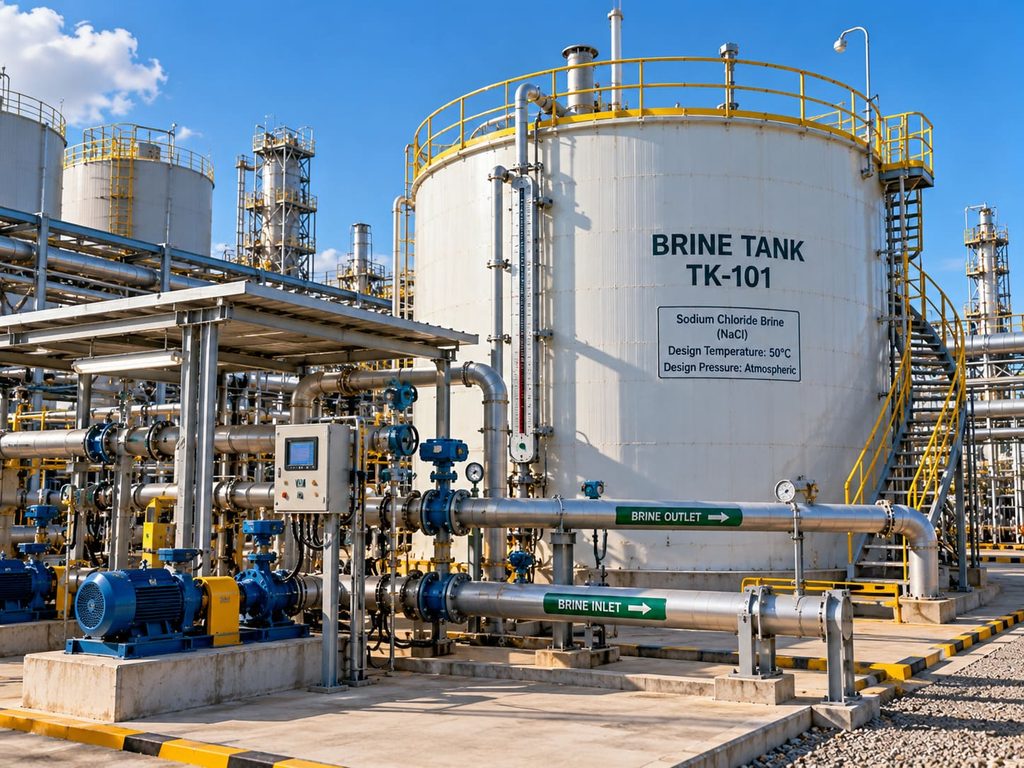
Brine is used throughout chemical processing, water treatment, food production, refrigeration, mining, desalination, and many other industries.
At first glance, measuring the level of salt water appears easy.
The real challenge is that concentrated brine can be corrosive and can leave salt deposits wherever evaporation or cooling occurs.
The Two Main Problems: Corrosion and Crystallization
Instrument materials must be compatible with the actual brine composition.
“Salt water” is not a complete material specification.
Chloride concentration, temperature, pH, additional chemicals, and contaminants can significantly affect corrosion behavior.
Crystallization creates a different problem.
Salt can accumulate around probes, process connections, floats, pressure taps, and radar antennas. A device may operate perfectly when first installed but gradually become less reliable as deposits grow.
Why Non-Contact Radar Is Attractive
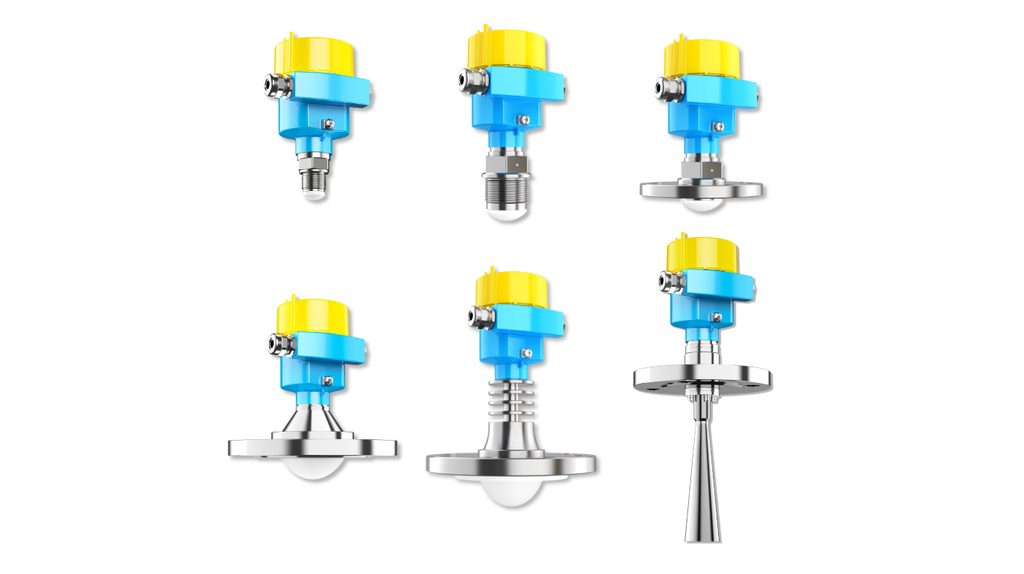
A top-mounted radar level transmitter can measure the liquid surface without immersing a long sensing element in the brine.
This reduces the amount of wetted measurement hardware and avoids mechanical float movement through the process liquid.
Radar measurement is also not calculated from hydrostatic pressure, so changes in liquid density do not directly change the level calculation.
However, corrosive vapor and condensation can still reach the antenna and process seal. Material compatibility therefore remains important even for non-contact measurement.
Crystals Around the Antenna
A common misconception is that a non-contact sensor cannot become contaminated.
In reality, vapor can condense on a cooler antenna or mounting connection. Water then evaporates and leaves salt behind.
Repeated cycles can gradually create a crystal layer.
The installation should therefore minimize cold spots and areas where condensate can collect.
For severe applications, inspection, cleaning, temperature control, or a suitable purge arrangement may be considered.
Hydrostatic Measurement
A pressure transmitter can provide practical level measurement in many brine tanks.
The important limitation is density.
Hydrostatic pressure depends on both liquid height and density. If brine concentration changes significantly, a transmitter calibrated for one density may indicate a different level even when the actual liquid height has not changed.
Where density is stable, this may be manageable. Where concentration varies, the expected error should be evaluated.
Magnetic and Float Instruments
Float and magnetic level instruments can provide useful local indication or switching functions.
Their suitability depends on corrosion resistance, liquid density, and the likelihood of salt crystals restricting float movement.
A bypass chamber that is rarely flushed can become a location for salt accumulation.
Maintenance access and drain connections should therefore be considered during design.
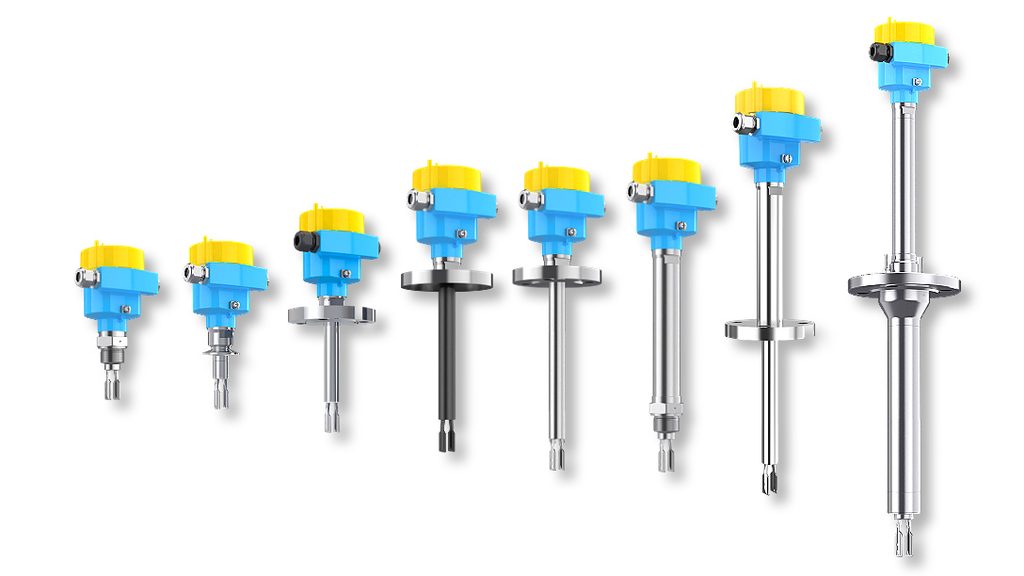
Point Level Alarms
Brine storage systems often require high-level overflow protection and low-level pump protection.
An independent point level switch can be useful, but its wetted materials and resistance to crystal buildup should be evaluated carefully.
The alarm device should be function-tested at intervals appropriate for the importance of the application.
Installation and Maintenance Considerations
Reliable brine tank level measurement also depends on installation and maintenance.
For radar instruments, the antenna should have a clear view of the liquid surface, while the mounting nozzle should be designed to minimize condensate and salt buildup. Internal pipes, ladders, filling streams, and other structures should be considered because they may affect the radar signal.
Material compatibility should include not only the sensor but also the flange, gasket, process seal, and other components exposed to the brine or vapor space.
Regular inspection is important because salt crystals can gradually accumulate around antennas, pressure connections, floats, or bypass chambers. These deposits may reduce measurement reliability over time.
Where crystallization is expected, the installation should allow convenient inspection, cleaning, flushing, or removal of the instrument. Designing the measurement point with maintenance access in mind can significantly improve long-term performance.
Conclusion
Reliable brine tank level measurement requires engineers to solve two problems at the same time: chemical compatibility and salt deposition.
Radar, pressure, float, magnetic, and point-level technologies can all be suitable under the right conditions.
The correct choice depends on concentration stability, temperature, corrosion, crystallization, tank geometry, and maintenance strategy.
For difficult concentrated-brine applications, reducing unnecessary contact with the liquid and designing the installation for easy inspection and cleaning can significantly improve long-term reliability.