Vibrating tuning fork level switches are widely used in petroleum, chemical processing, pharmaceuticals, food and beverage, water treatment, machinery, and many other industrial applications. They are commonly installed on tanks, vessels, and pipelines for high-level alarms, low-level alarms, pump protection, and overfill prevention.
Compared with float switches, electrode level switches, and capacitive level switches, a tuning fork level switch has no moving mechanical parts and is relatively unaffected by properties such as electrical conductivity or dielectric constant. This makes it highly suitable for demanding industrial applications.
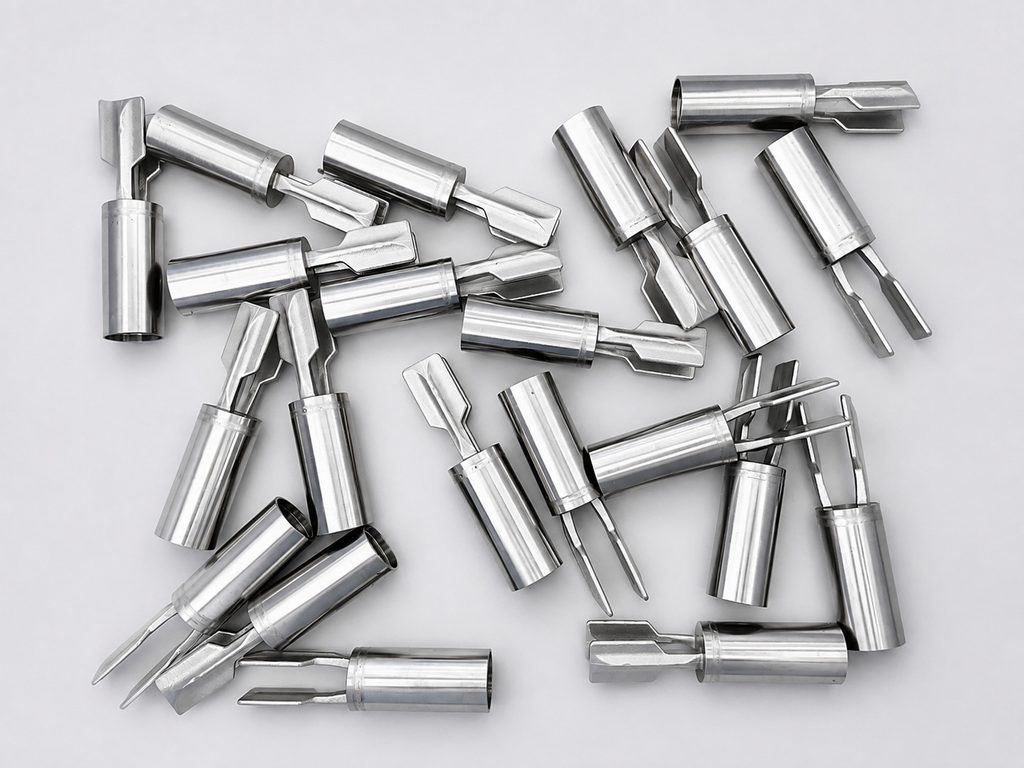
However, the long-term stability of a tuning fork level switch does not depend only on its electronics or housing design. The tuning fork itself, which directly contacts the process medium and performs the vibration sensing function, is one of the most critical parts of the instrument.
During manufacturing, there is an important process that may appear simple but has a significant influence on performance: tuning the fork body.
So why does the fork of a vibrating level switch need to be tuned? What exactly is being adjusted? And what benefits does proper fork tuning provide in real-world level detection?
1. How Does a Tuning Fork Level Switch Detect Liquid Level?
To understand why fork tuning matters, it is first necessary to understand the working principle of a tuning fork level switch.
A vibrating tuning fork level switch generally uses piezoelectric elements to excite the fork into vibration. Once powered, the fork continuously vibrates at a frequency determined by its mechanical resonance characteristics.
When the fork is in air, it vibrates at a relatively stable resonant frequency.
When the process liquid rises and immerses the fork, the liquid introduces additional mass and damping. This changes the vibration characteristics of the fork. One of the most important changes is a decrease in resonant frequency.
The electronic circuit continuously monitors this frequency change.
Once the frequency variation reaches a defined threshold, the electronics determine whether the fork is covered or uncovered by liquid. The instrument then generates a relay, transistor, or other switching output for use in alarm systems, interlocks, pump protection, or process control.
In other words, a tuning fork level switch does not simply determine whether the fork has physically touched the liquid.
It continuously analyzes:
How much has the vibration condition of the fork changed?
For this reason, a stable, repeatable, and clearly defined baseline resonant frequency is essential.
That is one of the fundamental reasons why the fork body needs to be precisely tuned.
2. What Is Fork Tuning in a Tuning Fork Level Switch?
In theory, if the fork length, thickness, material, geometry, and mass distribution were absolutely identical, every tuning fork produced to the same design would have exactly the same resonant frequency.
In industrial manufacturing, however, actual components are never purely mathematical models.
A tuning fork passes through multiple production processes, including machining, forming, welding, surface treatment, and assembly. Even with high-precision manufacturing, tiny differences can still occur in dimensions, local stiffness, mass distribution, and other mechanical characteristics.
A tuning fork is fundamentally a mechanical resonance system.
Small changes in fork length, thickness, material density, elastic modulus, cross-sectional geometry, and structural stiffness can all influence its final resonant frequency.
For this reason, after the main manufacturing processes are completed, the actual vibration characteristics of the fork need to be measured. The fork can then be finely adjusted according to the designed nominal frequency.
This process is commonly referred to as fork tuning or tuning fork calibration.
Fork tuning is not simply about making the fork vibrate.
The real purpose is:
To ensure that the mechanical vibration characteristics of each manufactured fork are as close as possible to the intended design target.
The concept is somewhat similar to tuning a musical instrument.
Two strings with similar dimensions can produce different tones if their tension differs. Industrial tuning forks operate according to a similar physical principle. The difference is that a level switch is not concerned with whether the sound is pleasant—it is concerned with whether the vibration frequency is accurate, stable, and easy to detect.
3. Benefit One: A More Stable Baseline Resonant Frequency
A tuning fork level switch identifies the presence or absence of liquid by analyzing changes in the vibration behavior of the fork.
Therefore, the instrument first needs a reliable baseline condition.
If the resonant frequency of the fork in air is already significantly different from the intended design range, the frequency change caused by liquid immersion may not correspond correctly with the detection range of the electronic circuit.
In more serious cases, this can lead to inconsistent switching behavior.
Proper tuning helps bring the actual mechanical resonance of the fork closer to the designed target frequency.
As a result, the electronics can evaluate the fork condition within a more predictable frequency range.
This consistency is particularly important for industrial instrumentation.
Users do not simply need one laboratory prototype that works correctly. They need dozens, hundreds, or even thousands of instruments of the same model to provide consistent performance.
Fork tuning helps establish this consistency from the manufacturing stage.
4. Benefit Two: Clearer Differentiation Between Wet and Dry Conditions
One of the keys to reliable level switching is having a sufficiently clear difference between two conditions:
- The fork vibrating in air
- The fork immersed in liquid
If the mechanical design of the fork is unsuitable, or if its actual resonant characteristics deviate too much from the target value, the effective frequency shift caused by immersion may not be sufficiently clear.
For the electronics, the closer these two operating conditions are, the more difficult it becomes to distinguish between them.
On the other hand, when the fork is properly designed and tuned to operate within the correct resonance range, the frequency change caused by liquid immersion becomes easier to detect.
This effectively increases the separation between the dry state and the wet state.
The greater this separation, the easier it is for the electronics to make a stable decision. It also reduces the possibility of repeated switching when the process condition is close to the detection threshold.
This is why the performance of a tuning fork level switch cannot be evaluated simply by asking whether the fork vibrates.
The quality and stability of the resonant frequency itself are equally important.
5. Benefit Three: Improved Detection of Low-Density Liquids
The lower the density of a liquid, the smaller its influence on the vibration of the tuning fork may become.
This means that when a tuning fork level switch is used for low-density liquid detection, the requirements for mechanical design, vibration sensing, and tuning consistency become more demanding.
If the baseline vibration condition is unstable, the relatively small frequency change caused by a low-density liquid can be more easily masked by manufacturing variation, signal noise, or external interference.
A properly designed and precisely tuned fork can operate within a more stable mechanical range, improving the system’s ability to identify small but meaningful changes caused by liquid contact.
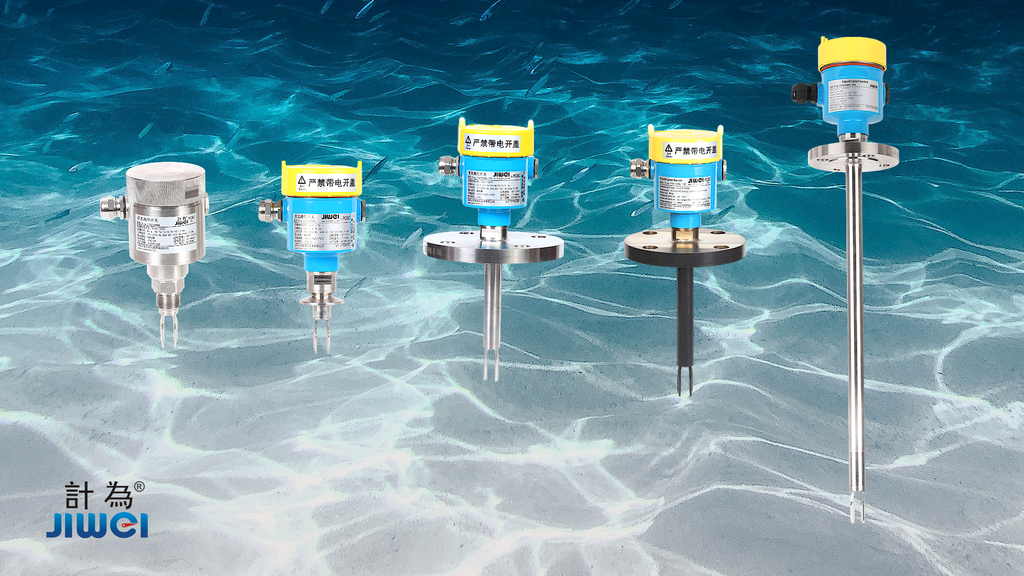
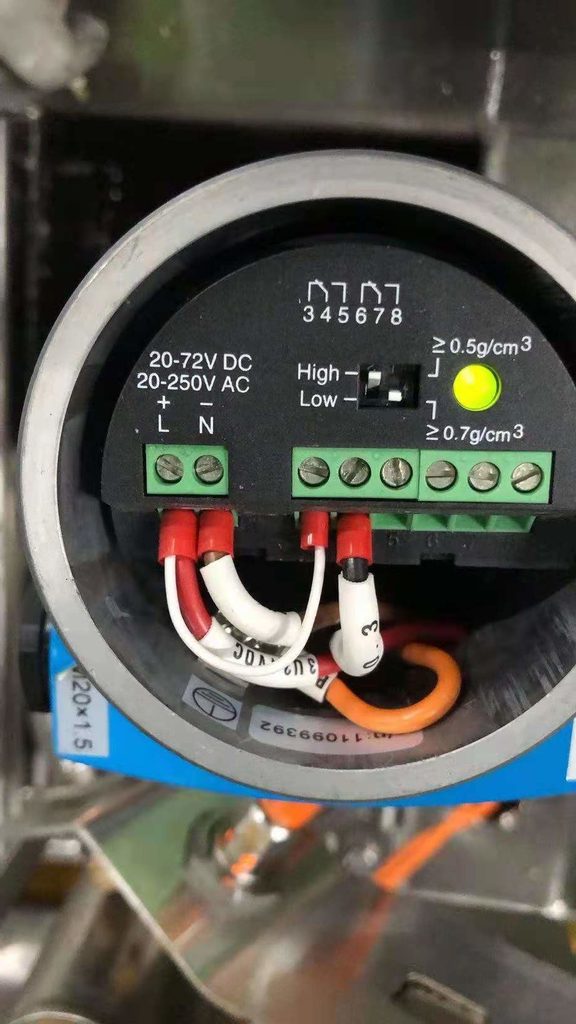
For example, Jiwei’s JWring tuning fork level switch operates by detecting the change in vibration frequency after the fork is immersed in the process medium. With precision tuning, it can detect liquids with densities as low as 0.5 g/cm³.
This capability is valuable for applications involving certain light oils, liquefied gases, solvents, and other relatively low-density liquids.
This also demonstrates an important point:
Fork tuning is not merely a manufacturing detail. It can directly affect the range of process media that a tuning fork level switch is able to detect reliably.
6. Benefit Four: Better Consistency Between Individual Instruments
Industrial instrumentation differs from ordinary consumer products.
A large industrial project may use dozens or even hundreds of level switches at the same site.
If the mechanical resonance characteristics vary too much from one tuning fork to another, instruments of the same model may behave differently under similar process conditions.
For example, one unit may switch very reliably, while another may be more sensitive to fluctuations near the liquid surface. Different production batches may also show noticeable differences in detection sensitivity.
Many factors can contribute to such variation, but consistency in the mechanical behavior of the tuning fork is an important one.
By tuning each fork during production, small deviations caused by actual manufacturing processes can be reduced, allowing the baseline resonance characteristics of different instruments to remain much more uniform.
From a manufacturing perspective, fork tuning is essentially the process of translating a theoretical engineering target into the mechanical behavior of each finished product.
Therefore, tuning does not only answer the question:
“Can this particular level switch work?”
It also addresses a more important industrial question:
Can the same performance be reliably reproduced across an entire product series?
For users who require batch purchasing, standardized spare parts, and long-term plant maintenance, product-to-product consistency can be more valuable than an impressive performance figure measured on a single laboratory sample.
7. Benefit Five: Stronger Resistance to Mechanical Interference
Industrial environments are rarely quiet.
Pumps, compressors, motors, agitators, and high-velocity fluids can all generate mechanical vibration.
Liquid turbulence, bubbles, splashing, and process impact may also temporarily influence the vibration of the tuning fork.
This creates an important challenge for the instrument:
How can it distinguish a genuine frequency change caused by liquid immersion from vibration caused by external mechanical interference?
The first requirement is that the tuning fork itself has a clearly defined and stable resonance characteristic.
A properly tuned fork provides a more predictable natural vibration condition. The electronic system can then detect and process signals around this stable mechanical reference.
If the natural frequency of the fork varies excessively from unit to unit, or if the baseline resonance is unstable, distinguishing real level changes from external vibration becomes more difficult.
In practical applications, Jiwei’s Ring-11 tuning fork level switch uses a tuned fork structure and vibration detection technology to identify whether the process medium has reached the fork based on changes in its resonant condition. Stable frequency detection and signal processing help reduce the possibility of false switching caused by short-term disturbances.
This highlights an important engineering principle:
Good resistance to interference is not achieved by electronics alone.
It is usually the combined result of mechanical fork design, precision tuning, piezoelectric sensing, and electronic signal processing.
8. Benefit Six: Reduced Risk of False Switching Near the Level Threshold
When selecting a liquid level switch, many users focus primarily on whether the instrument can generate an alarm.
In real industrial applications, however, another question is just as important:
Will it generate false alarms?
Consider a situation where the liquid surface is located close to the tuning fork.
Agitation, turbulence, foam, bubbles, or process flow may cause the liquid surface to move repeatedly around the fork. If the instrument’s baseline vibration condition is unstable, the signal can repeatedly cross the switching threshold.
The PLC or DCS may then receive a rapidly changing input signal.
This type of unstable switching can negatively affect the control system. In applications such as pump control, dry-run protection, or overfill prevention, repeated false switching may even introduce additional operational risks.
Proper fork tuning provides a stable and repeatable baseline resonant frequency. Combined with appropriate switching thresholds and signal-processing logic, it improves the certainty of liquid detection.
For the user, the practical result is straightforward:
When the liquid reaches the detection point, the switch operates reliably.
When the liquid is absent, the switch does not trigger unnecessarily.
When short-term disturbances occur, the output remains relatively stable.
This is one of the fundamental requirements of industrial level instrumentation: reliability.
9. Higher Frequency Does Not Necessarily Mean Better Performance
There is another common misunderstanding about tuning fork adjustment that should be clarified.
Fork tuning is not simply about achieving the highest possible vibration frequency.
The target frequency must be designed according to factors such as:
- Fork material
- Fork length
- Fork thickness
- Cross-sectional geometry
- Mechanical stiffness
- Intended process medium
- Detection sensitivity
- Overall sensor structure
Different types of vibrating level switches may also use different mechanical and electronic design strategies.
For example, a vibrating fork level switch designed specifically for liquid applications may primarily detect a stable frequency reduction caused by liquid immersion.
A vibrating fork level switch intended for powders or granular solids may use different mechanical structures and signal-processing methods.
Therefore, high-quality fork tuning does not mean adjusting every tuning fork to the highest possible frequency.
Instead, it means bringing the mechanical resonance of the fork into the optimal target range defined by the product design.
From an engineering perspective, the correct frequency matters more than simply having a higher frequency.
10. Fork Design and Fork Tuning Should Be Considered as One System
Fork tuning cannot compensate for poor mechanical design.
The final vibration characteristics of a tuning fork are primarily determined by its physical structure.
Fork length, thickness, material properties, cross-sectional shape, stiffness, and mass distribution all contribute to its mechanical resonance.
At the same time, an industrial tuning fork is not necessarily a simple rectangular structure like a laboratory test specimen.
The fork geometry may also need to reduce material buildup, improve liquid shedding, maintain sufficient mechanical strength, and withstand process impact.
This means that the development of a tuning fork level switch must balance several engineering requirements at the same time:
- Mechanical resonance characteristics
- Liquid detection sensitivity
- Resistance to buildup and adhesion
- Mechanical strength
- Manufacturing feasibility
- Resistance to process vibration and impact
Once the mechanical structure has been designed, manufacturing accuracy must reproduce that design as closely as possible.
Final tuning then brings the actual vibration characteristics of each individual fork into the required design range.
For this reason, fork tuning should not be viewed as an isolated corrective process.
It is better understood as the final stage of the overall mechanical vibration design.
Good engineering design determines what the fork should be.
Precision manufacturing determines whether it can be produced that way.
Fork tuning helps ensure that every finished fork actually approaches the intended mechanical condition.
All three are essential.
11. Evaluating a Tuning Fork Level Switch Requires More Than Looking at the Datasheet
Different brands of tuning fork level switches may appear very similar from the outside.
Most consist of two fork tines, a process connection, and an electronic housing.
However, many of the factors that determine long-term performance cannot be seen from the outside.
These include:
- How the mechanical structure of the fork is designed
- How the resonant frequency is controlled
- Whether each fork is individually tested and tuned during production
- Whether the frequency shift after immersion is sufficiently stable
- How the electronic circuit identifies valid switching signals
- How the instrument deals with vibration, bubbles, foam, turbulence, and process impact
Together, these factors determine whether a tuning fork level switch can simply “work” in ideal conditions or whether it can provide stable and reliable performance over long periods in real industrial environments.
Therefore, when selecting a tuning fork level switch, users should consider more than operating temperature, process pressure, hazardous-area approvals, process connections, and output types.
It is also worth understanding the manufacturer’s capabilities in fork design, precision tuning, vibration detection, and overall quality control.
Conclusion: Fork Tuning Creates a Reliable Reference for Stable Level Detection
The operating principle of a tuning fork level switch appears simple:
The fork vibrates.
Liquid reaches the fork.
The vibration frequency changes.
The electronics generate a switching signal.
However, converting this simple physical principle into a reliable industrial instrument requires considerable engineering expertise.
As the mechanical sensing element of the entire system, the tuning fork directly influences detection sensitivity, repeatability, low-density liquid capability, product consistency, and resistance to process interference.
The purpose of fork tuning is to precisely control the mechanical resonance of the actual manufactured fork according to the intended product design.
From this perspective:
Fork tuning is not an optional manufacturing step. It is an important process that transforms mechanical design into stable and repeatable level detection performance.
End users may never see this tuning process.
But once the instrument is installed, its ability to switch reliably when the liquid reaches the detection point, resist false alarms during process fluctuations, provide consistent performance from unit to unit, and remain stable over long-term operation all depend on careful control of these fundamental manufacturing details.
That is one of the key differences between a simple mechanical component and a high-quality industrial measurement instrument:
True reliability is often determined by the engineering details that cannot be seen from the outside.