Radar vs Guided Wave Radar: What Is the Difference?
Radar vs guided wave radar is a key choice when measuring sticky vacuum residue in refinery tanks. Non-contact radar and guided wave radar both use electromagnetic waves to measure liquid level.
However, the way these waves travel differs.
A non-contact radar transmitter sends electromagnetic waves through the space above the liquid and receives reflections from the product surface.
A guided wave radar transmitter directs electromagnetic pulses or signals along a probe or cable extending into the vessel.
Both technologies can provide continuous level measurement.
For vacuum residue applications, the difference between free-space propagation and direct contact with the liquid is particularly important.
1. Non-Contact Radar: Advantages and Limitations
Non-contact radar transmitters are normally installed at the top of a vessel.
Their antennas do not need to be immersed in the process liquid.
This construction can reduce fouling problems associated with long probes, floats, and other immersed components.
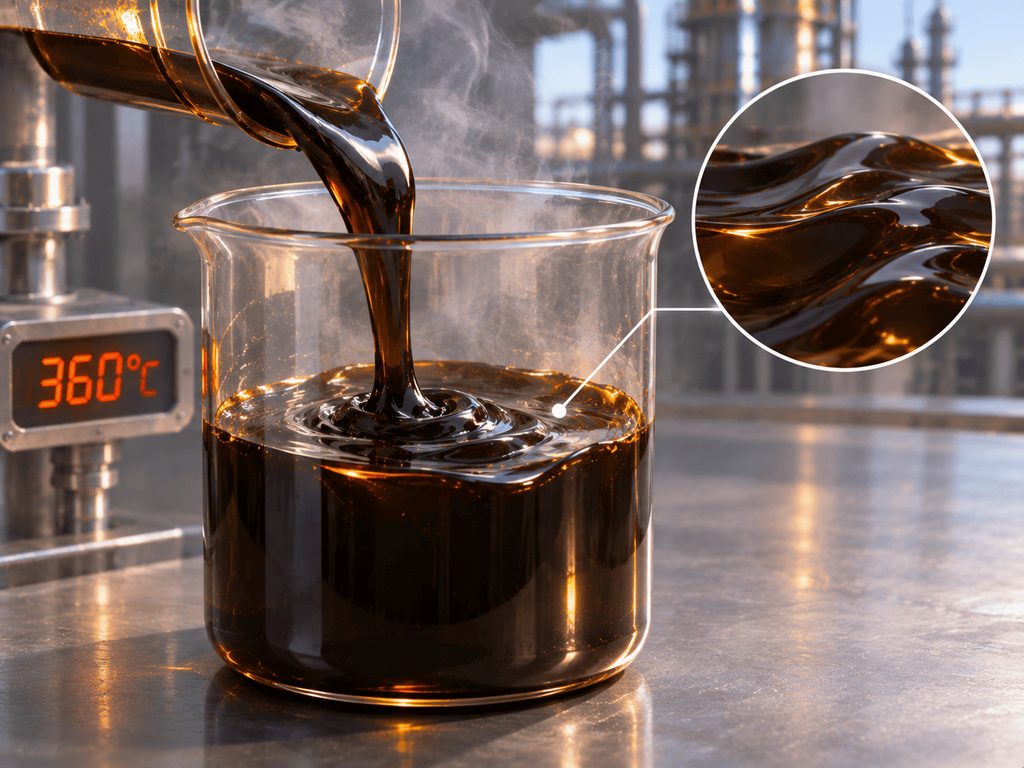
For highly viscous vacuum residue, avoiding direct contact with the liquid can simplify maintenance.
Non-contact radar also avoids the mechanical movement requirements of float-operated instruments.
However, radar performance depends on receiving a usable reflection from the liquid surface.
Foam, antenna contamination, poor mounting arrangements, and strong reflections from internal structures can affect the measurement.
2. Guided Wave Radar: Advantages and Limitations
Guided wave radar uses a probe or cable to guide electromagnetic energy.
Because the signal follows a defined path, guided wave radar can be useful in certain narrow vessels or installations with complicated internal structures.
However, the probe remains in contact with the product.
Vacuum residue may accumulate on the probe, particularly when operating temperatures decrease.
Deposits can affect signal propagation and introduce additional reflections.
Cable-type probes may also require careful consideration of mechanical loading, anchoring, and cleaning.
Therefore, the suitability of guided wave radar depends on the actual viscosity, fouling tendency, and process conditions.
3. Technical Comparison
| Feature | Non-Contact Radar | Guided Wave Radar |
|---|---|---|
| Measurement principle | Free-space electromagnetic waves | Guided electromagnetic waves |
| Contact with liquid | Antenna normally remains above the liquid | Probe contacts the liquid |
| Fouling concern | Antenna and nozzle contamination | Probe buildup |
| Internal obstructions | Beam interference must be evaluated | Less exposed to some free-space reflections |
| Maintenance | Antenna and nozzle inspection | Probe inspection and cleaning |
| High-temperature suitability | Model-dependent | Model-dependent |
| Vacuum residue suitability | Often worth evaluating first | Requires careful fouling assessment |
4. Why Is Non-Contact Radar Often Considered First?
The primary reason is the viscosity and adhesive nature of vacuum residue.
When a long probe is immersed in the product, material can accumulate along its surface.
If the product cools during shutdown, deposits may become difficult to remove.
Non-contact radar reduces this direct exposure.
For larger storage tanks, top-mounted radar can also offer practical installation advantages.
Nevertheless, antenna contamination and process connection limitations must still be considered.
5. When Might Guided Wave Radar Be Appropriate?
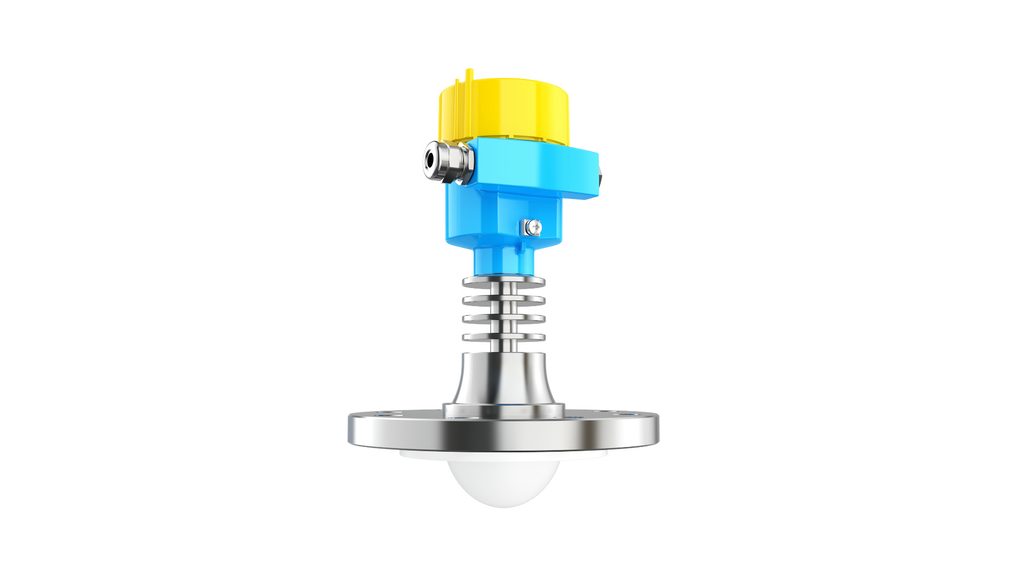
Guided wave radar may be considered in certain compact process vessels or installations where free-space radar faces substantial interference.
However, engineers must confirm that the product will not create unacceptable buildup or mechanical loading on the probe.
The potential for solidification during shutdown should also be assessed.
Probe geometry, mounting arrangements, and maintenance accessibility should be reviewed with the instrument manufacturer.
6. What Else Should Engineers Compare?
Instrument selection should consider measurement range, operating temperature, pressure, dielectric properties, and installation geometry.
For non-contact radar, antenna design, beam angle, and nozzle compatibility are important.
For guided wave radar, probe construction, length, anchoring, and fouling behavior require additional attention.
If the tank requires independent high-level protection, that function should be evaluated separately from the continuous level measurement system.
Conclusion
Neither radar technology is universally superior.
For high-viscosity vacuum residue, non-contact radar is often a sensible starting point because it minimizes direct exposure of the measuring structure to the product.
Guided wave radar may still be suitable for particular installations, provided its probe design and fouling performance meet the process requirements.