1. Introduction: Why Malt Inventory Monitoring Matters in Breweries
Malt Hopper level measurement helps breweries maintain a stable grain supply during milling and mashing.
Malt is one of the most important raw materials in beer production.
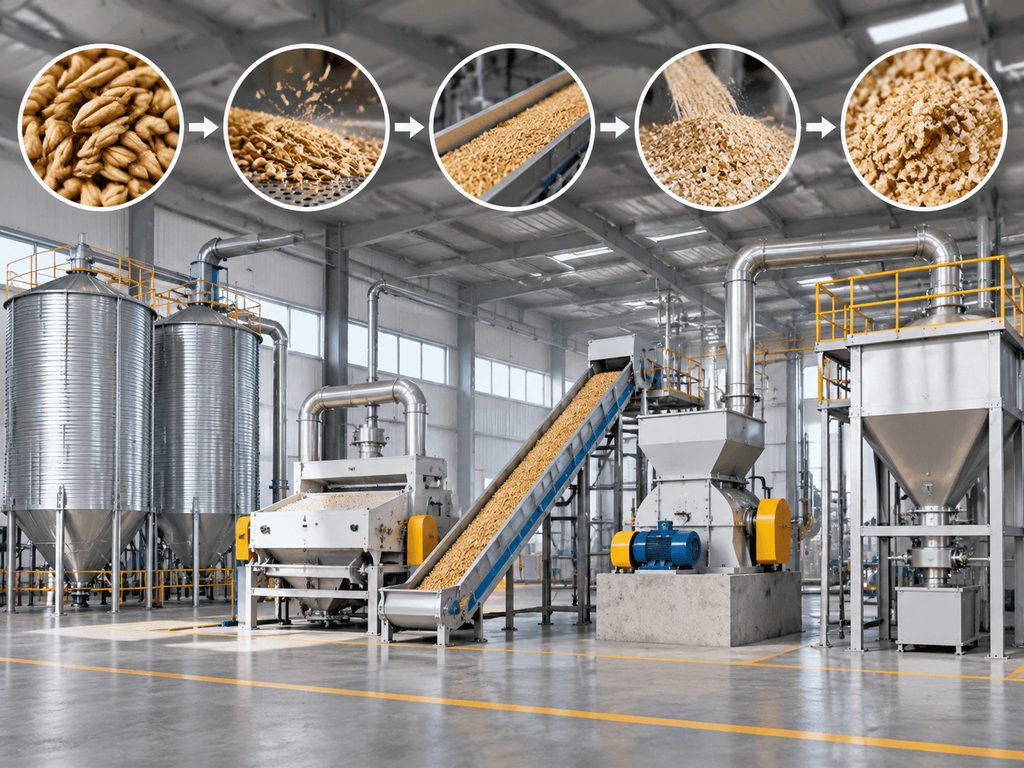
Before entering the mashing process, malted barley passes through several handling stages, including storage, cleaning, conveying, crushing, and temporary buffering.
Breweries commonly use hoppers and intermediate storage vessels to maintain a continuous supply of malt to downstream processing equipment.
Accurate level monitoring in these vessels helps operators coordinate material transfers, prevent unexpected shortages, and maintain stable production schedules.
However, measuring malt and crushed grain can be challenging.
Unlike liquids, bulk grain materials form uneven surfaces. During filling, grain may accumulate in a cone-shaped pile. During discharge, a central depression or funnel may develop.
Dust is another important consideration. Grain conveying and crushing operations can generate airborne particles that affect measurement conditions.
The JWrada-34 radar level meter offers a non-contact measurement option for suitable malt hoppers and intermediate storage vessels.
This article explains how the instrument can be evaluated for brewery applications, including material characteristics, installation design, commissioning, and integration with plant automation.
2. Common Measurement Challenges in Malt Hoppers
2.1 Grain Dust During Filling
Malt handling systems frequently use conveyors, elevators, and pneumatic or mechanical transfer equipment.
During material transfer, dust and fine grain particles may become suspended inside the hopper.
High dust concentrations can influence the quality of reflected radar signals, depending on particle characteristics and operating conditions.
Radar measurement is generally less dependent on the movement of air than acoustic measurement, but it is not completely immune to dust-related signal problems.
The instrument should therefore be tested under actual filling conditions.
2.2 Irregular Material Surfaces
Malt grains do not form a flat horizontal surface.
Depending on the hopper design and filling position, the material may accumulate in a cone or form an uneven pile.
A single-point measurement represents the distance to the surface within the radar beam rather than the average level across the entire hopper.
This distinction is important when calculating inventory.
For operational monitoring, a representative measurement point may be sufficient.
For accurate mass estimation, additional information about hopper geometry and bulk density is required.
2.3 Changes Between Whole Malt and Crushed Malt
Breweries may store both whole malt and crushed malt in different vessels.
These materials have different particle sizes, packing characteristics, and bulk densities.
Crushed malt may contain more fines and generate more dust than whole grain.
Consequently, measurement conditions can change between different processing stages.
The instrument should be evaluated for the actual material stored in each hopper.
2.4 Mechanical Structures Inside Hoppers
Some malt hoppers contain internal support beams, level indicators, ladders, or discharge equipment.
These structures may produce unwanted reflections.
The installation position should provide a clear measurement path and avoid direct interference from internal components.
3. Why Consider the JWrada-34 for Brewery Applications?
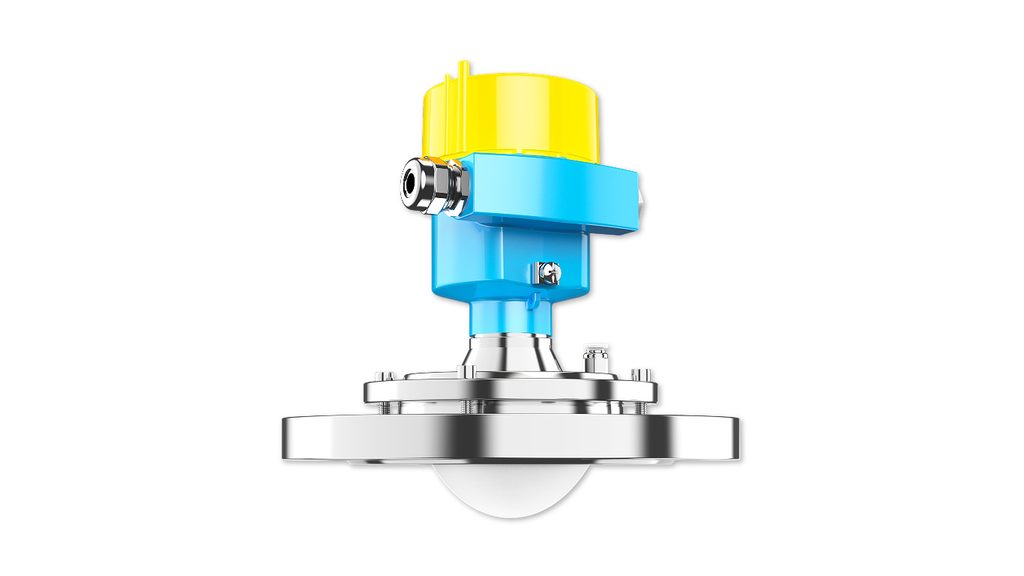
The JWrada-34 uses 80 GHz FMCW radar technology to measure the distance to the stored material surface.
Its main published specifications include:
- Operating frequency: 80 GHz.
- Maximum measuring range: 150 m.
- Measurement accuracy: up to ±1 mm under specified conditions.
- 76 mm lens antenna.
- Intelligent echo processing.
- False-echo learning.
- Multi-echo separation.
- Dynamic target tracking.
- 4–20 mA/HART and RS485/Modbus communication options, depending on configuration.
3.1 Non-Contact Measurement
The instrument measures from above the grain surface.
It does not require a mechanical float or immersed measuring component.
This is useful in food processing environments where direct contact with bulk materials may create additional cleaning and maintenance requirements.
The installation should nevertheless follow the brewery’s hygiene and contamination-control procedures.
3.2 Focused Radar Beam
The 80 GHz radar technology supports a concentrated beam.
When properly installed, this helps reduce unwanted reflections from hopper walls and nearby metal structures.
This is particularly useful in compact grain handling systems where installation space is limited.
3.3 Echo Processing for Uneven Material Surfaces
The material surface may change continuously during filling and discharge.
The JWrada-34 incorporates echo processing functions designed to identify the actual target among multiple reflections.
The commissioning process should verify the correct material echo at different filling levels.
3.4 Flexible Automation Integration
The radar measurement can be transmitted to a compatible PLC or DCS.
This allows brewery operators to monitor hopper levels from a central control room.
The data can also be used for low-level warnings, material transfer management, and inventory trend analysis.
4. Typical Brewery Application Scenario
Consider a brewery that receives malt in bulk and transfers it to an intermediate hopper before the crushing process.
The existing material monitoring method relies on periodic manual inspection.
The production team wants to introduce continuous level monitoring to coordinate the malt supply with the crushing equipment.
A representative engineering scenario is shown below.
| Parameter | Example Condition |
|---|---|
| Material | Malted barley |
| Vessel | Vertical hopper |
| Hopper height | Approximately 8 m |
| Filling method | Mechanical conveyor |
| Discharge method | Gravity or screw conveyor |
| Environment | Grain dust |
| Measurement method | Top-mounted radar |
| Control system | PLC |
| Output | 4–20 mA |
| Instrument | JWrada-34 |
These are illustrative conditions, not verified customer project specifications.
The nominal hopper height is within the JWrada-34 measuring range.
The actual application should be assessed based on grain properties, dust concentration, filling geometry, hopper structure, and required measurement performance.
5. Recommended Installation Design
5.1 Avoid the Main Filling Stream
The radar should not be positioned directly above the point where malt enters the hopper.
During filling, the incoming grain stream can create a changing material surface and elevated dust concentrations.
A position away from the main filling stream may provide more consistent measurement conditions.
5.2 Consider the Material Repose Angle
Bulk grain naturally forms an inclined surface.
The radar measures the distance to the surface within its beam, not the average height of all stored material.
The selected measurement point should therefore be representative of the hopper’s normal filling and discharge pattern.
5.3 Check Internal Supports
The installation position should avoid direct obstruction from support structures and other internal equipment.
The beam path should be reviewed using the actual hopper drawing.
Where multiple internal structures are present, echo analysis during commissioning becomes particularly important.
5.4 Protect the Antenna from Contamination
Grain dust can accumulate around openings and on exposed surfaces.
The installation arrangement should allow practical inspection and cleaning while minimizing the likelihood of material collecting on the antenna.
For food and beverage applications, the materials and installation arrangement should also comply with the facility’s hygiene requirements.
Any food-contact certification requirement must be verified separately for the selected configuration.

6. Commissioning and Echo Optimization
Once the radar instrument has been installed, the commissioning process should begin with the hopper dimensions.
The technician should establish the reference point, empty distance, and maximum operating level.
The following operating conditions should be checked:
- Empty hopper.
- Normal grain storage.
- Material filling.
- Active discharge.
- Low material level.
- High material level.
The echo profile should be examined to identify the true material surface reflection.
If false echoes occur because of support structures or other internal components, the technician can evaluate whether false-echo learning is appropriate.
The level output should then be compared with an independent reference measurement at several material levels.
Damping should be configured according to the required response time and the natural movement of the material surface.
For a rapidly operating hopper, excessive damping may delay low-level warnings.
For a highly variable material surface, insufficient filtering may produce unnecessary fluctuations.
The final settings should reflect the actual production process.
7. Integrating Malt Level Data into Brewery Automation
The JWrada-32 can provide continuous level information for brewery control systems.
This creates opportunities for more coordinated raw material handling.
Automated Material Replenishment
When the malt level reaches a predefined threshold, the PLC can issue a replenishment warning or initiate a permitted transfer sequence.
This helps prevent the crushing process from running out of raw material.
Crushing Process Coordination
The level signal can be used as an input for controlling the material supply to the malt mill.
The exact logic should be designed according to the capacity of the hopper, conveyor, and crushing equipment.
Inventory Visibility
Operators can monitor the remaining malt level from the control room.
This makes it easier to coordinate material deliveries and production schedules.
Historical Consumption Analysis
By recording level changes over time, breweries can obtain useful information about material consumption and replenishment frequency.
For accurate mass calculations, the system should account for the bulk density and geometry of the stored grain.
8. Expected Operational Benefits
A suitable JWrada-32 installation may support:
- Continuous monitoring of malt inventory.
- Reduced reliance on manual hopper inspection.
- Improved coordination between grain storage and crushing operations.
- Earlier identification of low material levels.
- Better visibility of filling and discharge patterns.
- Integration with existing brewery automation systems.
These benefits should be verified through actual commissioning and operating records rather than presented as guaranteed numerical improvements.
9. Frequently Asked Questions
Q1: Can JWrada-34 measure whole malted barley?
It can be evaluated for whole malt storage applications. The actual performance depends on the material properties, hopper geometry, dust conditions, and installation arrangement.
Q2: Can it measure crushed malt?
Potentially, yes. Crushed malt has different particle characteristics and may produce different dust conditions. Its suitability should be evaluated separately.
Q3: Does grain dust affect radar level measurement?
Heavy dust concentrations may influence signal quality in certain applications. Testing under actual filling conditions is recommended.
Q4: Can the radar determine the weight of malt in a hopper?
No. It measures distance or material level. Weight estimation requires additional information about the hopper geometry and the bulk density of the material.
Q5: Can JWrada-34 be connected to a brewery PLC?
Yes. Depending on the selected configuration, it supports industrial interfaces including 4–20 mA/HART and RS485/Modbus.
Q6: Is the instrument suitable for food processing environments?
The instrument can be considered for non-contact monitoring in food processing facilities. However, specific hygiene, material, and certification requirements must be checked for the selected installation.
10. Conclusion
Malt hoppers are essential components of brewery raw material handling systems.
Dust, irregular material surfaces, changing bulk density, and internal structural interference can complicate continuous level monitoring.
The JWrada-34 80 GHz radar level meter provides a non-contact measurement option that can be integrated into brewery automation systems.
By selecting an appropriate installation location, verifying the material surface echo, and configuring the measurement range according to the actual hopper geometry, breweries can improve visibility of malt inventory and support more coordinated material handling.
For applications involving whole malt or crushed grain, the final instrument selection should always be based on the actual material characteristics and operating conditions.