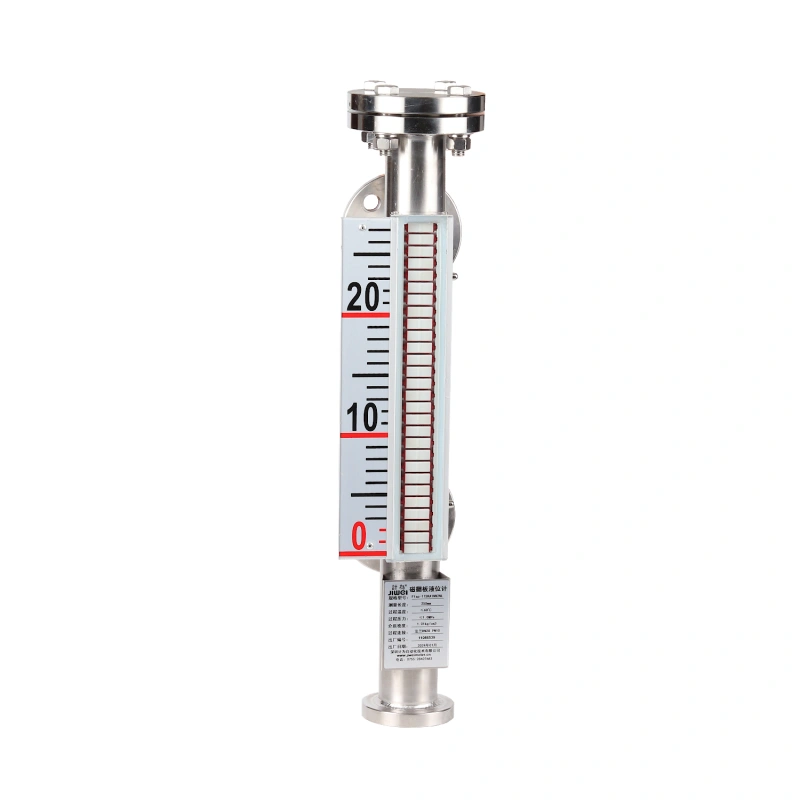
Magnetic Level Indicator for Petrochemical Tanks selection requires matching the instrument to the vessel, liquid, and operating conditions. Discover how magnetic level indicators are used in petrochemical storage tanks, buffer vessels, and process equipment, with guidance on float selection and remote monitoring.
1. Magnetic Level Indicator for Petrochemical Tanks: Application Overview
Petrochemical production involves raw material storage, chemical reactions, separation, intermediate processing, and product handling.
Throughout these operations, petrochemical tanks, buffer vessels, separators, and other process equipment require reliable liquid level monitoring.
Accurate level information helps operators maintain material availability, control transfer operations, and reduce the risk of overfilling.
Magnetic level indicators are widely considered for applications requiring direct local liquid level indication.
Their mechanical display allows operators to observe liquid levels without relying entirely on electrical instrumentation.
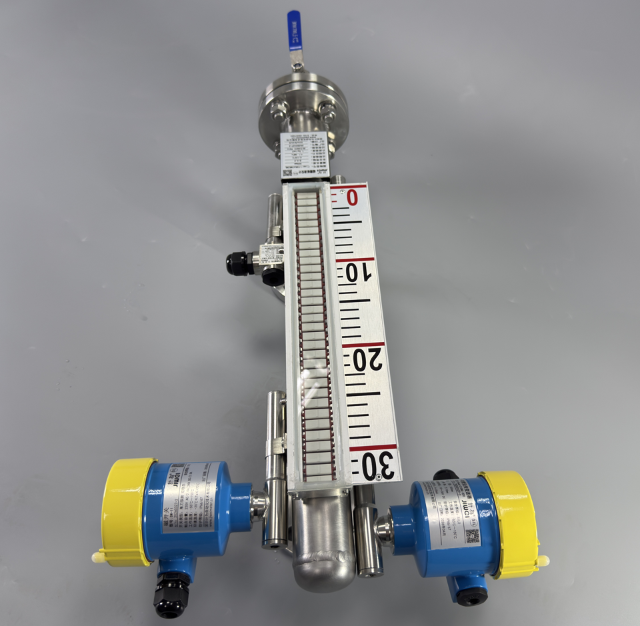
Optional transmitters and switches can also support remote monitoring and automated control.
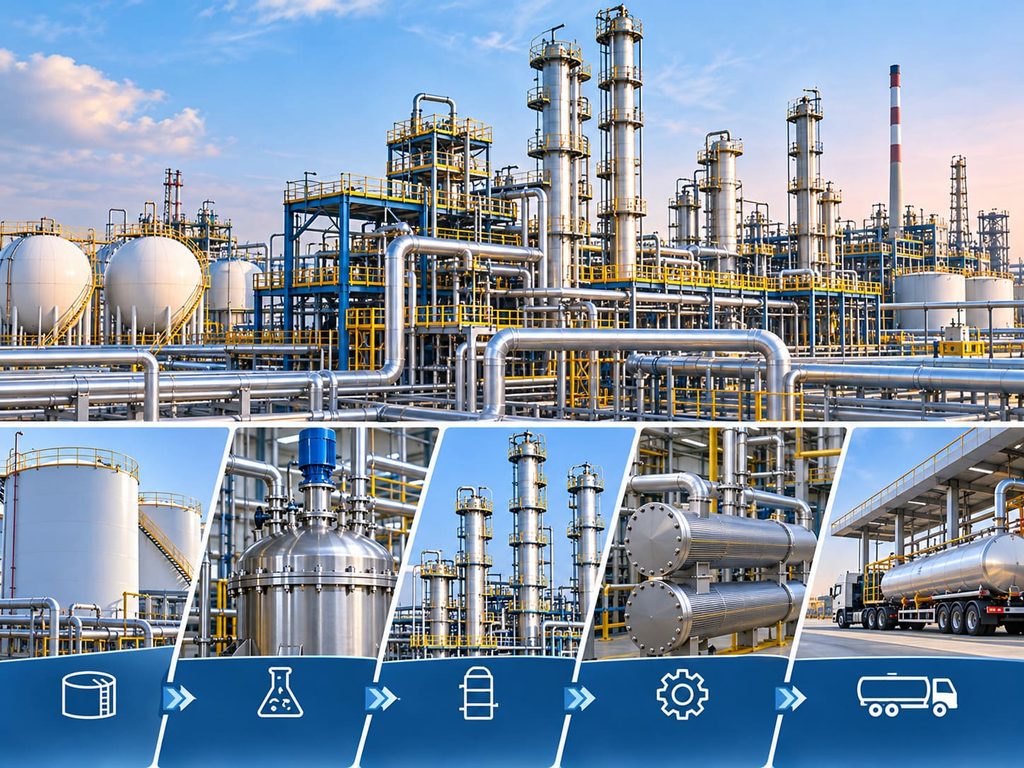
2. Challenges in Petrochemical Level Measurement
Petrochemical tanks handle many different liquids, including hydrocarbons, solvents, intermediates, and finished chemical products.
These liquids vary significantly in density, viscosity, corrosiveness, volatility, and operating temperature.
Low-Density Liquids
Some light hydrocarbons have relatively low densities.
Because magnetic level indicators rely on buoyancy, low-density liquids require appropriately designed floats.
An unsuitable float may fail to float correctly or produce inaccurate indications.
High-Viscosity Products
Heavy oils and certain petrochemical intermediates can become highly viscous, especially at lower temperatures.
High viscosity may restrict float movement or cause delayed level indication.
Flammable and Hazardous Media
Many petrochemical liquids are flammable.
Electrical accessories must therefore be selected according to hazardous-area classification and applicable standards.

3. Typical Petrochemical Applications
Raw Material Storage Tanks
Raw material tanks require continuous level monitoring to support inventory management and transfer operations.
For compatible liquids, a side-mounted magnetic level indicator can provide local level indication.
A remote transmitter may be added when centralized monitoring is required.
Intermediate Buffer Vessels
Buffer vessels help balance material flow between upstream and downstream processes.
Excessively high or low levels can affect process stability.
Magnetic level indicators equipped with level switches can provide signals for operational alarms.
Distillation and Separation Equipment
Distillation vessels and separators often operate under changing temperature and pressure conditions.
Level measurement instruments must be selected according to the actual process conditions.
For liquids that boil vigorously, foam excessively, or form deposits, float-based measurement may require special evaluation.
4. How to Select a Magnetic Level Indicator
The selection process should begin with a complete review of process parameters.
Important information includes liquid density, viscosity, operating temperature, design pressure, and chemical compatibility.
The measuring chamber and float must be suitable for the liquid and operating environment.
For outdoor installations, environmental exposure, corrosion protection, and the protection rating of electrical accessories should also be considered.
The Flap-11 series offers magnetic level indicator configurations that can be evaluated for a variety of industrial liquid level applications.
The final instrument configuration should be confirmed against the specific vessel requirements.
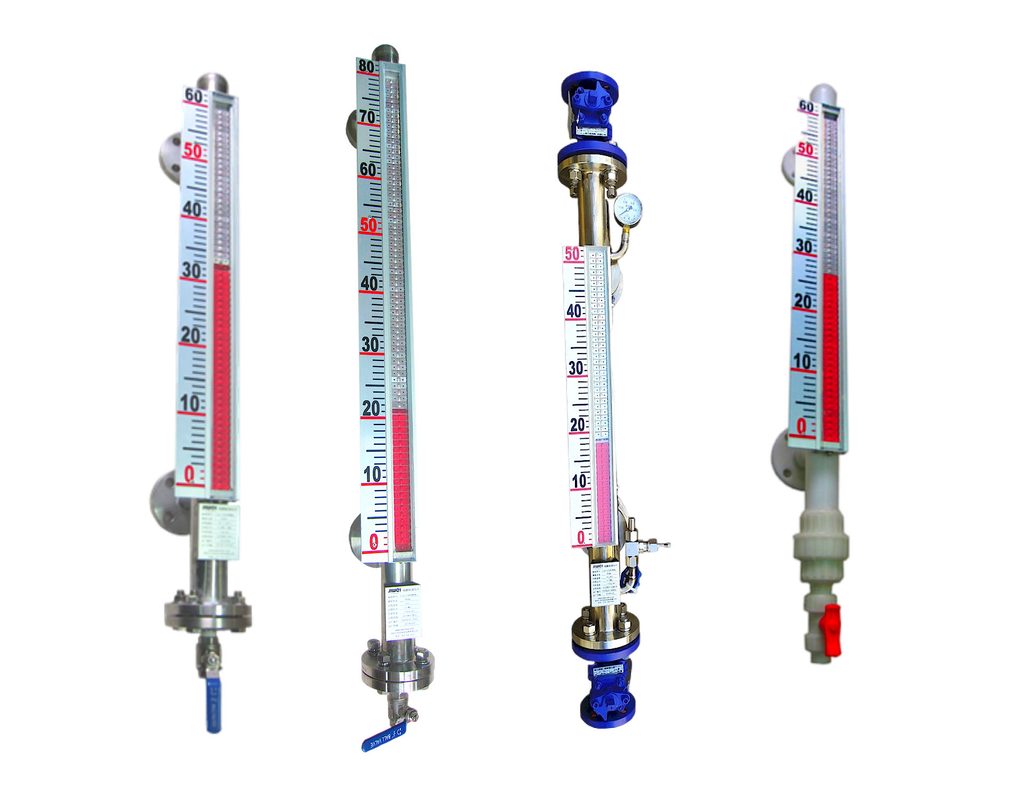
5. Installation Best Practices
Magnetic level indicators are commonly installed vertically on the side of petrochemical vessels.
The process connections should be positioned to cover the required measuring range.
Long measuring chambers may require additional support.
For equipment exposed to significant temperature changes, thermal expansion and mechanical stress must be considered.
Where process liquids contain sediment or deposits, the design should allow suitable inspection and cleaning.
Installation locations should also provide safe access for operators and maintenance personnel.
6. Remote Monitoring and Process Control
Modern petrochemical facilities frequently use PLC and DCS systems for centralized monitoring.
A magnetic level indicator equipped with a compatible transmitter can provide continuous liquid level signals.
These signals can be used for process supervision, trend monitoring, and control functions.
Level switches can provide additional high- and low-level alarms.
However, independent overfill protection and other safety functions must be designed according to the facility’s risk assessment.
A transmitter attached to the same float used for local indication does not automatically provide an independent protection layer.
7. Maintenance and Troubleshooting
Common magnetic level indicator problems include stuck floats, blocked connections, incomplete flap rotation, and disagreement between local and remote indications.
These issues may result from deposits, incorrect float selection, mechanical damage, or electrical accessory faults.
Routine inspection should focus on the measuring chamber, process connections, float movement, and signal performance.
Maintenance procedures must account for the hazards associated with the process liquid.
8. Frequently Asked Questions
Can magnetic level indicators measure all types of oil?
No. High viscosity, solid deposits, and certain operating conditions may limit their suitability.
Can magnetic level indicators be connected to a DCS?
Yes. With a compatible level transmitter, the instrument can provide continuous level signals to a DCS.
Are magnetic level indicators suitable for pressurized petrochemical vessels?
Yes, when the instrument is specifically designed and rated for the vessel’s pressure, temperature, and process conditions.
9. Conclusion
Magnetic level indicators provide a practical liquid level monitoring solution for many petrochemical tanks and process vessels.
Their combination of local indication and optional remote monitoring makes them useful for raw material tanks, buffer vessels, and selected process equipment.
Correct float selection, material compatibility, and installation practices are essential for reliable long-term operation.
Explore JIWEI’s oil and gas applications for related level measurement requirements.
For tank safety considerations, see OSHA guidance on petroleum and petrochemical storage tanks.