
Magnetic Level Indicator for Boiler Systems selection requires matching the instrument to the vessel, liquid, and operating conditions. Explore magnetic level indicator applications in boiler auxiliary systems, deaerators, and condensate tanks, including high-temperature measurement and safety requirements.
1. Magnetic Level Indicator for Boiler Systems: Application Overview
Boilers and their auxiliary systems are widely used in power generation, chemical processing, paper manufacturing, food production, and industrial heating.
Reliable liquid level monitoring is essential for maintaining stable operation in feedwater, steam, and condensate systems.
Deaerators require appropriate water levels to support boiler feedwater supply.
Condensate tanks need level monitoring to maintain sufficient water availability and protect transfer pumps.
Auxiliary storage and buffer vessels may also require local level indication.
Magnetic level indicators can be considered for selected boiler auxiliary applications when their design meets the required temperature, pressure, and safety conditions.
However, boiler steam drum level measurement is a safety-critical application and must comply with the applicable boiler codes and equipment requirements.

2. Challenges of High-Temperature Level Measurement
Changes in Liquid Density
Water density changes with temperature and pressure.
Because magnetic level indicators rely on buoyancy, the float must be selected according to the actual operating conditions.
Temperature Differences Between Vessel and Chamber
In high-temperature applications, the measuring chamber may operate at a different temperature from the main vessel.
This can create density differences and lead to level indication errors.
Such effects must be considered during engineering design.
High-Temperature Component Performance
Elevated temperatures can affect the float, magnetic components, seals, and electrical accessories.
The temperature rating of the complete instrument must be verified rather than considering only the measuring chamber material.
3. Typical Boiler Auxiliary Applications
Deaerator Level Monitoring
Deaerators remove dissolved gases from boiler feedwater.
Maintaining a suitable water level is important for stable feedwater system operation.
A properly rated magnetic level indicator may provide local level indication on a compatible deaerator.
A remote transmitter can also provide level information to the control system.
Condensate Collection Tanks
Condensate tanks collect water recovered from steam systems.
Liquid level monitoring helps operators manage condensate return and pump operation.
For suitable temperature and pressure conditions, a magnetic level indicator can provide local indication and optional alarm signals.
Auxiliary Buffer Vessels
Boiler auxiliary systems may include buffer vessels and storage tanks.
These vessels often require level monitoring to support water transfer and process control.
Instrument selection should be based on the specific operating conditions of each vessel.
For application context, review JIWEI’s energy applications alongside the instrument specifications.
4. Selecting a High-Temperature Magnetic Level Indicator
Important selection parameters include:
- Normal and maximum operating temperatures.
- Operating pressure and design pressure.
- Liquid density at operating conditions.
- Required measuring range.
- Process connection dimensions.
- Temperature limits of seals, floats, and electrical accessories.
For high-temperature applications, the possibility of density differences between the measuring chamber and the vessel should also be evaluated.
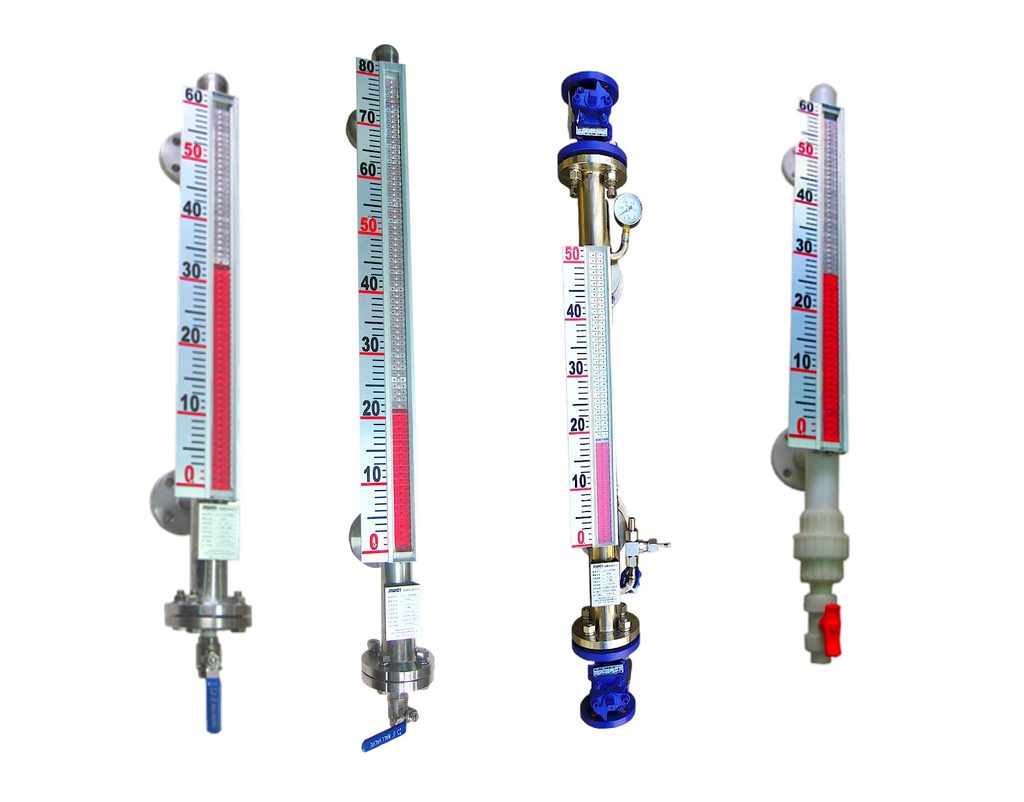
The Flap-11 series includes configurations for industrial liquid level monitoring, but the allowable operating conditions depend on the specific model and construction.
5. Installation Considerations
High-temperature instruments must be installed with consideration for thermal expansion and mechanical stress.
The measuring chamber should be vertically aligned and adequately supported.
Process connections must be suitable for the operating pressure and temperature.
For equipment subject to boiler or pressure vessel regulations, installation must comply with the applicable codes and approved engineering documentation.
A general-purpose magnetic level indicator should not be substituted for a required boiler water level gauge without confirming regulatory and technical compliance.
6. Remote Monitoring and Alarm Functions
Boiler auxiliary systems commonly use centralized control systems.
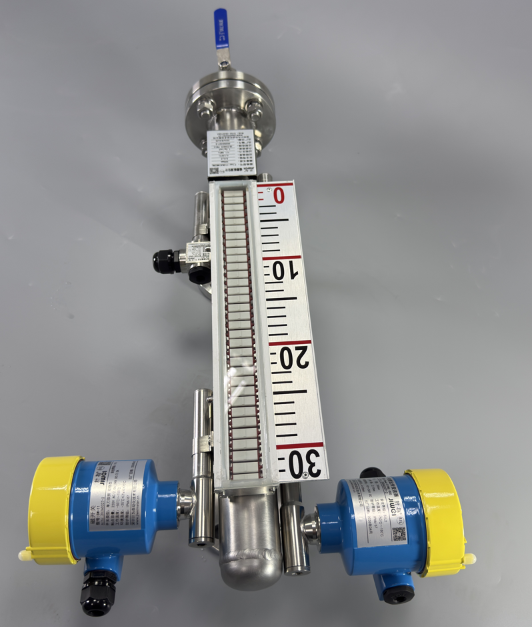
A magnetic level indicator equipped with a compatible transmitter can provide continuous level information to a PLC or DCS.
Level switches may also provide operational alarms.
However, safety-critical boiler low-water protection and steam drum level protection require specifically designed and compliant systems.
Optional magnetic level indicator accessories should not automatically be treated as independent safety devices.
7. Maintenance Recommendations
Routine maintenance should include checking process connections for leakage and confirming correct indicator operation.
For high-temperature systems, operators should also monitor insulation condition and possible temperature differences.
If abnormal level readings occur, the float, process connections, and liquid density assumptions should be reviewed.
Before maintenance, high-temperature equipment must be isolated, cooled, depressurized, and drained according to approved procedures.
8. Frequently Asked Questions
Can a standard magnetic level indicator be installed on a boiler steam drum?
Not automatically. The instrument must meet the applicable boiler safety codes and specific equipment requirements.
Why does temperature affect magnetic float performance?
Temperature changes liquid density, which affects the buoyancy and position of the float.
Can magnetic level indicators be used on deaerators?
Yes, when their pressure, temperature, material, and design specifications are suitable for the application.
9. Conclusion
Boiler auxiliary systems require reliable liquid level monitoring under demanding temperature and pressure conditions.
Magnetic level indicators can provide local indication and optional remote monitoring for suitable deaerators, condensate tanks, and auxiliary vessels.
Careful consideration of density changes, temperature differences, pressure ratings, and applicable safety requirements is essential.
For deaerator operating context, see the US Department of Energy guide to deaerators in industrial steam systems.