
Magnetic Level Indicator for Ammonia Tanks selection requires matching the instrument to the vessel, liquid, and operating conditions. Learn how magnetic level indicators are used in liquid ammonia storage tanks, including pressure requirements, float selection, remote monitoring, and safety considerations.
1. Magnetic Level Indicator for Ammonia Tanks: Application Overview
Liquid ammonia is widely used in fertilizer production, chemical manufacturing, industrial refrigeration, and other industrial processes.
Because ammonia presents significant toxicity hazards and other safety risks, its storage and handling require carefully designed equipment and operating procedures.
Liquid level is one of the most important parameters monitored in an ammonia storage tank.
Excessive liquid levels can increase the risk of overfilling, while insufficient levels may interrupt downstream supply systems.
Magnetic level indicators can be considered for liquid ammonia storage applications when their design, materials, and operating limits meet the requirements of the pressure vessel and process system.
Their external magnetic display provides local liquid level indication without requiring operators to observe the liquid directly.

2. Challenges in Liquid Ammonia Level Measurement
Pressure and Temperature Conditions
Liquid ammonia storage conditions depend on the selected storage method.
Some tanks operate under pressure at ambient temperatures, while others use refrigerated storage conditions.
The magnetic level indicator must be suitable for the vessel’s design pressure and operating temperature range.
The measuring chamber, float, seals, and process connections must all meet these requirements.
Liquid Density and Float Performance
Magnetic level indicators rely on buoyancy to move the float.
The density of liquid ammonia changes with temperature and pressure.
An incorrectly designed float may produce inaccurate indications or fail to float properly.
Therefore, float selection must be based on the actual operating conditions rather than a generic liquid density value.
Leakage and Personnel Safety
Ammonia leakage can create serious health and environmental hazards.
The pressure boundary, welded connections, flanges, and sealing components must be designed and maintained to minimize leakage risks.
Instrument installation and maintenance should follow the applicable pressure equipment and hazardous chemical safety requirements.
3. How Magnetic Level Indicators Work on Ammonia Tanks
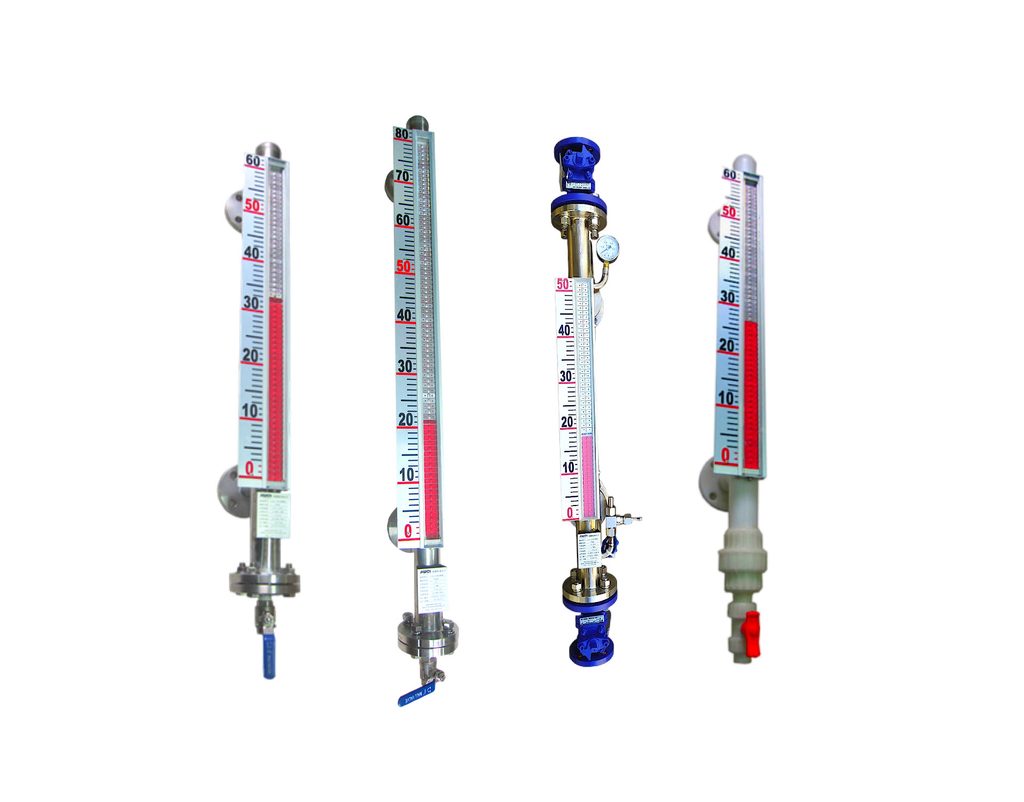
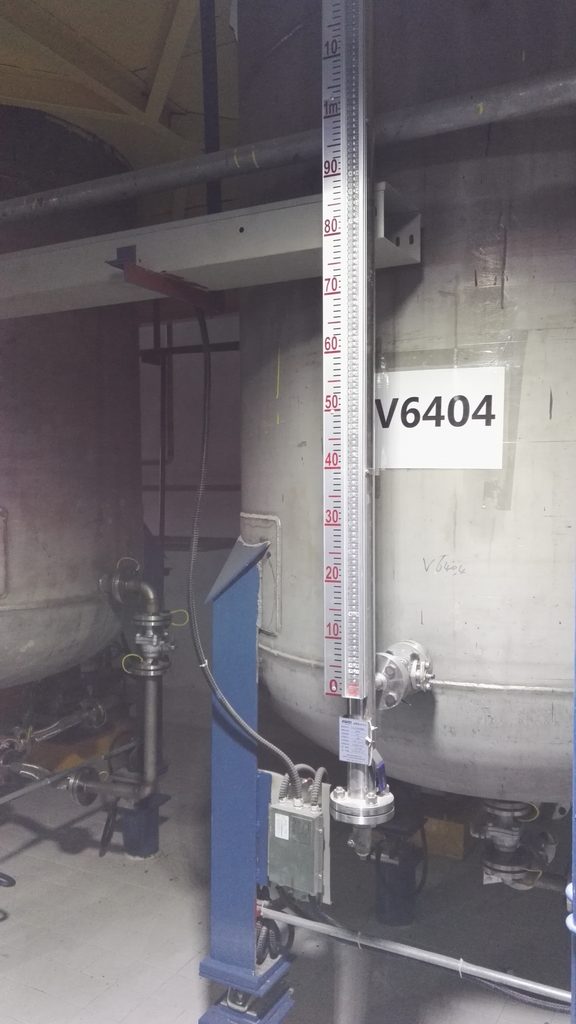
A side-mounted magnetic level indicator uses a measuring chamber connected to the storage vessel.
As the liquid level changes, the magnetic float moves vertically inside the chamber.
Magnets within the float activate an external flap indicator, displaying the liquid level through a contrasting color boundary.
Because the external display is separated from the process liquid, operators can read the level without direct visual exposure to ammonia.
Optional level transmitters can provide continuous level signals to a PLC or DCS.
Level switches may also be used to generate high- or low-level alarms.
However, a magnetic level indicator should not automatically be considered a replacement for an independent overfill protection system.
For application context, review JIWEI’s chemical process applications alongside the instrument specifications.
4. Selecting a Magnetic Level Indicator for Liquid Ammonia
The first step in instrument selection is to confirm the tank’s design and operating conditions.
Important parameters include operating pressure, design pressure, temperature range, liquid density, measuring range, and connection dimensions.
Wetted materials must be compatible with liquid ammonia under the specified conditions.
The suitability of sealing materials is equally important.
Float strength, buoyancy, and magnetic performance must be verified across the expected operating range.
For low-temperature storage applications, special attention should be given to material toughness and the temperature limits of all components.
5. Local Indication and Remote Monitoring
Liquid ammonia storage systems often require centralized monitoring.
A magnetic level indicator can provide local indication while an optional transmitter sends continuous level information to a control system.
Remote signals can be used for trend monitoring, process supervision, and operational alarms.
High- and low-level switches may also provide discrete alarm signals.
However, electrical accessories must comply with the applicable hazardous-area requirements.
For storage tanks requiring independent high-high level protection, separate sensing arrangements may be necessary.
This is particularly important when local indication and remote measurement depend on the same magnetic float.
6. Installation and Maintenance Requirements
Installation should be performed according to approved engineering procedures and applicable regulations.
Before installation, the instrument’s pressure rating, materials, connection dimensions, and technical documentation should be verified.
After installation, the required pressure or leak tests and functional checks should be completed.
Routine maintenance should focus on process connections, indicator operation, and remote signal reliability.
Any maintenance involving opening the instrument must be performed only after proper isolation, depressurization, and safe handling of residual ammonia.
7. Benefits and Limitations
Magnetic level indicators provide direct local level indication and can support remote monitoring in appropriately designed ammonia storage systems.
Their main advantages include visible mechanical indication and the ability to integrate with optional transmitters and switches.
However, the instrument’s suitability depends on pressure rating, material compatibility, float design, and safety requirements.
For critical storage applications, level measurement should be considered part of the overall safety system rather than an isolated instrument selection.
8. Frequently Asked Questions
Can a standard magnetic level gauge be used for liquid ammonia?
Not without verifying its suitability. Liquid ammonia applications require appropriate pressure ratings, materials, seals, and float design.
Do ammonia tank level transmitters need hazardous-area certification?
Electrical equipment must comply with the hazardous-area classification and applicable regulations for the installation location.
Why is liquid density important in ammonia level measurement?
The float depends on buoyancy, so changes in liquid density can affect float position and measurement accuracy.
9. Conclusion
Liquid ammonia storage requires dependable level monitoring and strict attention to safety.
Magnetic level indicators can provide effective local indication and optional remote monitoring when specifically selected for the operating conditions.
Proper engineering verification, installation, and maintenance are essential for reliable performance.