In sugar production, food processing, beverage manufacturing, and ingredient handling, white granulated sugar is one of the most commonly used bulk solid materials. From refined sugar production to sugar storage, conveying, and automated batching, storage silos and intermediate hoppers are widely used to ensure a continuous supply of sugar to downstream processes.
Reliable high- and low-level detection is therefore essential for maintaining stable material handling and automated production.
Although white sugar generally has good flowability, its relatively fine particle size can generate dust during conveying, filling, and discharge. Under certain operating conditions, sugar particles may also accumulate or adhere to surfaces inside the silo. In addition, level sensors installed near filling points may be exposed to continuous material impact.

For these reasons, a level switch used for white sugar should provide reliable sensitivity while offering good resistance to material buildup, dust, and demanding industrial operating conditions.
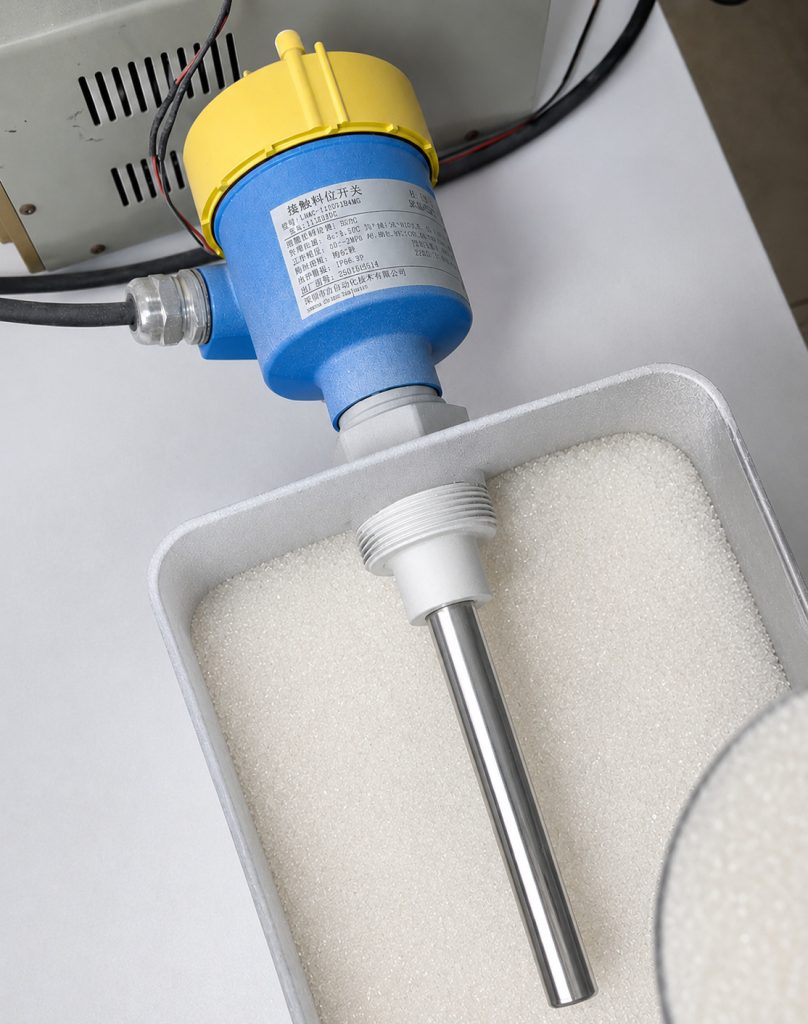
In a white sugar storage and automatic batching project at a food processing plant, the Tube-11 vibrating rod level switch was installed for high- and low-level detection. The switches reliably detected the presence and absence of white sugar at predetermined points, providing dependable switching signals for automatic filling, low-level alarms, and overfill protection.
Why Do White Sugar Silos Need Level Switches?
In modern food processing plants, white sugar is rarely added to production equipment entirely by manual operation. Instead, bulk sugar is usually stored in a silo or hopper and then transported to weighing, mixing, dissolving, or other downstream processes through screw conveyors, pneumatic conveying systems, or similar equipment.
Without reliable level detection, operators may have difficulty determining whether the amount of sugar inside the silo has reached a critical level.
During filling, for example, the sugar level may already be approaching the top of the silo while the upstream conveying system continues operating. This can lead to overfilling, material overflow, blockage, increased cleaning requirements, and unnecessary production interruptions.
The opposite problem can occur during continuous production. If the sugar level falls too low without being detected in time, insufficient material may be supplied to the downstream batching or processing system. In highly automated production lines, this can affect weighing accuracy, batching continuity, and overall production efficiency.
For this reason, white sugar silos are commonly equipped with one or more point level switches.
A high-level switch detects when sugar reaches the predetermined maximum level. Once the material covers the sensing element, the switch changes its output status. The control system can then trigger a high-level alarm or stop the upstream conveying equipment to prevent overfilling.
A low-level switch determines whether sufficient sugar remains in the silo. When the material falls below the sensing element, the output changes accordingly, allowing a PLC or DCS to initiate refilling or generate a low-material alarm.
By integrating high- and low-level switches with conveying equipment, a sugar storage system can move from manual inspection toward reliable automated control.
Challenges of White Sugar Level Detection
From a level measurement perspective, white granulated sugar is a typical granular bulk solid. Although it is generally easier to handle than extremely light powders, several application conditions still need to be considered.
1. Fine Sugar Particles Can Generate Dust
Sugar dust can be generated during conveying, lifting, filling, and discharge. When the filling height is significant or the conveying rate is high, suspended sugar dust may become particularly noticeable inside the silo.
If a level switch contains complex exposed mechanical components or has inadequate sealing, long-term exposure to dust may increase the risk of mechanical jamming, electrical problems, and maintenance requirements.
A level switch for white sugar applications should therefore have a simple and robust sensing structure with minimal mechanical movement.
2. Material Buildup Must Be Considered
White sugar generally flows well, but changes in ambient humidity, fine sugar dust, and prolonged operation may result in a certain amount of material adhering to the sensing element.
If a sensor is excessively sensitive to minor deposits, accumulated sugar may be incorrectly interpreted as an actual material level, resulting in false switching.
Reliable white sugar level detection therefore requires more than simply detecting the material. The instrument should also tolerate a reasonable amount of buildup without generating unnecessary false alarms.
3. Material Impact During Filling
White sugar entering a silo can have considerable falling velocity. If a level switch is installed directly underneath the filling inlet, the sensing element may be continuously exposed to material impact.
This can cause unstable switching and increase mechanical stress on the sensor over time.
Selecting the right level switch is therefore only part of the solution. Correct installation is equally important for reliable long-term operation.
Application: High- and Low-Level Detection in a White Sugar Silo
A food processing plant required an upgrade to the automatic level detection system of its white sugar storage silo.
During production, white sugar was first transferred into the storage silo and then conveyed to downstream processing equipment according to production requirements. The existing level detection method had shown insufficient stability during long-term operation.
The plant therefore required a level switch with a relatively simple sensing structure, low maintenance requirements, and reliable performance when detecting granular white sugar.
The project had two primary objectives.
The first was high-level detection and overfill protection.
When the sugar reached the specified high-level position, the level switch needed to provide an immediate signal to the PLC. The control system could then stop the upstream conveying equipment and prevent the silo from being overfilled.
The second was low-level detection.
As sugar was continuously consumed by the production line, the level would gradually decrease. Once it dropped below the predetermined low-level position, the switch needed to change its output status so that the control system could initiate refilling or alert operators that additional material was required.
Considering the granular characteristics of white sugar, the presence of dust, and the requirement for continuous industrial operation, the Tube-11 vibrating rod level switch was selected for point level detection.
How Does the Tube-11 Vibrating Rod Level Switch Detect White Sugar?
The Tube-11 is designed for point level detection of powders and granular bulk solids. Typical applications include sugar, grains, beans, PVC pellets, lime, sand, and various powdered materials.
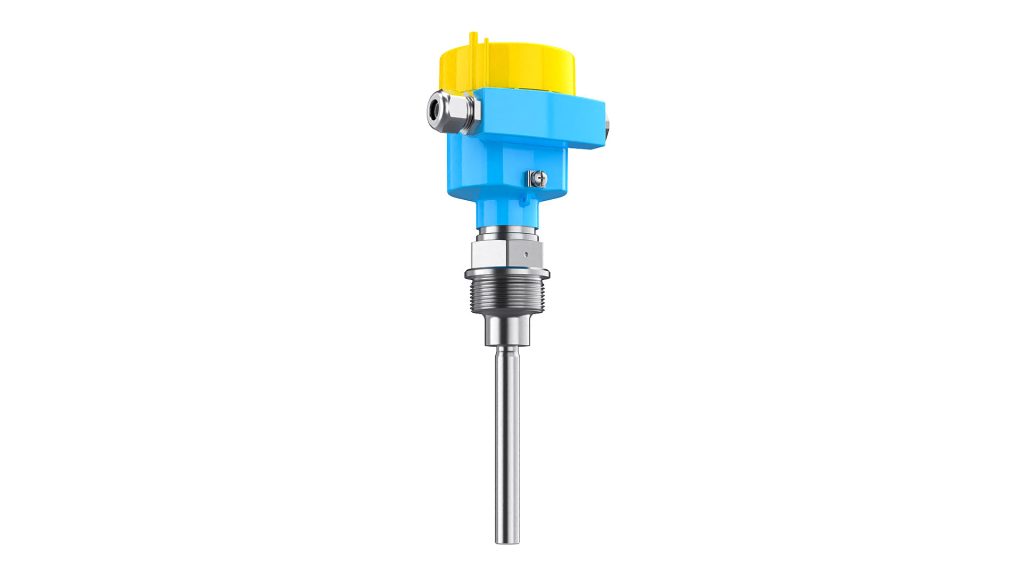
Unlike rotary paddle switches that depend on a motor-driven rotating blade, a vibrating rod level switch detects material by monitoring changes in the vibration characteristics of its sensing element.
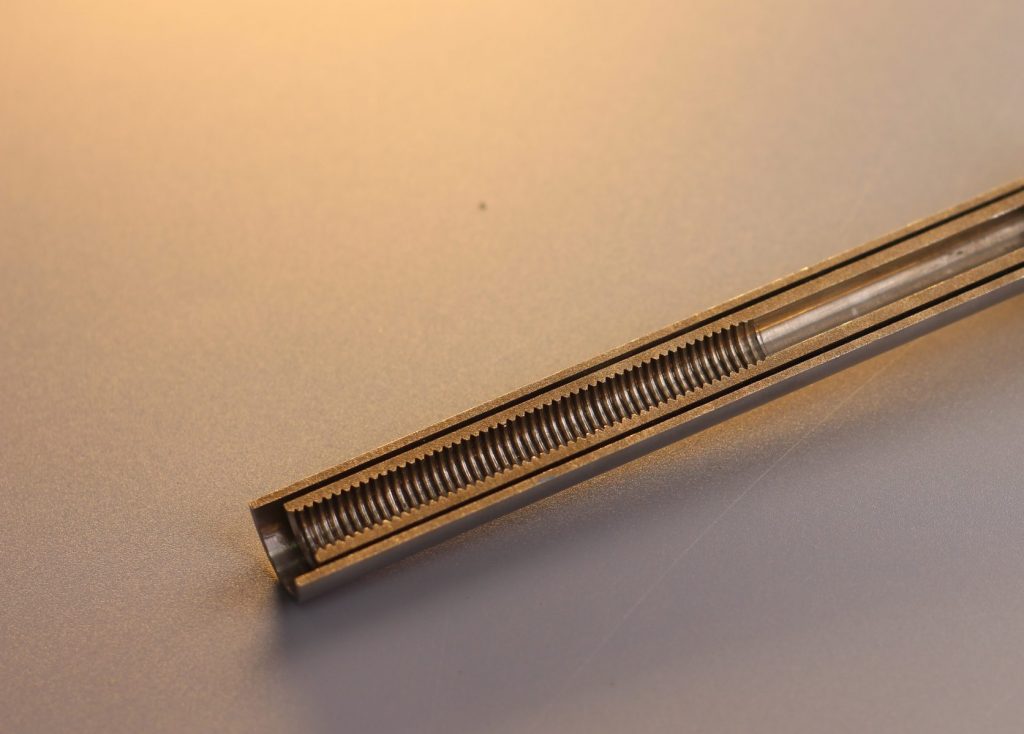
The Tube-11 uses a double-tube vibrating probe with an inner and outer tube. Piezoelectric components drive and monitor the vibration so that the sensing assembly operates at a predetermined resonant condition.
When the white sugar level is below the probe, the sensing element vibrates normally.
As the silo fills and sugar reaches the probe, the surrounding granules restrict its vibration. The vibration amplitude changes significantly, and the electronics detect this change and convert it into a switching output.
When the sugar level subsequently falls below the probe, the sensing element returns to its normal vibration condition and the output changes again.
The Tube-11 therefore does not provide continuous measurement of the entire material height. Instead, it answers a straightforward but important process question:
Is white sugar present at this specific point?
This point-level detection principle makes vibrating rod switches particularly suitable for high-level alarms, low-level alarms, empty-silo detection, overfill protection, and equipment interlocking.
Why Is the Tube-11 Suitable for White Sugar Level Detection?
1. Designed for Powder and Granular Materials
White granulated sugar is a typical granular material, and the Tube-11 is specifically designed for powders and granular bulk solids.
This allows the sensor to directly detect the presence of sugar without requiring complicated indirect measurement methods.
When white sugar reaches the vibrating probe, the resulting change in vibration provides a clear basis for point level detection.
2. Minimum Detectable Material Density of 0.02 g/cm³
The ability of a vibrating level switch to detect bulk solids is closely related to sensor sensitivity and material density.
The Tube-11 can detect materials with densities as low as 0.02 g/cm³. This enables it to handle not only common granular materials such as white sugar but also many relatively low-density powders and lightweight bulk solids.
For white sugar applications, this sensitivity provides ample detection capability for reliable switching.
3. Double-Tube Vibrating Probe
The Tube-11 features a double-tube probe design with nested inner and outer vibrating elements. The resonant characteristics of the sensing structure enable the instrument to respond sensitively when material contacts the probe.
When sugar covers the sensing element, its vibration condition changes and the electronic unit detects the resulting difference.
Because there is no exposed rotating paddle, the sensing mechanism avoids the continuous mechanical rotation associated with rotary level switches. This can be particularly beneficial in dusty sugar storage environments.
4. Good Tolerance to Material Buildup
After extended operation, a small amount of sugar or sugar dust may remain on the sensing element.
A level switch that cannot tolerate such buildup may generate false level indications. The Tube-11 is designed with a relatively high buildup tolerance, helping reduce the influence of minor deposits on normal level detection.
However, no contact level switch should be considered completely immune to severe material caking. If white sugar is exposed to excessive moisture and forms significant hardened deposits, periodic inspection and cleaning may still be required.
5. No Complicated On-Site Calibration
Food processing facilities often operate numerous instruments. If every level switch requires complicated material calibration after installation, commissioning and maintenance can become time-consuming.
The Tube-11 is designed for straightforward installation and operation without complicated field calibration under normal application conditions.
This helps reduce commissioning time and simplifies routine operation.
Proper Installation in a White Sugar Silo
In this application, the installation position was just as important as the selection of the level switch itself.
Avoid Installing Directly Under the Filling Inlet
A vibrating rod level switch should not be installed directly underneath the white sugar filling point whenever possible.
During filling, large quantities of sugar falling continuously onto the probe can create false level signals and expose the sensing element to unnecessary mechanical impact.
The switch should therefore be installed in an area where the material is relatively stable.
If silo geometry makes it impossible to completely avoid the filling stream, a protective shield can be installed to prevent falling sugar from directly striking the vibrating probe.
Use a Slight Downward Angle for Horizontal Installation
When the Tube-11 is mounted horizontally through the silo wall, installing the probe at a slight downward angle can help reduce material accumulation around the sensing element.
A downward inclination of approximately 20 degrees is recommended for horizontal installation where appropriate.
This is particularly useful in white sugar applications because fine sugar particles and dust may otherwise gradually accumulate around the probe connection area.
Avoid Dead Zones Inside the Silo
The surface of granular materials inside a silo is not necessarily horizontal.
During filling, white sugar may form a pile beneath the inlet. During discharge, the material surface may form a funnel-shaped profile. As a result, high- and low-level switch positions should not be determined solely by the total silo height.
The actual filling direction, discharge configuration, material flow pattern, and angle of repose should also be considered.
The high-level switch should be positioned where it represents the maximum safe storage level, while the low-level switch should take into account the minimum useful inventory and the actual flow behavior around the outlet.
Control Logic for White Sugar Level Detection
After installation, the Tube-11 output signals were connected to the plant PLC system.
As white sugar entered the silo and eventually covered the high-level vibrating probe, the vibration condition changed and the instrument generated a high-level switching signal.
The PLC could then execute predetermined control actions, such as stopping the sugar conveying system, closing the relevant feeding mechanism, activating a high-level alarm, and displaying the high-level status in the central control system.
As production continued, sugar was gradually discharged from the bottom of the silo.
When the material level fell below the low-level probe, the switch changed its output state. The PLC could then initiate a refilling sequence, generate a low-level alarm, control downstream equipment, or alert operators to check the available sugar inventory.
In this way, the high- and low-level switches, PLC, and conveying equipment formed a simple but effective automatic sugar silo control system.
Key Tube-11 Parameters for White Sugar Applications
When selecting a Tube-11 vibrating rod level switch for white sugar level detection, several technical specifications are particularly relevant:
- Suitable for powdered and granular bulk solids
- Minimum detectable material density: 0.02 g/cm³
- Probe vibration frequency: approximately 360 Hz
- Standard probe length: 125 mm
- Probe diameter: 16 mm
- Switching delay when material covers the probe: approximately 0.5 seconds
- Switching delay when material leaves the probe: approximately 1 second
- Relay-output power supply: 20–253 V AC or 20–72 V DC
- Two-wire version power supply: 10–36 V DC
- Process pressure range: -1 to 16 bar
For ordinary white sugar storage silos, a high-temperature version is generally unnecessary. However, the final model should always be selected according to actual process temperature, mounting connection, electrical output, hazardous-area classification, and control system requirements.
Sugar Dust and Explosion Protection
White sugar may appear harmless under ordinary conditions, but fine sugar dust is a combustible dust and should be treated accordingly in industrial environments.
During conveying, screening, lifting, and silo filling, fine sugar particles can become suspended in the air. Under appropriate concentration and ignition conditions, combustible dust can create a fire or explosion hazard.
For sugar plants, food processing facilities, and material conveying systems where an explosive dust atmosphere may occur, selecting a level switch involves more than determining whether the instrument can detect the material.
The hazardous-area classification and required explosion protection should also be considered.
Tube-11 versions are available for applications requiring appropriate gas and dust explosion protection, allowing the instrument configuration to be selected according to project safety requirements.
It is important to recognize that an explosion-protected level switch represents only one component of an overall combustible-dust safety strategy.
A complete safety approach may also involve appropriate equipment grounding, dust collection, ventilation, hazardous-area classification, explosion-protected electrical equipment, housekeeping practices, and compliance with applicable industrial safety requirements.
Application Results: Improved Automation and Reduced Manual Inspection
Following installation and commissioning, the Tube-11 vibrating rod level switches provided stable detection of the presence and absence of white sugar at the designated high- and low-level points.
When the material reached the high-level detection point, the switch provided a timely signal so that the control system could stop filling. When the sugar dropped below the low-level position, the system received the corresponding low-material signal and could initiate the required refilling logic.
Compared with relying heavily on operators to visually inspect silo inventory, point level switches provide clear and repeatable switching feedback for the sugar storage and conveying process.
The main benefits include:
- Reduced frequency of manual silo inspections
- Lower risk of overfilling, material overflow, and insufficient material supply
- Easy integration with PLC and DCS control systems
- Reduced maintenance associated with complex mechanical transmission components
- Improved automation of sugar storage and conveying processes
In a food production line operating continuously, a level switch may be a relatively small field instrument, but the reliability of its output signal can directly affect coordination between filling, storage, discharge, and downstream processing equipment.
How to Select a Level Switch for White Sugar
When selecting a vibrating rod level switch for a white sugar application, the product model should not be chosen based on the material name alone. The actual operating conditions should be evaluated first.
Several factors deserve particular attention.
Material characteristics:
Determine whether the material is standard granulated sugar, powdered sugar, or a mixture containing a significant percentage of fine particles.
Silo dimensions:
Confirm the silo height, diameter, geometry, and available mounting positions to determine the appropriate probe location and installation method.
High- or low-level detection:
Determine whether the switch will be used for overfill protection, low-level warning, empty detection, or a combination of high- and low-level monitoring.
Process temperature:
Normal white sugar silos generally operate at moderate temperatures. However, the actual process temperature should be verified when the sensor is installed near heated processing equipment.
Process connection:
Select the appropriate threaded, flanged, or other connection according to the existing silo nozzle and mechanical requirements.
Power supply and output:
Choose the appropriate power supply and switching output according to the PLC, DCS, control cabinet, or other automation equipment.
Hazardous-area requirements:
Where combustible sugar dust may create an explosive atmosphere, the required hazardous-area classification and explosion-protection specifications should be confirmed before selecting the instrument.
Considering material properties, mechanical installation, electrical requirements, and plant safety together helps ensure that the vibrating rod level switch performs reliably in the actual sugar handling process.
Conclusion
White sugar level detection may appear straightforward, but real-world applications involve several factors, including granular material behavior, sugar dust, probe buildup, filling impact, installation position, and automation interlocking.
The Tube-11 vibrating rod level switch uses a double-tube vibrating probe to detect changes in vibration when white sugar reaches or leaves the sensing element. With a minimum detectable material density of 0.02 g/cm³, simple commissioning, good tolerance to material buildup, self-diagnostic capabilities, and multiple output options, it is well suited to point level detection of white sugar and many other powdered or granular bulk solids.
In white sugar storage applications, Tube-11 switches can be installed at high- and low-level positions and integrated with PLC-controlled conveying equipment. This enables functions such as overfill alarms, automatic filling shutdown, low-level warnings, and automatic refilling.
For sugar producers, food processing plants, beverage manufacturers, and automated batching systems that use white sugar as a raw material, selecting the right vibrating rod level switch—and combining it with proper installation and control logic—can improve the reliability of sugar storage, conveying, and batching while supporting a higher level of process automation.