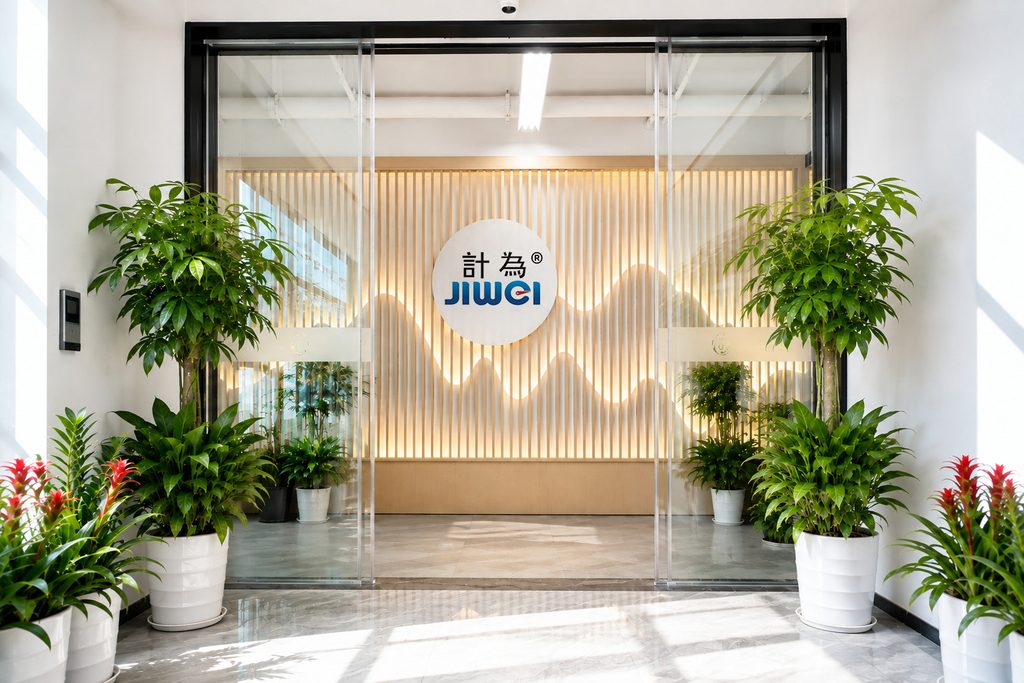
As its business continues to expand and demand for industrial automation solutions grows, Shenzhen Jiwei Automations Ltd. has officially completed the relocation and upgrade of its office facilities.
The company’s new office is located at Room 901, Building 4, Bangyan Green Valley Factory, No. 98 Zhihe Road, Dakang Community, Yuanshan Subdistrict, Longgang District, Shenzhen, China.
This relocation represents more than an upgrade in office space. It also marks a new stage in Jiwei’s development in level measurement instrumentation, industrial automation applications, customer service, and market expansion.
The larger working and R&D environment will provide stronger support for the continued development of the company’s core products, including radar level meters, vibrating rod level switches, and tuning fork level switches.
Business Growth Drives Jiwei’s Office Expansion
In recent years, the continued development of smart manufacturing, industrial digitalization, and automation has increased demand for reliable industrial automation instruments and level measurement equipment across industries such as chemical processing, power generation, environmental protection, food and beverage, building materials, and new energy.
Accurate liquid level, material level, and general level measurement plays an important role in production continuity, process control, and equipment safety.
In demanding industrial environments involving heavy dust, steam, material impact, mechanical vibration, or complex vessel structures, users increasingly require instrumentation with higher levels of stability, reliability, and application adaptability.
Jiwei has long focused on industrial level measurement and continuously develops and optimizes its products based on real-world operating conditions.
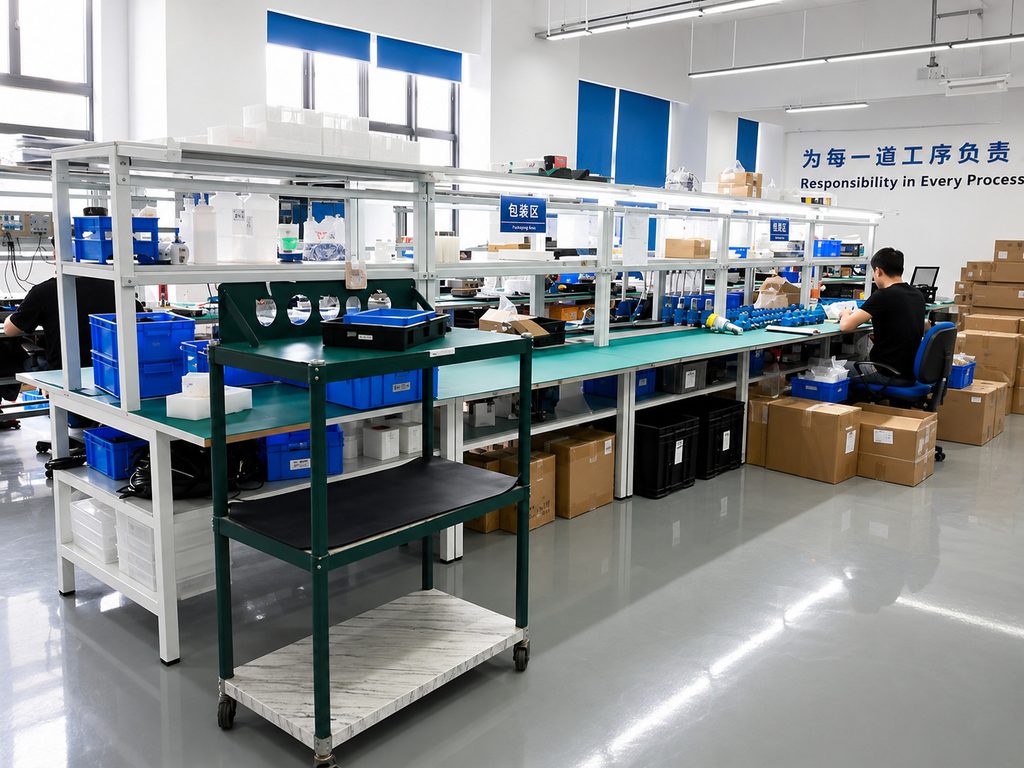
As the number of customer applications and projects has increased, the company’s previous office space gradually became insufficient for R&D collaboration, team communication, technical services, and customer reception.
The relocation is therefore both a result of continued business growth and a strategic investment in the company’s next stage of technical and market development.
Level Measurement Expertise and Product Reliability Support Long-Term Growth
For industrial automation instruments, true competitiveness is not determined only by laboratory specifications. More importantly, an instrument must remain stable and reliable after being installed in an actual industrial process.
Operating conditions vary significantly from one application to another.
Differences in material properties, vessel geometry, silo height, installation conditions, ambient temperature, and interference sources can all affect measurement performance. Even instruments based on the same measurement principle may perform differently under different field conditions.
For this reason, Jiwei continuously conducts research and validation involving measurement principles, mechanical structures, electronic circuits, software algorithms, signal processing, and application adaptability.
From product design and manufacturing to testing, project implementation, and customer feedback, each stage provides valuable input for further development.
Problems identified in field applications are analyzed, tested, and used to improve future product iterations. This process helps enhance instrument stability and adaptability across a wider range of industrial environments.
This application-oriented R&D approach has become an important foundation for Jiwei’s continued growth and customer trust.
Radar Level Meters for Continuous Measurement in Complex Applications
A radar level meter is widely used for continuous level measurement in storage tanks, silos, vessels, and other industrial containers.
In real-world applications, internal structures, dust, steam, agitators, fluctuating material surfaces, and complex reflection conditions may all generate interference echoes and increase measurement difficulty.
As a result, the development of radar level meters involves much more than simply transmitting and receiving electromagnetic waves.
It also requires expertise in antenna design, electronic circuitry, echo recognition, signal processing, and software algorithms.
Jiwei’s R&D team continuously studies radar signal behavior under different industrial conditions. By optimizing signal identification and processing logic, the company aims to improve the recognition of valid echoes and enhance measurement performance in complex environments.
The development objective is therefore no longer simply whether the instrument can measure a level, but whether it can provide accurate, stable, and reliable measurement over long-term operation.
Vibrating Rod Level Switches for Reliable Solid Material Detection
A vibrating rod level switch is commonly used for high- and low-level detection of powders, granules, and other bulk solid materials.
Typical applications include silos, storage bins, hoppers, and other solid-material handling systems.
Unlike liquids, solid materials can vary significantly in density, particle size, flow characteristics, adhesion, and accumulation behavior.
Industrial environments may also involve material impact, mechanical vibration, buildup, and limited installation space.
For this reason, reliable operation of a vibrating rod level switch depends not only on vibration detection technology, but also on the coordinated optimization of mechanical structure, vibration characteristics, signal evaluation, and installation design.
Through continuous testing with different materials and operating conditions, Jiwei works to reduce false alarms and abnormal switching behavior while improving overall reliability in challenging applications.
Tuning Fork Level Switches for Stable Liquid Level Detection
A tuning fork level switch is primarily used for point-level detection in liquid applications.
It can be applied for high-level alarms, low-level alarms, overflow prevention, pump protection, and other process-control functions.
Although the device has a relatively compact structure, its operation involves several technical elements, including mechanical vibration, electronic excitation, signal acquisition, status recognition, and interference resistance.
Liquid density, viscosity, temperature, and installation method may all influence instrument performance.
Jiwei therefore places strong emphasis on fluid characteristics and actual equipment conditions during the development of its tuning fork level switches.
Through continuous testing and field application experience, the company aims to improve product stability and long-term operating performance across different liquid applications.
From Product Development to Complex Industrial Application Research
The most difficult challenges in industrial automation instrumentation often come from harsh and unpredictable field conditions.
Heavy dust, steam, material buildup, mechanical vibration, material impact, temperature variation, complex vessel structures, and electrical interference can all affect the performance of level measurement instruments.
For this reason, successful testing under standard laboratory conditions alone is not sufficient.
Jiwei’s R&D team continuously evaluates complex operating environments through simulation testing, project validation, field-problem analysis, and product iteration.
The goal is to identify the factors that influence measurement stability and optimize products from multiple perspectives, including mechanical structure, electronic circuits, software algorithms, and parameter logic.
For Jiwei, the objective of level instrumentation development is not simply to make a device function properly.
A more important goal is to continuously expand the range of operating conditions in which the instrument can deliver stable and reliable long-term performance.
As a result, the company’s R&D focus has gradually expanded from individual product functions to broader research involving measurement principles, hardware-software integration, signal processing, and adaptability to complex industrial environments.
China’s Industrial Instrumentation Market Is Moving Toward Technology and Reliability
As China’s manufacturing capabilities continue to develop, the factors industrial users consider when selecting domestic automation instruments are also changing.
In the past, customers often focused on whether domestic instruments could replace imported products.
Today, more users are evaluating whether an instrument can actually solve application-specific problems and whether it can provide long-term stability, reliability, and reasonable maintenance costs.
This means that competition among Chinese industrial automation instrument manufacturers is gradually shifting away from price alone.
The market is increasingly focused on core technology, product performance, software capability, application adaptability, reliability, and technical service.
For manufacturers of level measurement instruments, long-term competitiveness depends on understanding real industrial applications and continuously improving products through practical field experience.
A New Office Marks a New Stage in Level Measurement Technology
The new office will provide improved conditions for R&D communication, team collaboration, operational management, and customer service.
It will also create additional capacity for future recruitment, technical development, and market expansion.
The relocation represents a new milestone in Jiwei’s development, but the company’s long-term growth will continue to depend on product quality, technological capability, and the trust built through customer applications.
Looking ahead, Jiwei will remain focused on industrial level measurement and automation instrumentation.
The company will continue to strengthen the development and application of radar level meters, vibrating rod level switches, tuning fork level switches, and other liquid and bulk-solid level measurement products.
At the same time, Jiwei plans to increase investment in software algorithms, measurement technologies, application adaptability, and reliability verification, with more R&D resources dedicated to solving measurement challenges in complex industrial environments.
A new office represents a new beginning. Jiwei will continue to provide industrial users with reliable level measurement products and application-oriented technologies for liquid level, material level, and industrial process measurement.