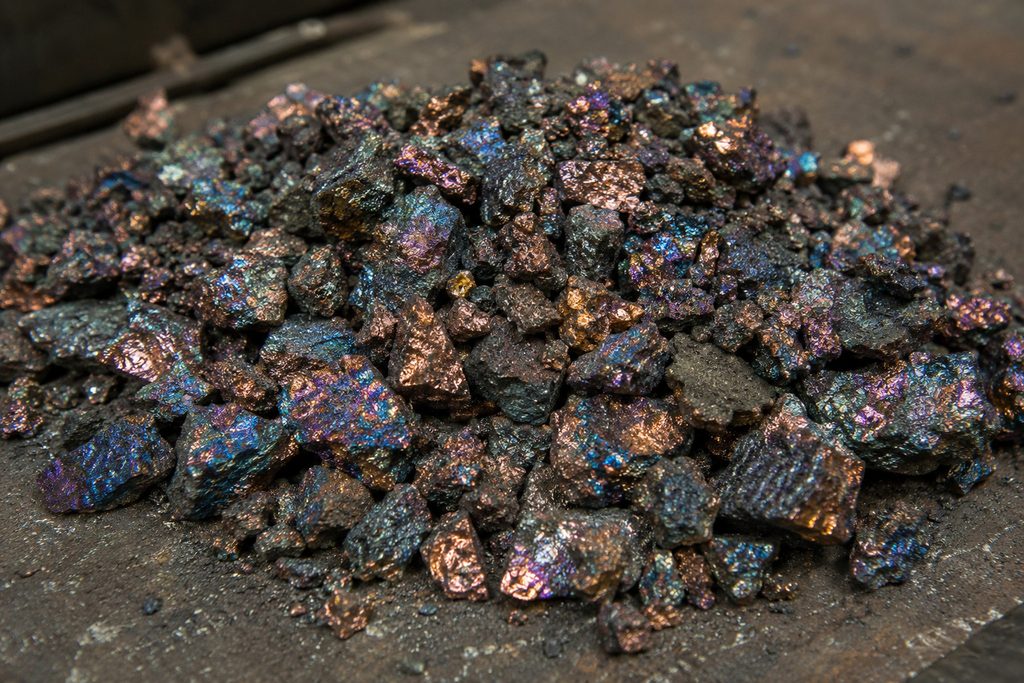
Copper concentrate is an important raw material in copper smelting operations. Throughout storage, conveying, batching, and smelting processes, reliable high- and low-level detection in copper concentrate silos is essential for maintaining stable material handling and process control.
Compared with ordinary granular materials, copper concentrate is typically fine, dusty, and prone to adhesion or caking when its moisture content changes. These characteristics can make level detection challenging. Conventional level measurement technologies may be affected by material buildup, variations in dielectric properties, or harsh environmental conditions.
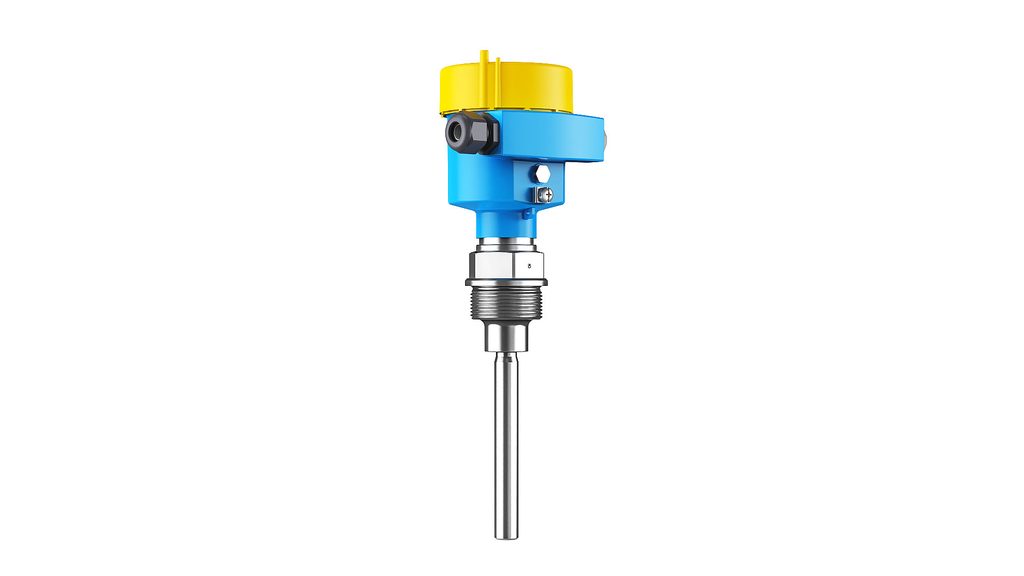
In one copper smelting application, the Tube-11 vibrating rod level switch was selected for point level detection in a copper concentrate storage silo. By monitoring predefined high and low material levels, the switches provide reliable signals for feeding, discharge, alarms, and equipment interlocks, helping improve the stability and automation of the copper concentrate handling system.
Why Is Copper Concentrate Level Detection Challenging?
Copper concentrate is generally produced through crushing, grinding, flotation, and other mineral processing operations. Its composition and physical characteristics can vary depending on the ore source and beneficiation process.
After arriving at a smelting facility, copper concentrate passes through several stages, including unloading, storage, blending, and conveying. Storage silos and hoppers act as important buffers between these processes, making reliable level detection essential.
1. Fine Particles and Heavy Dust
Copper concentrate consists of relatively fine particles. During conveying and silo filling, large amounts of dust may be generated.
If a level sensor is sensitive to airborne dust, unstable switching or false alarms may occur. A copper concentrate level switch therefore needs to operate reliably even in dusty environments.
2. Material Adhesion and Buildup
Copper concentrate is not always completely dry. As moisture content increases, fine particles can become sticky and may adhere to the sensor or form deposits inside the silo.
If a sensor is highly sensitive to material buildup, residual concentrate on the sensing element may be interpreted as an actual material level even after the bulk material has dropped below the switch.
For this reason, resistance to buildup is an important consideration when selecting a level switch for copper concentrate.
3. Changes in Moisture and Material Properties
The moisture content of copper concentrate may vary between batches.
For level detection technologies that depend heavily on the electrical properties of the material, these variations can alter dielectric constant, conductivity, or other characteristics, potentially requiring additional adjustment or calibration.
A detection principle that is largely independent of changes in dielectric constant can therefore offer an advantage in copper concentrate applications.
4. Level Signals Are Used for Process Interlocks
A copper concentrate level switch often performs more than a simple local alarm function. Its output may be connected directly to a PLC or DCS.
For example, when the material reaches the high-level switch, the control system may stop or adjust upstream conveying equipment. When the material falls below the low-level switch, the system may initiate refilling or stop downstream equipment to prevent material starvation.
An unreliable level signal can therefore cause unnecessary equipment starts and stops or disrupt continuous production. Reliable switching performance is consequently a key requirement.
Project Requirements for Copper Concentrate Level Detection
In this application, high- and low-level detection was required for a copper concentrate storage silo.
Copper concentrate entered the silo through a belt conveying system and was discharged from the bottom into the next process stage. To prevent overfilling while maintaining a sufficient supply of material for downstream production, the automation system required dependable high- and low-level signals.
Several factors were considered during instrument selection:
- The level switch had to be suitable for powders and granular bulk solids.
- It needed to operate reliably in a dusty copper concentrate environment.
- Changes in moisture content and material characteristics should have minimal impact on switching performance.
- The sensing element needed good resistance to material buildup.
- A compact probe design was preferred to reduce the mechanical impact caused by falling copper concentrate.
- The output signal needed to integrate easily with the existing PLC or DCS for alarms and process interlocks.
After evaluating these operating conditions, the Tube-11 vibrating rod level switch was selected for point level detection in the copper concentrate silo.
How Does the Tube-11 Detect Copper Concentrate Level?
The Tube-11 is a vibrating rod level switch designed for point level detection of powdered and granular bulk solids. Its sensing element uses a dual-tube vibration structure with inner and outer tubes.
During normal operation, piezoelectric elements excite the sensing probe at its characteristic vibration frequency while the electronics continuously monitor its vibration state.
When the copper concentrate level remains below the probe, the sensing element vibrates normally.
As the silo fills and copper concentrate reaches and covers the probe, the material creates a damping effect. This changes the vibration characteristics of the sensing element. The electronics detect this change and convert it into a switching output.
When the material level falls and the probe becomes uncovered again, the vibration returns to its normal state and the output switches accordingly.
It is important to distinguish point level detection from material composition measurement. The Tube-11 does not measure copper grade or moisture content. Instead, it detects whether copper concentrate has reached a predefined position inside the silo.
This makes it particularly suitable for applications such as high-level alarms, low-level alarms, overfill protection, and other point level control functions.
Dual-Tube Vibration Design for Reliable Detection
The Tube-11 uses a dual-tube probe structure in which the vibration characteristics of the inner and outer tubes are engineered to provide sensitive and reliable detection.
One important advantage of this measuring principle in copper concentrate applications is that detection does not depend on the dielectric constant of the material.
The source, mineral composition, particle characteristics, and moisture content of copper concentrate may change from batch to batch. These variations can affect the electrical properties of the material.
A vibrating level switch determines the switching point primarily by detecting changes in probe vibration after contact with the material. This reduces the influence of dielectric constant variations on level detection.
For copper concentrate silos handling material from different sources or batches, this can help maintain more consistent switching performance.
Resistance to Buildup in Moist Copper Concentrate
Material buildup is another common challenge in copper concentrate level measurement.
When copper concentrate contains moisture, fine particles may adhere to the sensing probe. With some detection technologies, residual material can cause false switching even when the actual bulk level has already dropped.
The Tube-11 is designed with buildup tolerance to reduce the influence of ordinary material deposits on switching performance.
Correct installation remains essential.
The level switch should generally not be installed directly beneath the material inlet, where a continuous stream of copper concentrate could strike the sensing probe. The installation point should also take the actual material flow pattern into account.
Areas where excessive accumulation, bridging, or dead zones are likely to occur should not be selected as the only reference point for level detection.
Combining appropriate instrument selection with proper installation helps maximize reliability in demanding copper concentrate applications.
Compact 125 mm Probe Helps Reduce Material Impact
When copper concentrate enters a storage silo, the falling material can create significant mechanical forces.
If a level switch extends too far into the silo, a larger part of the probe is exposed to the falling material stream, potentially increasing mechanical stress.
The Tube-11 features a compact standard probe approximately 125 mm long and 16 mm in diameter.
When the required switching point can be achieved with this compact structure, the smaller exposed area helps reduce the mechanical load created by falling copper concentrate.
This characteristic is particularly useful in silos with relatively high filling rates or significant material impact.
However, even a robust point level switch should not be installed directly in a severe impact zone. The actual installation should consider silo geometry, filling direction, material flow, and potential mechanical loads. Additional protection may be considered where necessary.
High-Level Detection in Copper Concentrate Silos
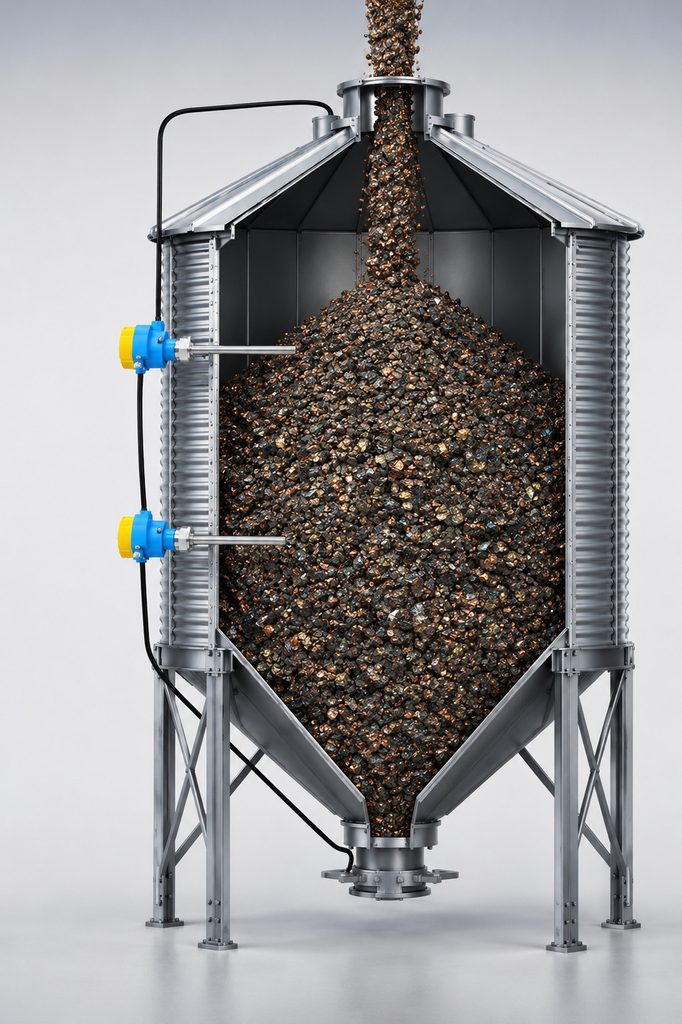
In this project, one Tube-11 vibrating rod level switch was installed near the upper section of the copper concentrate silo for high-level detection.
During normal filling, the copper concentrate level gradually rises. Once the material reaches and covers the high-level probe, the damping effect changes the vibration state of the sensing element and causes the switch output to change.
The signal is transmitted to the PLC, where it can activate a high-level alarm and, depending on the control philosophy, stop or regulate upstream belt conveyors, feeders, or other filling equipment.
This helps prevent continued feeding when the silo is approaching its maximum operating level.
Reliable high-level detection can reduce the risk of overfilling, material spillage, blockage, and unnecessary cleanup around the storage and conveying system.
For continuous copper smelting operations, this contributes to both process stability and reduced manual intervention.
Low-Level Detection in Copper Concentrate Silos
A second Tube-11 can be installed at a lower position in the silo to provide low-level detection.
When copper concentrate covers the sensing element, the system recognizes the presence of material at that position. As discharge continues and the material level falls below the probe, the switch changes state and sends a low-level signal to the control system.
Depending on process requirements, this signal can be used to start refilling, activate a low-material alarm, or interlock downstream equipment.
By combining high- and low-level switches, operators can establish a straightforward and reliable point level control system for copper concentrate storage.
It should be noted that a vibrating rod level switch is a point level detection device.
If an application requires continuous indication of material height, inventory, or percentage level throughout the entire silo, a continuous level measurement instrument should be considered. The Tube-11 is primarily intended for critical switching points such as high, low, and high-high level alarms.
Performance in Dusty Industrial Environments
The transfer and discharge of copper concentrate can generate significant dust, making enclosure protection an important consideration for instrumentation.
The Tube-11 can provide IP66/IP67 enclosure protection and is available in configurations suitable for industrial applications where gas or dust explosion protection may be required.
The process connection and sensing probe use corrosion-resistant metallic materials, with probe material options such as 316L and 318S13 stainless steel, helping the instrument withstand demanding industrial environments.
For a specific copper concentrate application, however, final instrument selection should always consider actual process temperature, pressure, corrosiveness, hazardous-area classification, and material composition.
Instrument configuration should therefore be based on the complete process conditions rather than on the material name alone.
Installation Considerations for the Tube-11
Correct installation is essential for achieving stable copper concentrate level detection.
First, avoid installing the switch directly beneath the filling inlet. Continuous impact from falling copper concentrate can increase mechanical wear and may affect detection reliability.
Second, select a representative level position. Bulk solids often form an angled surface inside a silo, meaning the material level near the wall may differ from the level at the center. The installation height should therefore consider the actual angle of repose and filling pattern.
Third, avoid dead zones or areas where residual material accumulates. If a section of the silo retains copper concentrate after the main material has been discharged, a switch installed there may remain covered and fail to represent the actual operating condition.
Finally, the electrical wiring and alarm logic should be designed according to process safety requirements. For critical high-high level alarms, the response to power loss, cable faults, and other abnormal conditions should also be considered.
Operational Benefits of the Application
Using the Tube-11 vibrating rod level switch for copper concentrate high- and low-level detection provides a relatively simple point level control solution.
Because the vibration principle does not depend on the dielectric constant of the material, variations in copper concentrate moisture content and electrical characteristics are less likely to require repeated adjustment.
The compact probe also reduces the area exposed to falling material, while buildup tolerance helps minimize false switching caused by deposits of moist copper concentrate.
From a maintenance perspective, vibrating rod level switches do not require complicated on-site calibration for normal point level detection. With correct selection and installation, routine cleaning and adjustment requirements can be reduced.
More importantly, stable switching signals can be incorporated directly into the automated control of the copper concentrate handling system.
When the silo approaches the high-level limit, filling equipment can be stopped or regulated automatically. When the material falls below the low-level position, the system can initiate refilling or generate a shortage alarm.
This allows copper concentrate storage and conveying operations to rely less on manual observation and more on automated process control.
Why Use a Vibrating Rod Level Switch for Copper Concentrate?
When selecting a level switch for copper concentrate, the objective is not necessarily to use the most complex measurement technology. The instrument must first address the actual challenges of the application: dust, buildup, changing material characteristics, and mechanical impact.
The Tube-11 detects whether material has reached a predefined point by monitoring changes in the vibration of its dual-tube sensing element.
Its measuring principle is independent of material dielectric constant, while its compact probe design reduces exposure to falling material. Buildup tolerance and industrial-grade enclosure options further support reliable operation under demanding conditions.
These characteristics make the Tube-11 suitable not only for copper concentrate level detection but also for other bulk solids such as metal ore powders, alumina, coal powder, fly ash, and various powdered or granular materials.
Conclusion
A copper concentrate storage silo may appear to be only one part of a much larger copper smelting process, but the reliability of its level signals can directly affect feeding, conveying, batching, and downstream production.
Copper concentrate presents several challenges for level detection, including heavy dust, potential material adhesion, variations in moisture content, and changes in electrical properties.
The Tube-11 vibrating rod level switch uses a dual-tube vibration sensing principle to detect whether copper concentrate has reached a predefined level. Its operation does not depend on material dielectric constant, while its compact probe, buildup tolerance, and industrial protection design help improve reliability under demanding operating conditions.
When correctly positioned and integrated with a PLC or DCS, the Tube-11 can provide dependable point level signals for high-level, low-level, and overfill protection applications.
For copper concentrate storage and conveying systems, this provides a practical way to reduce false alarms and maintenance requirements while improving process automation and supporting stable, continuous operation throughout the copper smelting process.