1. Project Background: Why Is Fly Ash Level Measurement Difficult?
In power plants, heating stations, cement and building materials plants, metallurgical environmental protection systems, and many industrial facilities using coal-fired boilers, fly ash level measurement has always been a challenging application for field instruments. Fly ash has fine particles, high dust concentration, and strong fluidity. After high-temperature combustion and dust collection, it usually enters ash hoppers, sending vessels, ash silos, or intermediate storage bins. Reliable level switches are required on site for high-level alarm, low-level alarm, or blockage detection, helping prevent ash hopper overfilling, poor ash discharge, empty conveying, dust leakage, and equipment shutdown. RF Admittance Level Switch
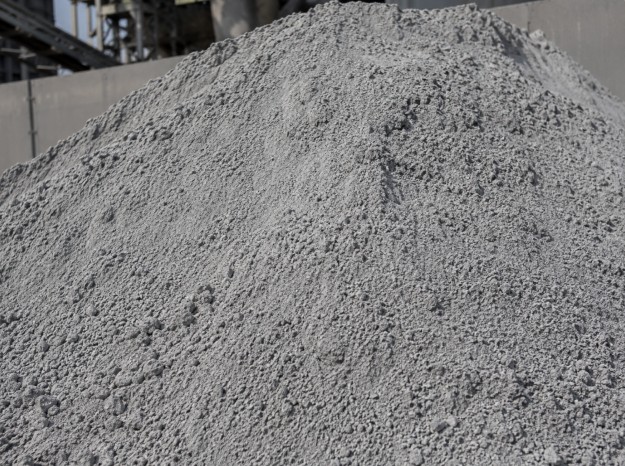
Compared with ordinary granular materials, fly ash creates more demanding measurement conditions. High dust levels can affect instrument housings, mechanical parts, and electronics, while buildup or scaling inside ash hoppers may cause false alarms. In some applications, high temperature and material impact also place extra stress on the probe and electronic unit. As a result, fly ash level measurement requires instruments that can operate reliably, resist buildup, reduce maintenance, and adapt to harsh site conditions.
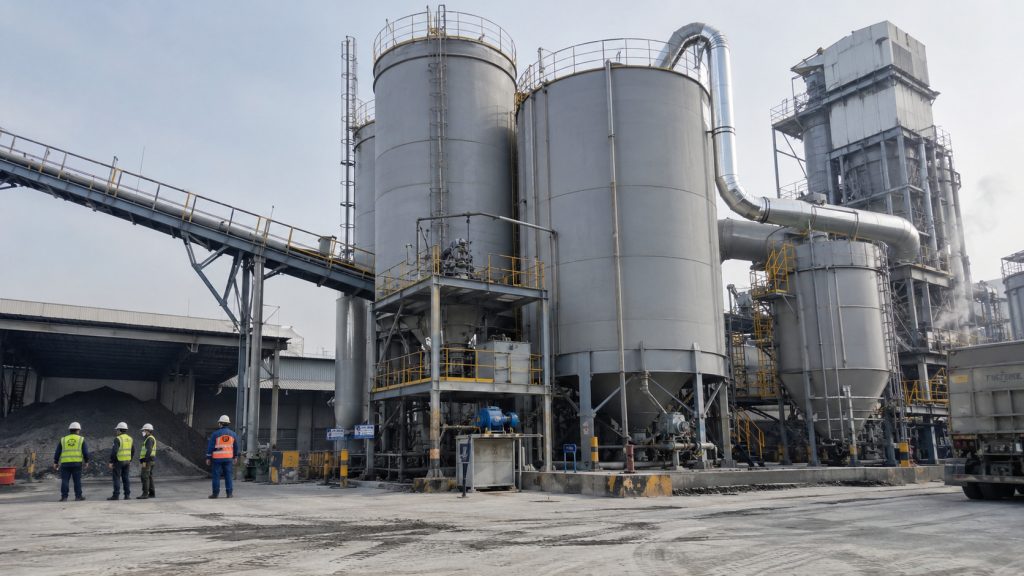
In actual projects, many users initially choose rotary paddle level switches, capacitive level switches, or other mechanical switches. Rotary paddle switches are intuitive in structure and relatively low in cost. However, in fine-powder environments such as fly ash, dust may enter the drive shaft, clutch, or sealing area, causing jamming and false alarms. Traditional capacitive level instruments are sensitive, but when probe buildup, vessel wall scaling, or material adhesion occurs, they may mistakenly identify material stuck on the probe as the actual material level. For continuous production enterprises, false alarms not only increase inspection and maintenance workload, but may also affect the stable operation of ash conveying systems, dust collection systems, and boiler auxiliary systems.
2. Application Case: Fly Ash Level Control Upgrade for Dust Collector Hoppers in an Industrial Plant
At an industrial plant using coal-fired boilers, fly ash from the pulse baghouse dust collector is discharged into lower ash hoppers and then removed by the ash conveying system. Reliable high-level detection is essential because excessive ash buildup can cause poor discharge, increased filter bag resistance, reduced dust collection efficiency, and even production instability.
Before the upgrade, the user used rotary paddle level switches to reduce costs. However, fine fly ash often entered the mechanical parts, causing the clutch and drive shaft to jam. This led to frequent false alarms or missed alarms, requiring repeated dismantling, cleaning, and resetting. As a result, maintenance workload increased significantly, especially in the high-dust environment of multiple production lines.
After evaluating the actual site conditions, the project finally selected the Jiwei Cape-11 Series RF Admittance Level Switch for high-level alarm in fly ash hoppers. According to public application information, the coal ash in this type of working condition becomes dry powder after high-temperature combustion and baghouse dust collection, with relatively stable dielectric characteristics. It is suitable for point level detection using RF admittance level switches. The user first installed the product on one production line for trial operation. After confirming stable performance, the user purchased additional Cape-11 RF admittance level switches six months later for the remaining production lines, replacing the previous mechanical level switches with a high failure rate.
3. Why Choose an RF Admittance Level Switch?
The key challenge in fly ash level measurement is not simply detecting whether material exists, but distinguishing the actual material level from probe buildup. The Jiwei Cape-11 Series RF Admittance Level Switch detects changes in reactance between the probe and the vessel wall to realize level measurement and control. When fly ash covers the measuring electrode of the probe, the reactance between the measuring electrode and the tank changes. The circuit detects this change and outputs an alarm signal.
Compared with traditional capacitive level switches, RF admittance level switches offer stronger resistance to material buildup. The Jiwei Cape-11 Series uses both a measuring electrode and a guard electrode to reduce the influence of fly ash adhering to the probe. This allows the instrument to focus on the signal change caused by the actual material level, helping prevent false alarms in fly ash, coal ash, flue dust, and other adhesive powder applications.
In addition, RF admittance level switches have no mechanical rotating parts and do not rely on blade rotation to determine material level. As a result, they avoid common problems of rotary paddle switches, such as shaft jamming, blade wear, and dust entering the clutch. For high-dust, fine-powder applications where ash hoppers are compact and frequent maintenance is inconvenient, a structure without moving parts can significantly reduce daily inspection pressure.
4. Product Advantages of Jiwei Cape-11 Series in Fly Ash Applications
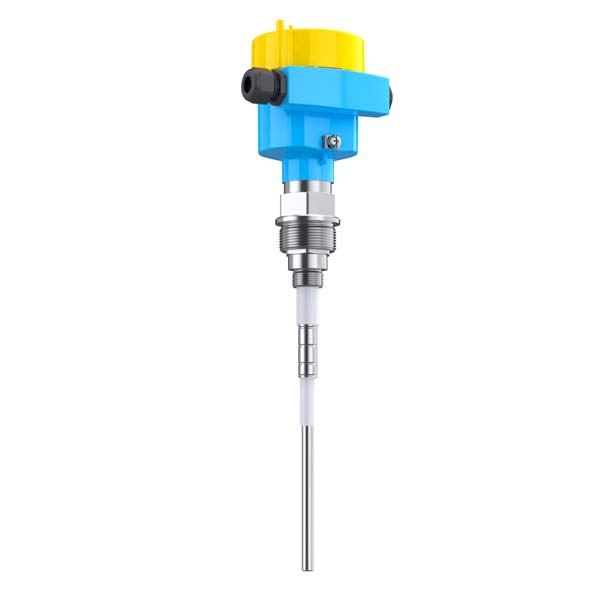
According to Jiwei’s official product information, the Cape-11 Series RF Admittance Level Switch is mainly designed for powder material measurement such as fly ash. It includes four major model types: general type, protective type, cable type, and ultra-high-temperature type. Different models correspond to different installation positions, temperature ranges, material impact conditions, and silo structures, covering various fly ash-related applications such as dust collector hoppers, sending vessels, ash silos, coal powder ash collection bins, and desulfurization flue dust bins.
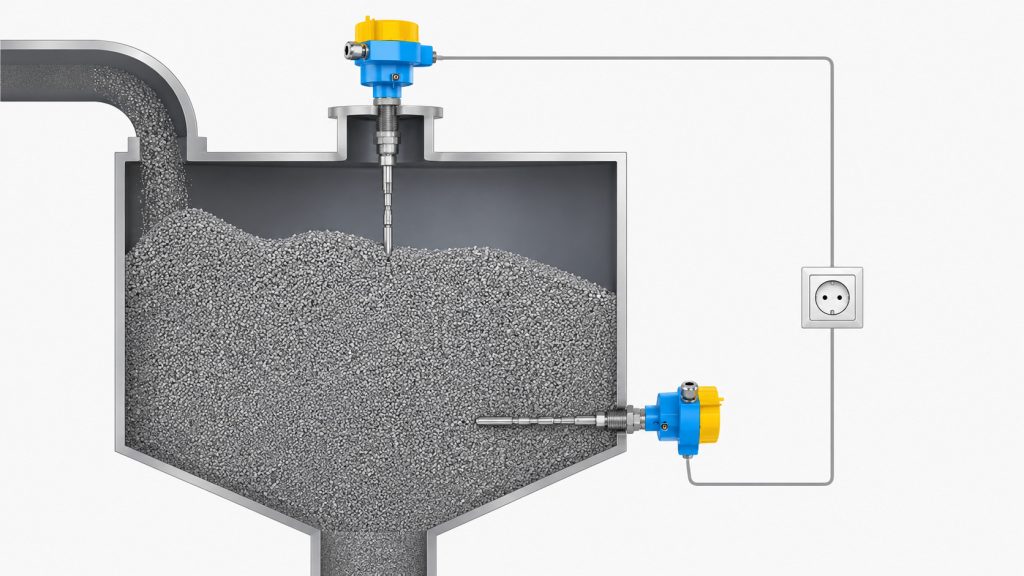
4.1 Strong Anti-Buildup Capability, Suitable for Fly Ash and Adhesive Materials
Fly ash does not always fall freely inside ash hoppers. Especially under changes in humidity, temperature difference, or rough vessel wall conditions, ash may accumulate at the probe root, vessel wall, or local dead corners. The Jiwei Cape-11 Series reduces the interference caused by material buildup and scaling through RF admittance detection technology and guard electrode design. For users, this means the instrument is less likely to falsely report a high level because a thin layer of ash is attached to the probe, and the probe does not need to be frequently removed for cleaning.
4.2 Dual-Color LED Indication for Easier On-Site Inspection
In fly ash conveying and dust collection systems, level switches are usually installed on the side of ash hoppers, on the top of ash silos, or near sending vessels. The site space is often limited, and lighting conditions are usually average. The Jiwei Cape-11 Series is equipped with an external dual-color LED indicator. The housing can rotate relative to the process connection, allowing the LED direction to be adjusted during installation. This makes it easier for inspection personnel to observe switch status from a distance. For sites with multiple ash hoppers arranged in rows, this detail helps quickly identify alarm points and improves inspection efficiency.
4.3 Modular Design for Convenient Installation and Maintenance
Instrument maintenance in fly ash projects usually requires fast, simple, and replaceable solutions. The Cape-11 Series adopts a modular design, making installation and maintenance more convenient. For retrofit projects, long shutdowns are often unacceptable. The simpler the instrument structure and the more intuitive the commissioning, the easier it is to shorten the upgrade period. Compared with mechanical level switches that require transmission components to be dismantled and inspected, RF admittance level switches are more suitable for long-term use in high-dust environments.
4.4 IP66 Protection, Suitable for Most Dusty Sites
Dust in fly ash applications exists not only inside the storage vessel, but also around equipment platforms, instrument housings, and cable entries. Jiwei Cape-11 product information indicates that the product protection rating can reach IP66, making it suitable for most dusty environments. For dust collector hoppers, ash conveying platforms, and ash silo sites, a higher housing protection level helps reduce electrical failures caused by dust intrusion.
4.5 Multiple Models Available for Normal Temperature, High Temperature, Large Silos, and Impact Conditions
The Jiwei Cape-11 Series offers different models for various fly ash applications. Cape-11A is suitable for general dust, coal ash, fly ash silos, and ash hoppers. Cape-11P includes a stainless steel protective tube for applications with material impact, such as power plant ash hoppers and ash silos. Cape-11R is designed for large silos or tanks with vertical installation, while Cape-11H uses a high-temperature ceramic probe for dust and powder applications above 250°C, with a maximum process temperature of 450°C.
This model classification is highly valuable for fly ash projects. Although all applications may be called “fly ash level measurement,” the working conditions vary greatly by location. A dust collector ash hopper may focus more on dust and material buildup. The top of an ash silo may focus more on insertion length and large silo structure. A high-temperature flue dust bin may focus more on process temperature. A location with strong material impact requires a protective type or an installation method that avoids impact. Selecting models according to actual working conditions helps avoid poor suitability caused by using one model for every application.
5. Selection Recommendations: How to Choose a Fly Ash Level Switch
In fly ash projects, model selection should first clarify the measurement purpose. If the purpose is only high-level alarm to prevent ash hopper overfilling or ash silo overflow, a side-mounted or top-mounted RF admittance level switch can be selected. If low-level alarm is required to determine whether a sending vessel contains material or whether an ash silo is nearly empty, the appropriate insertion length and installation position should be selected according to the silo structure. If the silo diameter is large and side-mounted probes are easily affected by impact, the cable type with vertical installation can be prioritized.
Second, medium temperature must be considered. When the temperature of fly ash after dust collection is not high, Cape-11A general type or Cape-11P protective type can be selected according to site conditions. If the site temperature exceeds the applicable range of conventional models, especially in high-temperature ash, sintered ash, metallurgical ash, or high-temperature flue dust bins, Cape-11H ultra-high-temperature type should be considered. This model covers higher-temperature scenarios and is suitable for projects with strict probe temperature-resistance requirements.
Third, material impact should be considered. If the installation point is close to the feeding inlet, or if fly ash is mixed with particles and strong airflow impact is present, the feeding point should be avoided, and a protective baffle should be installed above the probe. For locations with strong impact, the Cape-11P protective type with stainless steel protective tube can be selected. If space permits, the instrument should be installed where material flow is relatively stable. This not only ensures accurate level reflection, but also extends probe service life.
Finally, dielectric constant, probe length, and guard electrode length should be considered. Product information for Cape-11A, Cape-11P, Cape-11H, and related models indicates that they are suitable for materials with a dielectric constant of ≥1.6. During model selection, probe length should be determined based on actual fly ash characteristics, vessel material, installation direction, and alarm point height. The guard electrode should extend into the silo to prevent material buildup at the root or inside the mounting nozzle from affecting detection stability.
6. Installation Points: Key Factors for Stable Fly Ash Level Measurement
Many fly ash level measurement problems do not come entirely from the instrument itself, but from unreasonable installation locations. When RF admittance level switches are used for fly ash, the following points should be emphasized.
First, when installed vertically, the instrument should maintain sufficient distance from the vessel wall to avoid measurement interference from wall buildup, local ash accumulation, or internal structural parts. According to Jiwei installation information, when vertically installed, the RF admittance level switch should be at least 500 mm away from the vessel wall.
Second, the guard electrode should extend into the silo. If the guard electrode does not enter the effective measurement area, buildup at the root or ash accumulation inside the mounting nozzle may affect detection stability. Jiwei information recommends that the guard electrode should extend at least 50 mm into the silo.
Third, when installed horizontally, the level switch should be tilted downward by approximately 20° to reduce ash accumulation and buildup on the probe surface. At the same time, to reduce direct material impact, a protective baffle should be installed above the probe, and the baffle length should be greater than the horizontal insertion length of the probe.
Fourth, when multiple RF admittance level switches are installed in the same silo, sufficient vertical spacing should be maintained to avoid mutual interference or misjudgment. For ash silos with both high-level and low-level detection, installation height should be planned during the design stage to ensure that alarm logic is consistent with ash conveying control logic.
Fifth, the installation point should avoid the feeding inlet and strong airflow impact zones. During pneumatic conveying, fly ash may be accompanied by strong airflow disturbance. If the level switch is directly located in the falling ash or blowing area, probe impact, uneven local accumulation, or signal fluctuation may occur. Therefore, reasonable installation location is more important than simply increasing instrument sensitivity.
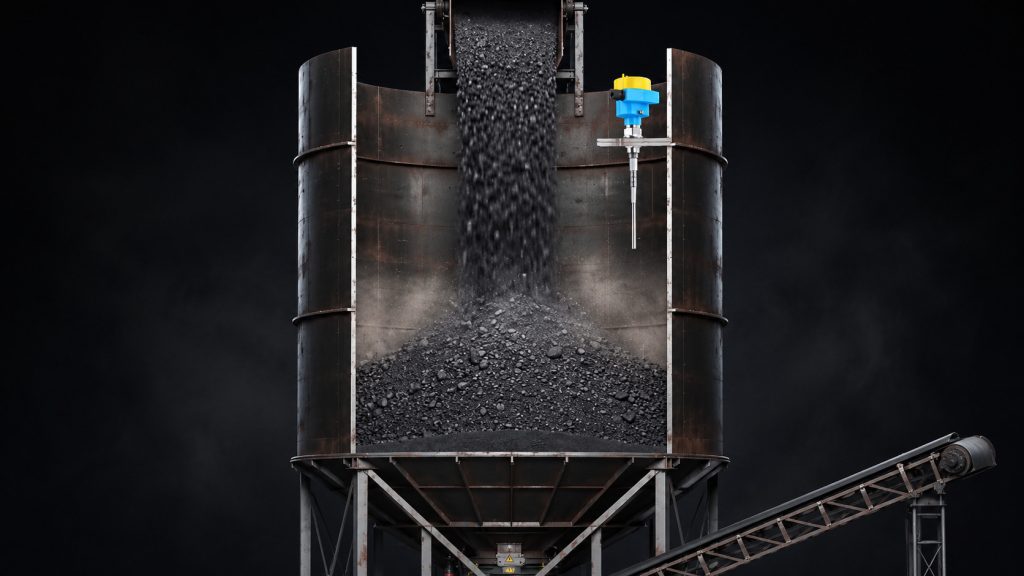
7. Application Results: From Frequent Maintenance to Stable Alarm
In this fly ash hopper level measurement case, the user’s most direct benefit was the reduction of false alarms and maintenance workload. When rotary paddle level switches were previously used, dust entered the mechanical structure and caused jamming, requiring frequent inspection and cleaning by site personnel. After replacing them with Jiwei Cape-11 RF Admittance Level Switches, the instruments detected level through changes in electrical reactance, without mechanical rotating parts, avoiding the problem of transmission components jamming due to ash intrusion.
Second, the anti-buildup capability improved alarm reliability. Ash accumulation and adhesion are unavoidable in fly ash applications. If the instrument cannot distinguish buildup from the actual material level, high-level false alarms or delayed alarms may occur. The RF admittance principle of the Cape-11 Series effectively reduces the influence of buildup, making ash hopper high-level alarms closer to real working conditions.
Third, on-site inspection became more convenient. The external dual-color LED indicator allows operators to quickly check switch status, and the rotatable housing makes installation direction more flexible. For projects with multiple ash hoppers, silos, and measuring points, this visible status feedback can significantly improve inspection efficiency.
More importantly, the repeat purchase after trial operation demonstrates the suitability of this solution in actual working conditions. The user first installed the instrument on a single production line for trial operation. After confirming stable performance, the user applied it in batches to the remaining production lines. This “trial first, then scale up” approach also provides a reference for other fly ash projects. For level points with complex working conditions and frequent historical failures, a typical ash hopper can be selected for trial verification before gradually replacing mechanical switches with high failure rates.
8. Conclusion: Reliable, Anti-Buildup, and Low-Maintenance Solutions Are Better for Fly Ash Level Measurement
Fly ash level measurement may seem like a simple switching detection task, but actual site conditions often include dust, high temperature, material buildup, impact, airflow disturbance, and difficult maintenance. When selecting a level switch, users should not only compare purchase price, but should also consider false alarm costs, shutdown risk, maintenance frequency, and long-term operational stability.
The Jiwei Cape-11 Series RF Admittance Level Switch is designed for fly ash, coal ash, powder, dust, and adhesive materials. It features anti-buildup capability, no mechanical moving parts, dual-color LED indication, modular structure, IP66 protection, and multiple model options. For power plant dust collector hoppers, sending vessels, ash silos, coal powder ash collection bins, flue gas desulfurization dust bins, and industrial boiler dust collection systems, it can provide a stable and reliable high-level and low-level alarm solution.
From the application case, when traditional rotary paddle level switches suffer from ash intrusion, jamming, false alarms, and frequent maintenance in fly ash applications, RF admittance level switches provide a more suitable alternative for long-term operation. Through proper model selection, correct installation, and avoidance of impact points, the Jiwei Cape-11 Series can help users improve the reliability of fly ash level control, reduce inspection and maintenance pressure, and ensure continuous and stable operation of dust collection and ash conveying systems.
For users looking for fly ash level switches, ash hopper level control, or ash silo level detection solutions, the Jiwei Cape-11 RF Admittance Level Switch is suitable not only for new projects, but also for retrofitting old level measurement points. It is especially suitable for complex working conditions with heavy dust, obvious material buildup, and frequent mechanical switch failures.