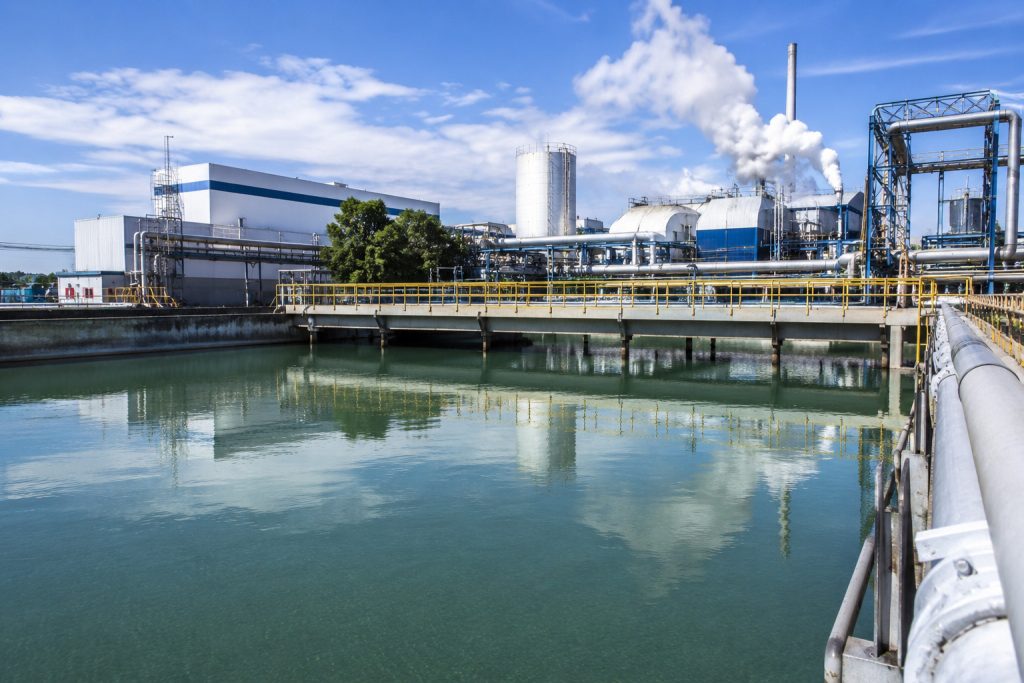
In modern paper manufacturing, water is not only an essential production medium but also a critical resource used throughout multiple processes, including pulping, washing, screening, bleaching, papermaking, and equipment cleaning. To ensure continuous and stable production, paper mills typically install clean water tanks or reservoirs to store and regulate process water.
Although clean water tank level measurement may appear to be a relatively simple application, the accuracy, continuity, and stability of the level data can directly affect water pump control, process water management, and the safe operation of the entire water supply system.
During an automation upgrade project, a paper mill needed to improve the level measurement system of its clean water tank. The existing measurement method suffered from unstable readings and inconvenient maintenance. Therefore, the plant required a non-contact level measurement solution that could provide continuous monitoring, stable performance, and low maintenance requirements.
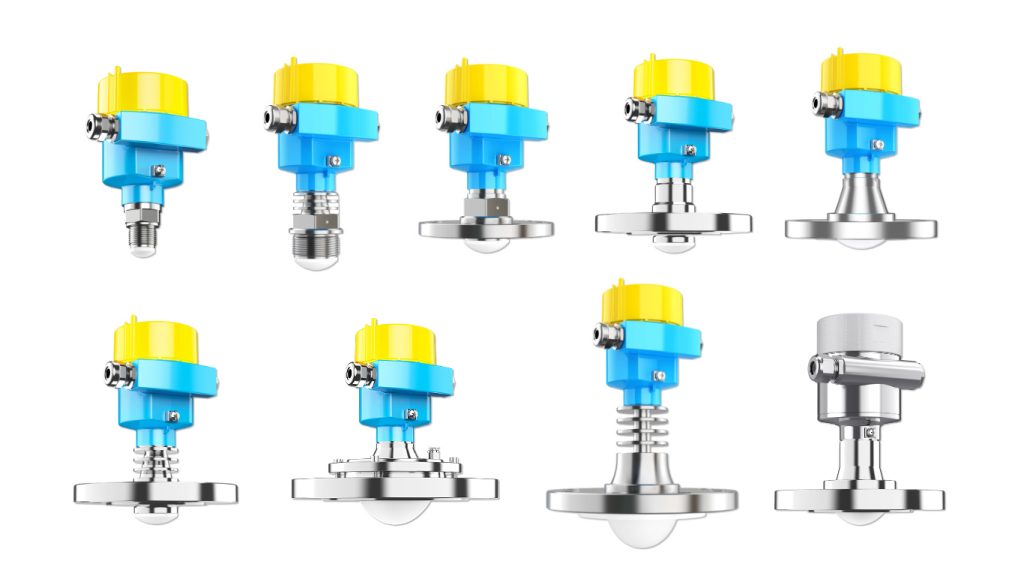
After evaluating the operating conditions, measuring range, installation environment, and control requirements, the plant selected a JWrada Series radar level meter for continuous clean water tank level measurement.
After commissioning, the radar level meter provided stable and continuous level signals, supplying reliable measurement data for water replenishment, water supply management, and pump interlock control.
1. Why Is Accurate Clean Water Tank Level Measurement Important in Paper Mills?
The paper industry requires a considerable amount of water throughout the production process. From pulp preparation to paper machine operation, different production stages depend on an adequate and stable water supply.
The clean water tank serves as an important storage and buffer facility within the plant’s water supply system. Its primary functions are to store process water and compensate for fluctuations in water demand.
During normal operation, the water level must remain within an appropriate range.
If the level becomes too low, the water supply pumps may run dry or become unable to provide sufficient water to downstream equipment, potentially affecting production continuity. If the level becomes too high, overflow may occur, resulting in water waste and additional operational problems.
Therefore, clean water tank level measurement is not simply about knowing how much water is in the tank.
More importantly, real-time level data can be transmitted to a PLC or DCS, allowing operators to monitor water storage conditions and automatically control inlet valves, replenishment pumps, and water supply pumps according to changes in the measured level.
For paper mills operating continuously, the reliability of the level measurement instrument is particularly important.
2. Level Measurement Requirements of the Project
The clean water tank in this paper mill was primarily used for process water storage and regulation. The project required a continuous level measuring instrument that could transmit real-time data to the plant control system.
Several key requirements were identified during the instrument selection process.
First, the instrument had to provide continuous level measurement.
Unlike high-level or low-level switches that only indicate specific alarm points, the water management system needed to know the actual level continuously. Therefore, the instrument had to provide a continuous output signal so that the control system could display the actual water level or level percentage.
Second, the instrument needed to provide good long-term measurement stability.
The clean water tank operates continuously. If the level instrument frequently produces fluctuating readings or measurement failures, operators must repeatedly inspect the instrument on site. This increases maintenance requirements and can reduce the reliability of the automatic control system.
Third, the plant preferred a measurement technology that minimized direct contact with the process medium.
Although the measured medium was clean water, a non-contact measurement method could help reduce problems associated with contamination, deposits, mechanical components, and routine sensor maintenance.
Finally, the instrument had to integrate easily with the existing control system.
A standard industrial output signal was required so that the radar level meter could be connected to the PLC or DCS for level indication, trend monitoring, alarms, and pump or valve interlocks.
Considering these requirements, radar level measurement was selected as a suitable solution.
3. Why Choose a Radar Level Meter for a Clean Water Tank?
A radar level meter is a non-contact instrument designed for continuous level measurement.
Its basic operating principle involves transmitting electromagnetic waves from the antenna toward the surface of the measured medium. When the radar signal reaches the liquid surface, part of the signal is reflected back toward the instrument.
The radar level meter receives the reflected signal and processes it to determine the distance between the instrument reference point and the liquid surface. With the tank dimensions and measurement parameters configured correctly, the instrument can then calculate the actual liquid level.
Compared with technologies that require the sensing element to remain in direct contact with the liquid, radar level measurement offers several practical advantages for paper mill clean water tanks.
3.1 Non-Contact Measurement Reduces Maintenance
The radar level meter is installed above the clean water tank, allowing it to measure the water surface without direct contact with the liquid.
As a result, there are no floats or other moving mechanical components inside the tank that could become stuck or require frequent servicing.
For clean water tanks requiring continuous long-term monitoring, reducing routine maintenance is an important practical advantage.
3.2 Suitable for Continuous Level Monitoring
A radar level meter continuously detects the position of the liquid surface and converts the measurement into a standard signal that can be transmitted to the control system.
Operators can view the current water level directly from the control room and monitor historical changes through level trend data.
This continuous measurement capability is particularly useful for automatic water replenishment and process water management.
3.3 No Moving Mechanical Parts
Traditional mechanical level measurement devices may contain moving components that are subject to wear, sticking, or mechanical failure after extended operation.
Radar measurement is based on electromagnetic waves and does not require floats, connecting rods, or other moving sensing mechanisms.
This makes radar level meters particularly suitable for applications where the plant wants to minimize routine instrument maintenance.
3.4 Supports Automatic Process Control
The purpose of measuring the clean water tank level is not limited to displaying a value locally.
By transmitting the continuous output from the radar level meter to a PLC or DCS, the plant can configure high-level alarms, low-level alarms, and pump or valve interlocks according to its operating requirements.
For example, when the water level falls below a predetermined value, the control system can initiate the water replenishment process. When the level reaches the configured upper limit, the replenishment system can be stopped.
In this way, a simple level measurement point becomes part of an automated water management system.
4. Instrument Selection Based on Actual Tank Conditions
Industrial instrument selection should never be based solely on the name of the measured medium.
Even when the medium is simply water, tank height, measuring range, installation location, internal structures, surface movement, and environmental conditions can vary significantly from one application to another.
For this reason, the actual operating conditions of the clean water tank were carefully evaluated before selecting the radar level meter.
The main application parameters included:
Measured medium: Clean water
Measurement type: Continuous level measurement
Installation position: Top of the clean water tank
Measurement requirement: Real-time monitoring of water level changes
Signal requirement: Integration with the existing control system
Operating condition: Continuous long-term operation with low maintenance requirements
Environment: Industrial production area
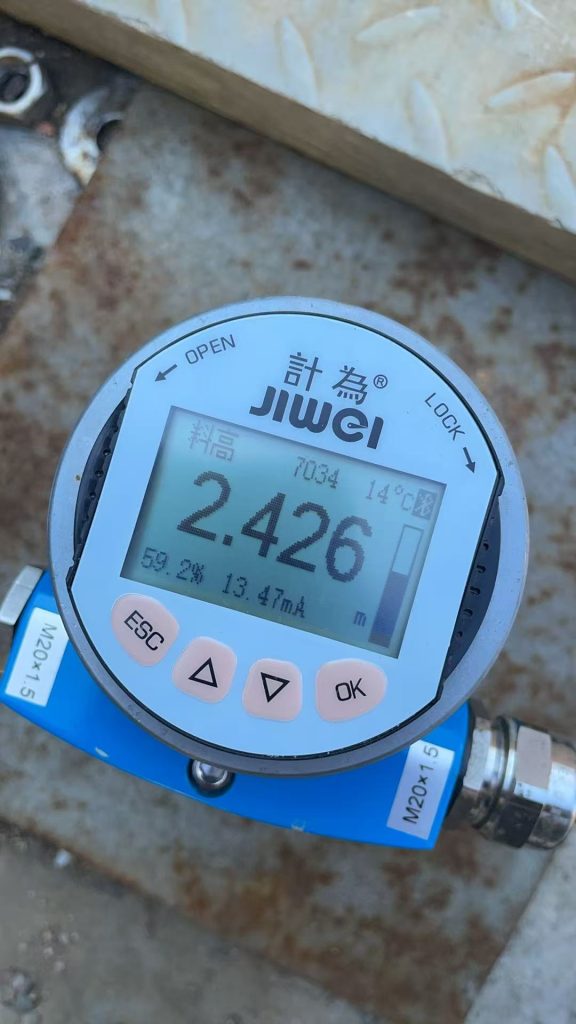
Based on the measuring range and installation conditions, a JWrada Series radar level meter was selected for the application.
In an actual radar level meter selection process, additional parameters should also be confirmed, including maximum measuring distance, process connection, power supply, output signal, and available installation space.
If inlet pipes, structural supports, ladders, or other fixed objects are located inside the tank, this information should also be considered before installation so that an appropriate mounting position can be selected.
5. Why Is the Installation Position of a Radar Level Meter Important?
Many unstable radar level measurements are caused not by the instrument itself but by an unsuitable installation position.
This is an important factor that can easily be overlooked in clean water tank applications.
The electromagnetic signal transmitted by the radar level meter needs a clear path to the liquid surface so that a strong and reliable reflection can return to the instrument.
If significant obstacles are located within the radar beam, they may generate additional reflections and interfere with the true level echo.
For this project, the radar level meter was therefore installed in a relatively open area at the top of the clean water tank, away from major inlet flows, tank walls, and internal structures whenever possible.
Avoid Direct Installation Above the Water Inlet
When water enters the tank, the inlet area can experience significant turbulence and local surface movement.
If the radar level meter is installed directly above this area, strong surface fluctuations may make signal processing more difficult.
For this reason, the installation point should generally be positioned at a suitable distance from the main water inlet.
Avoid Installing Too Close to the Tank Wall
If the radar level meter is installed too close to the tank wall, part of the radar beam may interact with the wall and generate unwanted reflections.
This is particularly important when pipes, brackets, ladders, or other metal structures are installed near the wall.
Ensure Proper Antenna Orientation
After installation, the antenna should be correctly oriented toward the measured liquid surface.
If the mounting flange or bracket is significantly tilted, the installation should be adjusted before commissioning.
For reliable radar level measurement, proper installation is just as important as correct instrument selection.
6. Commissioning the Radar Level Meter
Installing the radar level meter is only part of the project.
To ensure that the instrument accurately displays the clean water tank level, basic parameters must be configured according to the actual tank dimensions and operating conditions.
During commissioning, technicians configured the measuring range, zero point, full-scale level, and other relevant parameters according to the clean water tank dimensions.
The real-time echo signal and level changes were then checked to verify that the instrument responded correctly to changes in the actual water level.
If fixed objects within the measuring area generated unwanted reflections, the corresponding instrument functions and configuration could be used to reduce the influence of these false echoes.
After the radar level meter itself had been configured, the output signal was checked against the value displayed by the PLC or DCS.
This step is important because there are situations where the local display on the radar level meter is correct while the control system shows an incorrect value.
In such cases, the problem may not be caused by the radar instrument. It may instead result from incorrect PLC scaling, signal conversion, wiring, or engineering unit settings.
For this reason, instrument commissioning and control system commissioning should be performed together.
7. Results After Installation and Commissioning
After installation and commissioning were completed, the JWrada Series radar level meter was put into operation for continuous clean water tank level monitoring.
During operation, the instrument continuously tracked changes in the water level and transmitted real-time level data to the plant control system.
Operators could monitor the amount of water stored in the tank directly from the control room without frequently visiting the tank for manual inspection.
Compared with the previous measurement method, the new radar level measurement solution provided several practical improvements.
More Intuitive Level Information
The control system can display the actual continuous level rather than simply indicating whether the water has reached a particular alarm point.
Operators can use this information to understand the current water storage condition and make better production and water management decisions.
Reduced Manual Inspection
With remote continuous level monitoring, operators no longer need to rely on frequent manual checks to determine the water level.
This is particularly valuable for tanks located away from the main operating area or facilities requiring continuous monitoring.
Reliable Data for Pump and Valve Interlocks
A stable continuous level signal can be incorporated into the automatic control system.
According to the plant’s operating requirements, high and low level limits can be configured so that replenishment pumps, water supply pumps, and valves operate automatically according to the measured level.
This helps improve the automation of the plant water supply system.
Lower Instrument Maintenance Requirements
Because radar technology provides non-contact measurement, the sensing system does not need to remain immersed in the liquid.
Routine maintenance can therefore focus primarily on checking the mounting condition, electrical connections, instrument status, and measurement data.
For paper mills seeking to reduce instrument maintenance requirements, this is an important advantage of radar level measurement.
8. What Should Be Considered When Using Radar Level Meters in Paper Mill Clean Water Tanks?
Although a clean water tank is generally considered a relatively straightforward level measurement application, several details should still be considered to ensure long-term measurement stability.
First, do not provide only “water” as the application information when selecting an instrument.
The tank height, normal operating level, installation position, process connection, power supply, output signal, and major internal structures should also be provided. More complete process information allows for more accurate radar level meter selection.
Second, consider surface turbulence caused by incoming water.
If the inlet flow rate is high, significant waves may form near the inlet. The radar level meter should be positioned away from this area whenever possible.
Third, identify internal obstacles before installation.
Structural beams, pipes, ladders, and other objects within the radar beam path should be considered during the design stage. Selecting an appropriate installation position in advance is much easier than relocating the instrument after installation.
Fourth, verify control system scaling.
The output range of the radar level meter must match the engineering range configured in the PLC or DCS. Otherwise, the instrument may display the correct value locally while the control room receives an incorrect level reading.
Fifth, verify the measurement using actual water level changes.
Commissioning should not be considered complete simply because the instrument displays a value.
Whenever practical, the measured level should be checked at several points during filling or draining to confirm that the radar level reading follows the actual water level correctly.
9. Radar Level Meter vs. Ultrasonic Level Meter for Clean Water Tanks
Radar level meters and ultrasonic level meters are both commonly used for non-contact liquid level measurement, so they are often compared when selecting instrumentation for clean water tanks.
Ultrasonic level meters use sound waves for measurement and can be a practical solution for water tanks with relatively simple operating conditions and suitable measuring distances.
Radar level meters use electromagnetic waves rather than sound waves. Their measurement principle does not depend on air as the propagation medium for acoustic signals.
For industrial sites with more demanding operating environments, or where long-term measurement stability and standardized radar instrumentation are priorities, radar level measurement may be an appropriate choice.
However, there is no universal answer as to which technology is always better.
The correct choice should be based on measuring distance, operating environment, available installation space, required accuracy, project budget, and maintenance expectations rather than instrument price alone.
10. What This Clean Water Tank Project Means for Paper Mill Automation
As paper mills continue to improve production automation, level measurement is evolving from simple local indication toward continuous monitoring, remote data transmission, alarms, and automatic control.
The clean water tank is a typical example.
In traditional operation, personnel may rely heavily on local level indicators or manual inspection to determine the water level. With a continuous level measurement instrument, the clean water tank becomes a real-time data point within the plant automation system.
Level data can be used for trend analysis, high and low level alarms, and automatic control of replenishment pumps, water supply pumps, and valves.
With its non-contact continuous measurement principle, radar level technology provides an effective measurement foundation for this automation process.
In addition to clean water tanks, radar level measurement technology can also be considered for industrial water reservoirs, storage tanks, and other continuous level measurement applications, provided that the selected instrument is suitable for the specific process conditions.
However, operating conditions can vary considerably between measurement points.
Temperature, pressure, corrosiveness, foam, vapor, agitation, internal structures, and measuring distance can all influence instrument selection.
Therefore, even when the same radar measurement principle is used, each measurement point should be evaluated according to its actual operating conditions.
11. Conclusion
A clean water tank may appear to be a relatively simple measurement point in a paper mill, but its level data plays an important role in maintaining a stable process water supply.
In this project, a JWrada Series radar level meter was used for non-contact continuous level measurement. Combined with an appropriate installation position, correct parameter configuration, and control system commissioning, the solution enabled real-time monitoring of the clean water tank level.
The application demonstrates that radar level meters are a practical option for clean water tanks requiring continuous operation, low maintenance, and remote level monitoring.
However, reliable level measurement depends on more than the instrument itself.
Correct instrument selection, proper installation, and professional commissioning are three essential factors for achieving stable long-term radar level measurement.
When selecting a radar level meter for a paper mill clean water tank, users should first determine the actual measuring range, tank structure, installation conditions, liquid surface characteristics, and control requirements.
Only when the instrument is properly matched to the application can the advantages of non-contact radar level measurement—including continuous monitoring, low maintenance, and easy integration with automation systems—be fully utilized to support the stable operation of the paper mill’s process water supply system.